Butte in Silver Bow County, Montana — The American West (Mountains)
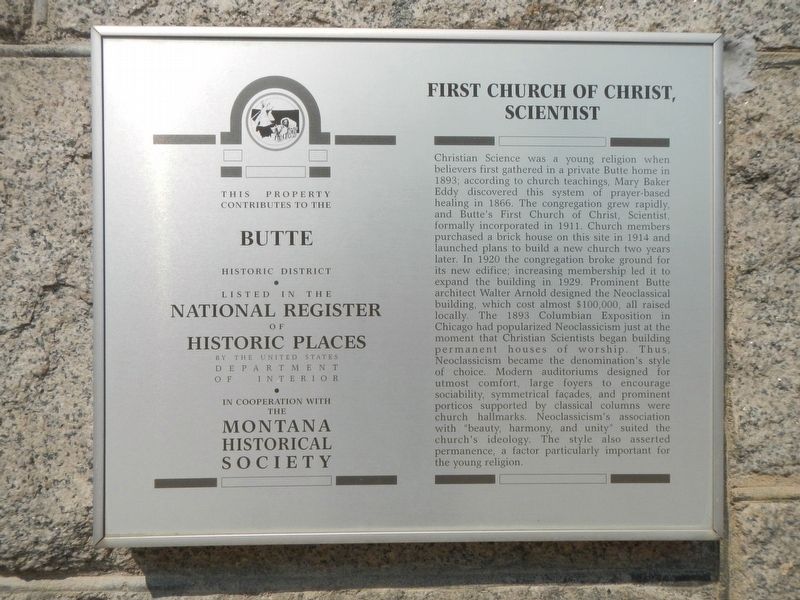
First Church of Christ, Scientist
Butte National Historic Landmark District
Photographed by Barry Swackhamer, July 12, 2021
1. First Church of Christ, Scientist Marker
this page online
Erected by Montana Historical Society.
Topics and series. This historical marker is listed in these topic lists: Architecture • Religion & Religious Structures. In addition, it is included in the Montana National Register Sign Program series list.
Location. 46° 0.903′ N, 112° 32.383′ W. Marker is in Butte, Montana, in Silver Bow County. It is at the intersection of North Montana Street and West Quartz Street, on the left when traveling north on North Montana Street. Touch for map. Marker is at or near this postal address: 229 North Montana Street, Butte MT 59701, United States of America. Touch for directions.

Regionally, this marker is in andspecifically outhwest Montana, in Gold West Country, in Mining Country. It is also in the American Mountain West and in the Lewis & Clark Corridor. Globally, it is in North America, the Rocky Mountains, the Western Hemisphere, the Western World, and the Anglosphere. Historically, it finds itself
Photographed by Barry Swackhamer, July 12, 2021
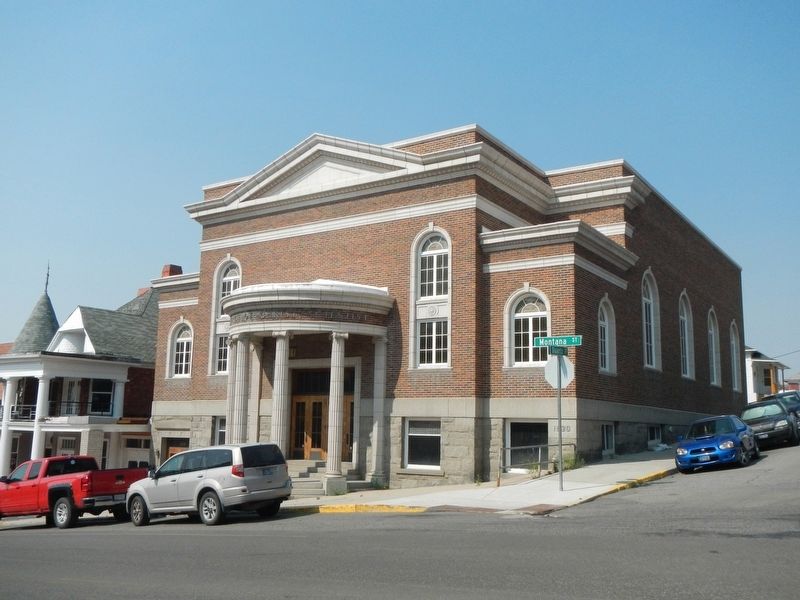
2. First Church of Christ, Scientist Marker
The marker is to the right of the entrance.
Other nearby markers. At least 8 other markers are within walking distance of this marker: Mountain View Methodist Episcopal Church (within shouting distance of this marker); Mountain View Church Parsonage (within shouting distance of this marker); Henry Jacobs House (about 300 feet away, measured in a direct line); Leonard Apartments (about 300 feet away); Clark Mansion (about 300 feet away); Butte-Anaconda Historic District (about 300 feet away); Silver Bow County Courthouse (about 300 feet away); Carpenters' Union Hall (about 400 feet away). Touch for a list and map of all markers in Butte.
Photographed by Barry Swackhamer, July 12, 2021
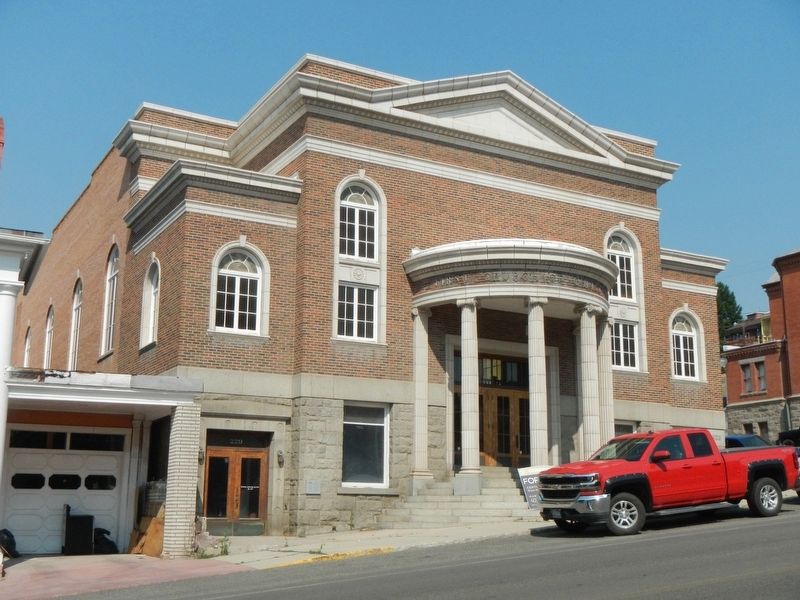
3. First Church of Christ, Scientist Church
Credits. This page was last revised on January 10, 2025. It was originally submitted on October 27, 2021, by Barry Swackhamer of Brentwood, California. This page has been viewed 310 times since then and 28 times this year. Photos: 1, 2, 3. submitted on October 27, 2021, by Barry Swackhamer of Brentwood, California.
