Greenville in Pitt County, North Carolina — The American South (South Atlantic)
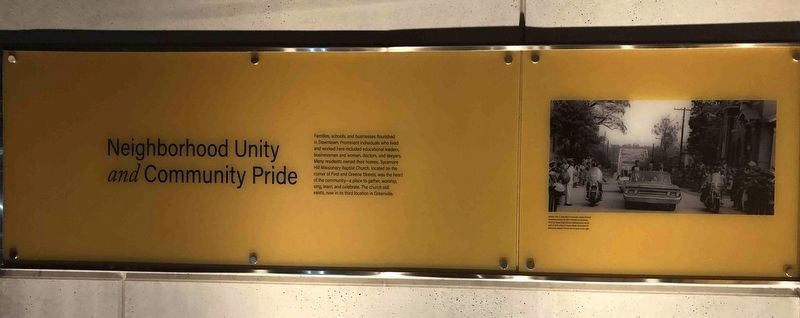
Neighborhood Unity and Community Pride
Photographed by Ray Gurganus, November 10, 2021
1. Neighborhood Unity and Community Pride Marker
Topics. This historical marker is listed in these topic lists: African Americans • Religion & Religious Structures.
Location. 35° 36.943′ N, 77° 22.417′ W. Marker is in Greenville, North Carolina, in Pitt County. It is at the intersection of West First Street and North Greene Street, on the right when traveling west on West First Street. Touch for map. Marker is at or near this postal address: 201 W 1st St, Greenville NC 27858, United States of America. Touch for directions.

Regionally, this marker is in North Carolina’s Coastal Plain. It is also in the American South, specifically in the Upper South, and
this page online
Other nearby markers. At least 8 other markers are within walking distance of this marker: Sycamore Hill Missionary Baptist Church (a few steps from this marker); Sycamore Hill Gateway Plaza (a few steps from this marker); a different marker also named Sycamore Hill Missionary Baptist Church (a few steps from this marker); United in Faith (a few steps from this marker); a different marker also named Sycamore Hill Missionary Baptist Church (a few steps from this marker); a different marker also named Sycamore Hill Missionary Baptist Church (a few steps from this marker); Town Common & Urban Renewal (about 400 feet away, measured in a direct line); Thomas J. Jarvis (about 500 feet away). Touch for a list and map of all markers in Greenville.
Photographed by Ray Gurganus, November 10, 2021
2. Neighborhood Unity and Community Pride Marker
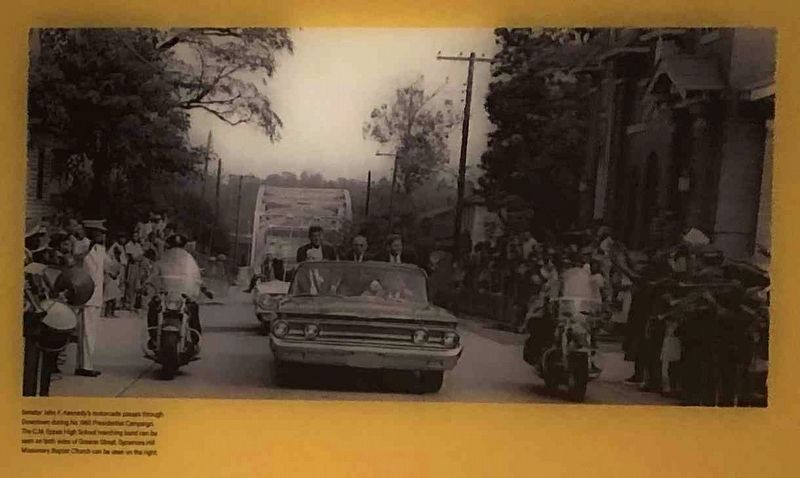
Senator John F. Kennedy's motorcade passes through downtown during his 1960 presidential campaign. The C. M. Eppes High School marching band can be seen on both sides of Greene Street. Sycamore Hill Missionary Baptist Church can be seen on the right.
Photographed by Ray Gurganus, November 10, 2021
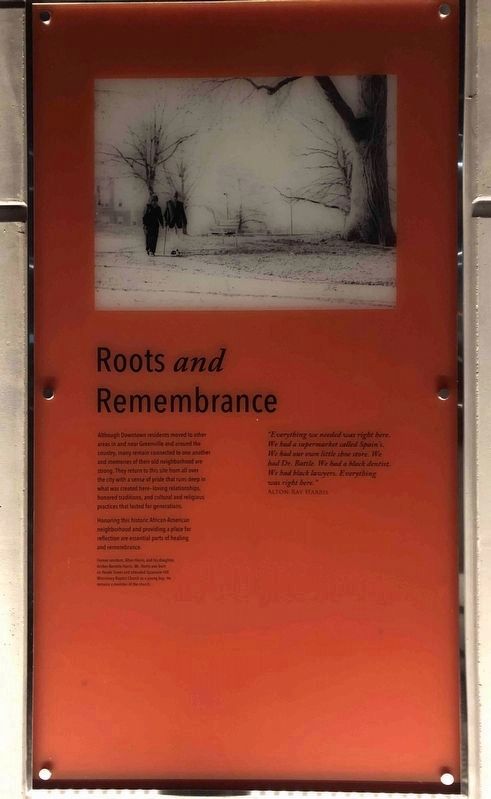
3. Roots and Rememberance
Although Downtown residents moved to other areas in and near Greenville and around the country, many remain connected to one another and memories of their old neighborhood are strong. They return to this site from all over the city with a sense of pride that runs deep in what was created here-loving relationships, honored traditions, and cultural and religious practices that lasted for generations.
Honoring this historic African-American neighborhood and providing a place for reflection are essential parts of healing and remembrance.
Former resident, Alton Harris, and his daughter, Amber Nanette Hauls. Mr. Harris was born on Reade Street and attended Sycamore Hill Missionary Baptist Church as a young boy. He remains a member of the church.
"Everything we needed was right here. We had a supermarket called Spain's. We had our own little shoe store. We had Dr. Battle. We had a black dentist We had black lawyers. Everything was right here." -- Alton Ray Harris
Honoring this historic African-American neighborhood and providing a place for reflection are essential parts of healing and remembrance.
Former resident, Alton Harris, and his daughter, Amber Nanette Hauls. Mr. Harris was born on Reade Street and attended Sycamore Hill Missionary Baptist Church as a young boy. He remains a member of the church.
"Everything we needed was right here. We had a supermarket called Spain's. We had our own little shoe store. We had Dr. Battle. We had a black dentist We had black lawyers. Everything was right here." -- Alton Ray Harris
Photographed by Ray Gurganus, November 10, 2021
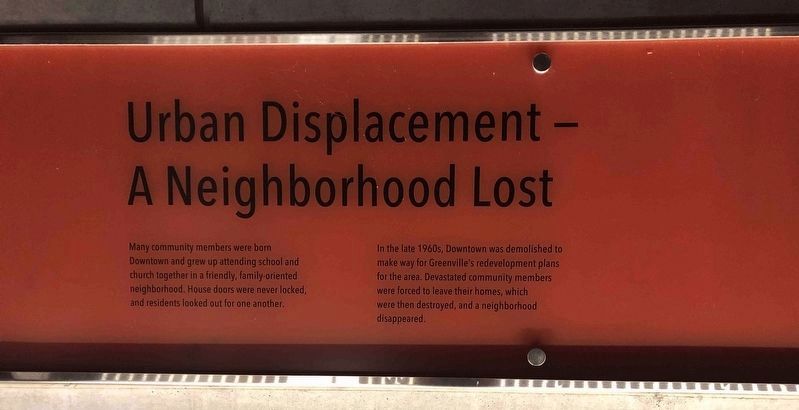
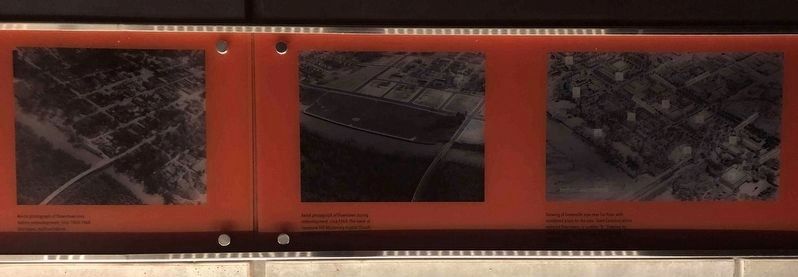
4. Urban Displacement -- A Neighborhood Lost
Many community members where born downtown and grew up attending school and church together in a friendly, family-oriented neighborhood. House doors were never locked, and residents looked out for one another.
In the late 1960's, downtown was demolished to make way for Greenville's redevelopment plans for the area. Devestated community members were forced to leave their homes, which were then destroyed, and a neighborhood disappeared.
In the late 1960's, downtown was demolished to make way for Greenville's redevelopment plans for the area. Devestated community members were forced to leave their homes, which were then destroyed, and a neighborhood disappeared.
Photographed by Ray Gurganus, November 10, 2021
5. Urban Displacement -- A Neighborhood Lost
Photographed by Ray Gurganus, November 10, 2021
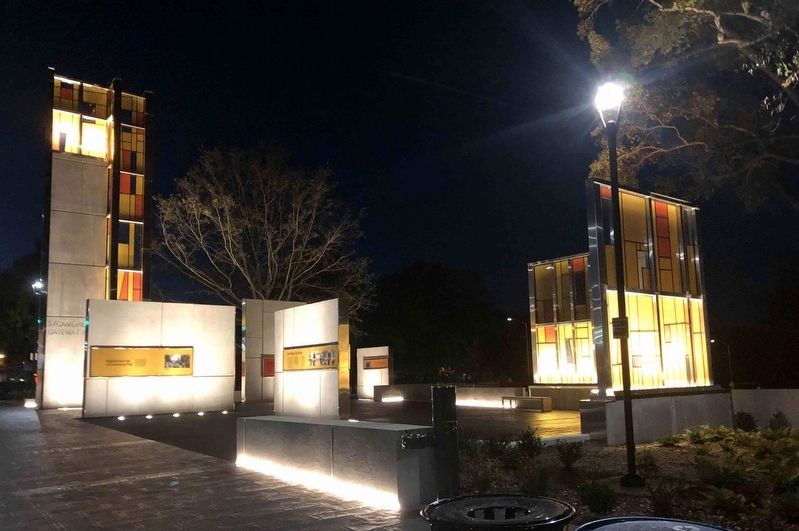
6. Sycamore Hill Gateway Plaza
Credits. This page was last revised on November 15, 2021. It was originally submitted on November 11, 2021, by Ray Gurganus of Washington, District of Columbia. This page has been viewed 228 times since then and 8 times this year. Photos: 1, 2. submitted on November 11, 2021, by Ray Gurganus of Washington, District of Columbia. 3, 4, 5. submitted on November 13, 2021, by Ray Gurganus of Washington, District of Columbia. 6. submitted on November 11, 2021, by Ray Gurganus of Washington, District of Columbia. • Bernard Fisher was the editor who published this page.
