Thomas Jay Park in Tucson in Pima County, Arizona — The American Mountains (Southwest)
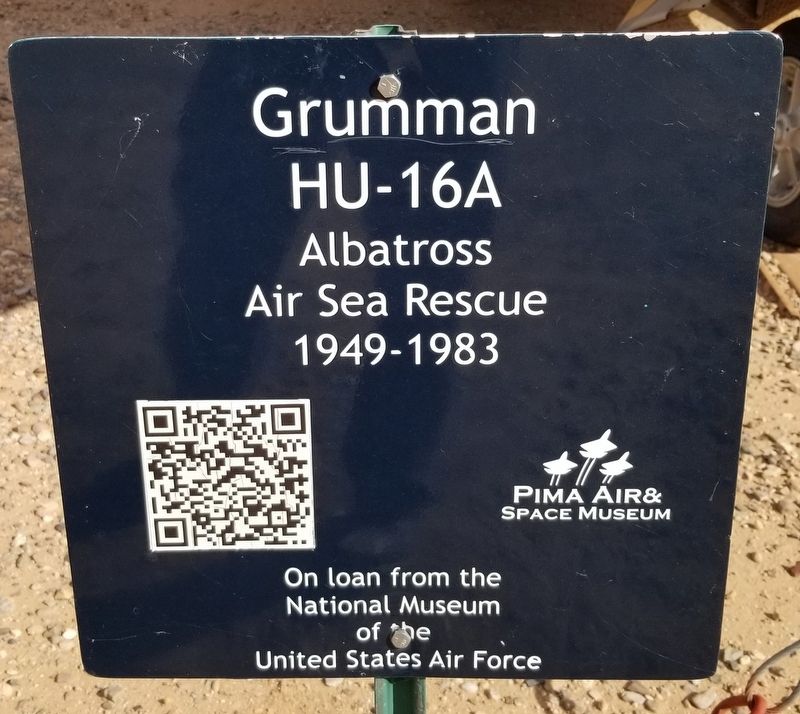
Grumman HU-16A
Photographed by James Hulse, November 9, 2021
1. Grumman HU-16A Marker
HU-16A
Albatross
Air Sea Rescue
1949-1983
On loan from the
National Museum
of the
United States Air Force
Erected by Pima Air & Space Museum.
Topics. This historical marker is listed in this topic list: Air & Space.
Location. 32° 8.357′ N, 110° 52.209′ W. Marker is in Tucson, Arizona, in Pima County. It is in Thomas Jay Park. It can be reached from East Valencia Road 0.3 miles west of South Wilmot Road. The marker is located in the southwestern section of the Pima Air & Space Museum. Touch for map. Marker is at or near this postal address: 6000 East Valencia Road, Tucson AZ 85756, United States of America. Touch for directions.

Regionally, this marker is in the Sky Islands, in the Sonoran Desert, and in the Phoenix Metropolitan Area. It is also in the American Borderlands and in the Southwest. Globally, it is in North America, the Western Hemisphere, the Western World, and the Anglosphere. Historically, it finds itself in what was once New Spain and also the Gadsden Purchase.
Other nearby markers. At least 8 other markers are within walking
this page online
More about this marker. The marker is located on the outside section of the Pima Air & Space Museum. There is an entry fee required to visit both the inside and outside sections of the museum.
Also see . . . Grumman HU-16 Albatross.
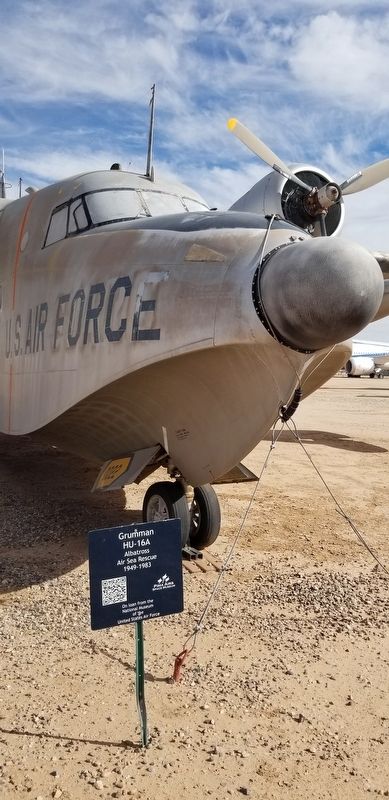
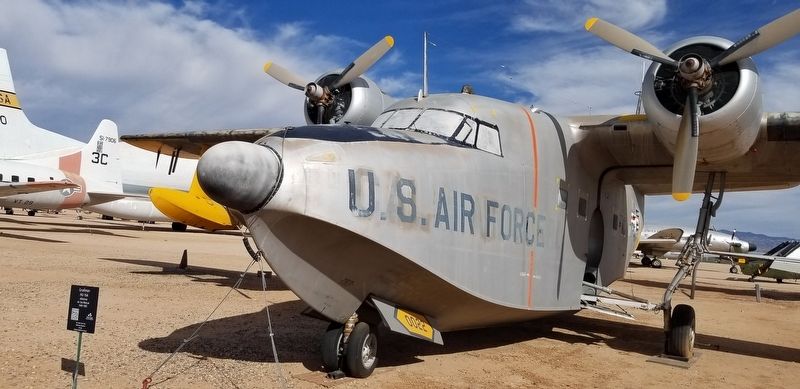
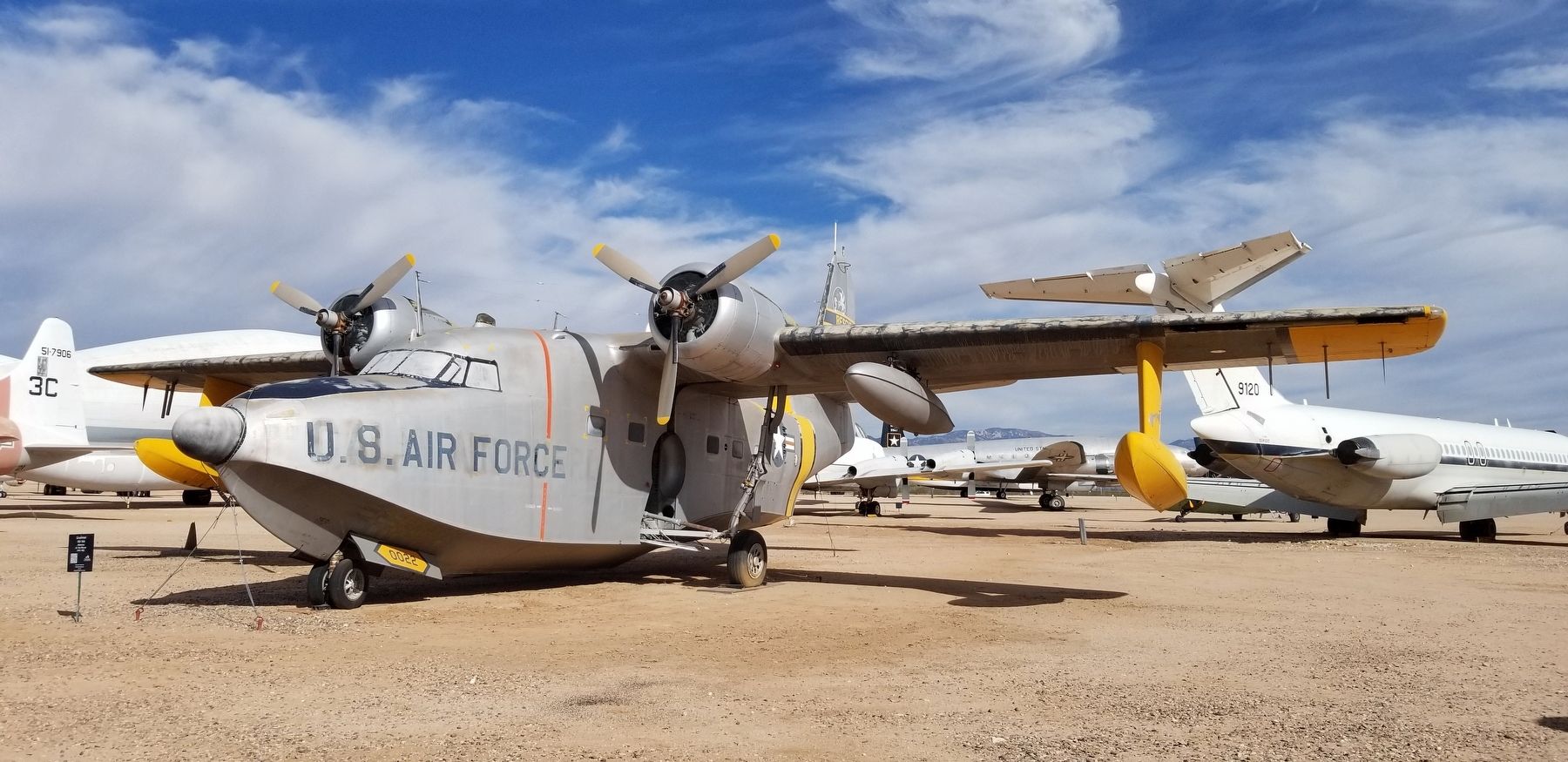
The Grumman HU-16 Albatross is a large, twin–radial engined amphibious seaplane that was used by the United States Air Force (USAF), the U.S. Navy (USN), and the U.S. Coast Guard (USCG), primarily as a search and rescue aircraft. Originally designated as the SA-16 for the USAF and the JR2F-1 and UF-1 for the USN and USCG, it was redesignated as the HU-16(Submitted on November 12, 2021, by James Hulse of Medina, Texas.)in 1962. Source: WikipediaPhotographed by James Hulse, November 9, 20212. The Grumman HU-16A and Marker
Photographed by James Hulse, November 9, 2021
3. The Grumman HU-16A and Marker
Photographed by James Hulse, November 9, 2021
4. The Grumman HU-16A
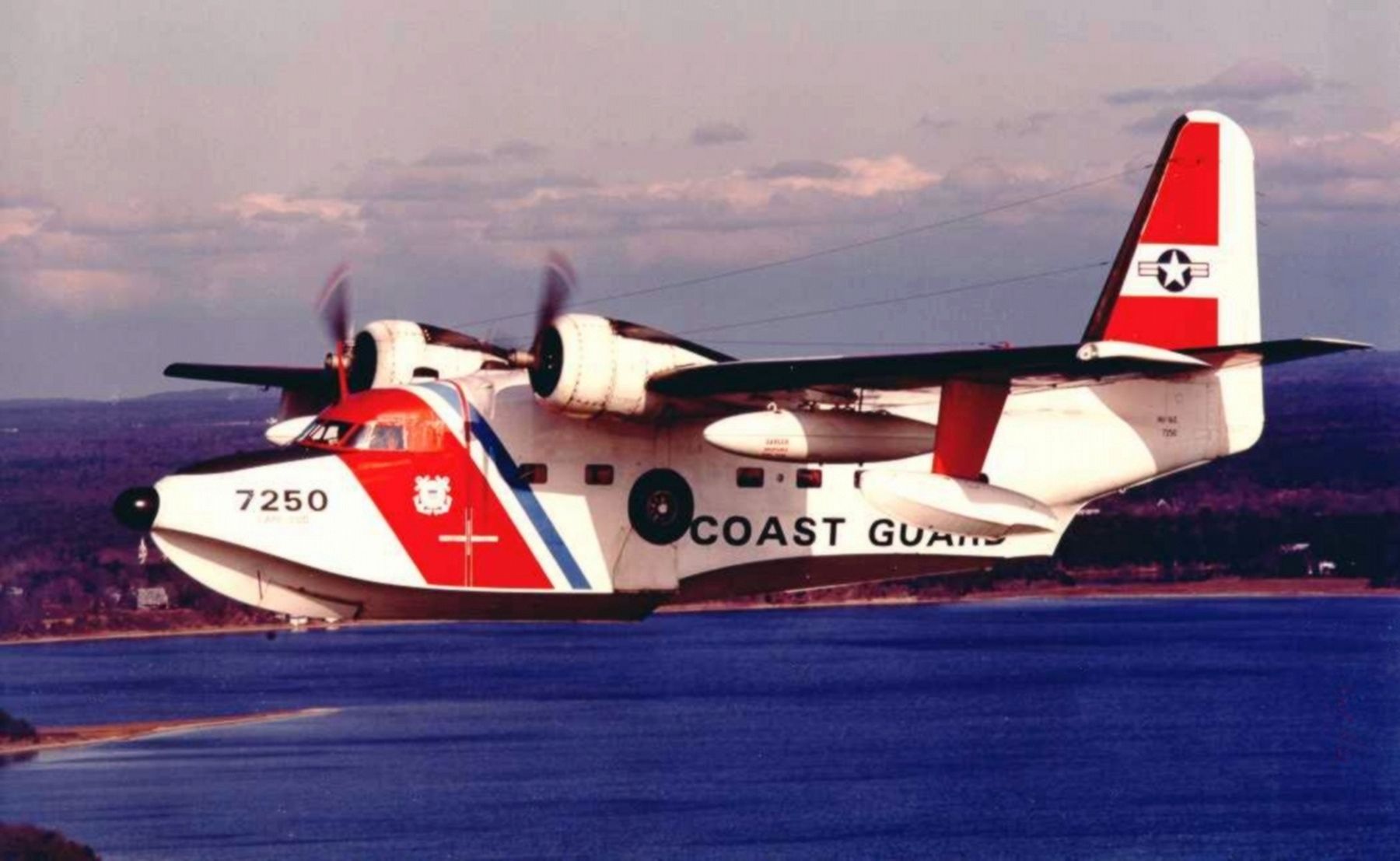
Public Domain - US Coast Guard photo, circa 1970s
5. U.S. Coast Guard HU-16E from CGAS Cape Cod in the 1970s.
Credits. This page was last revised on November 12, 2021. It was originally submitted on November 12, 2021, by James Hulse of Medina, Texas. This page has been viewed 245 times since then and 22 times this year. Photos: 1, 2, 3, 4, 5. submitted on November 12, 2021, by James Hulse of Medina, Texas.
