Fort Washington in Prince George's County, Maryland — The American Northeast (Mid-Atlantic)
New Forts for a New War
Fort Foote Park
| — | National Park Service, U.S. Department of the Interior | — |
Photographed by Allen C. Browne, November 29, 2021
1. New Forts for a New War Marker
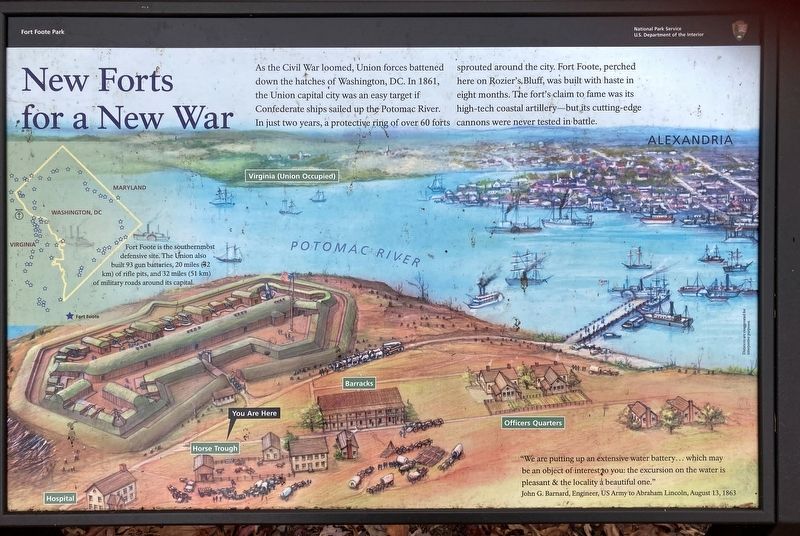
As the Civil War loomed, Union forces battened down the hatches of Washington, DC. In 1861, the Union capital city was an easy target if Confederate ships sailed up the Potomac River. In just two years, a protective ring of over 60 forts sprouted around the city. Fort Foote, perched here on Rozier's Bluff, was built with haste in eight months. The fort's claim to fame was its high-tech coastal artillery—but its cutting-edge cannons were never tested in battle.
“We are putting up an extensive water battery… which may be an object of interest to you: the excursion on the water is pleasant & the locality a beautiful one.”
John G. Barnard, Engineer, US Army to Abraham Lincoln, August 13, 1863
[Caption:]
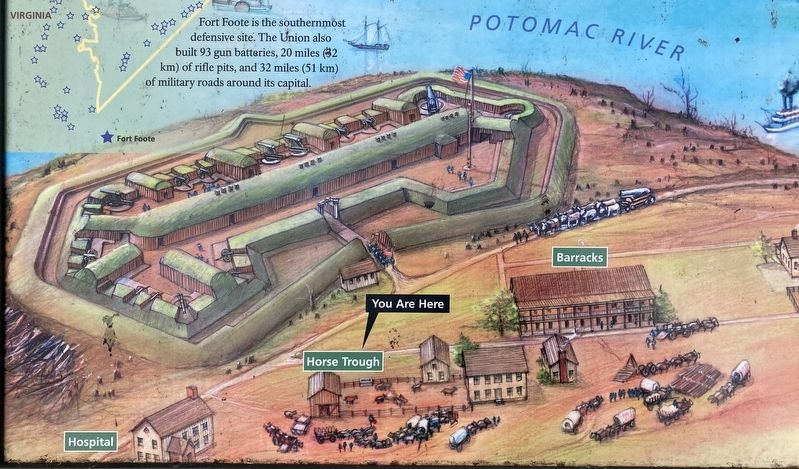
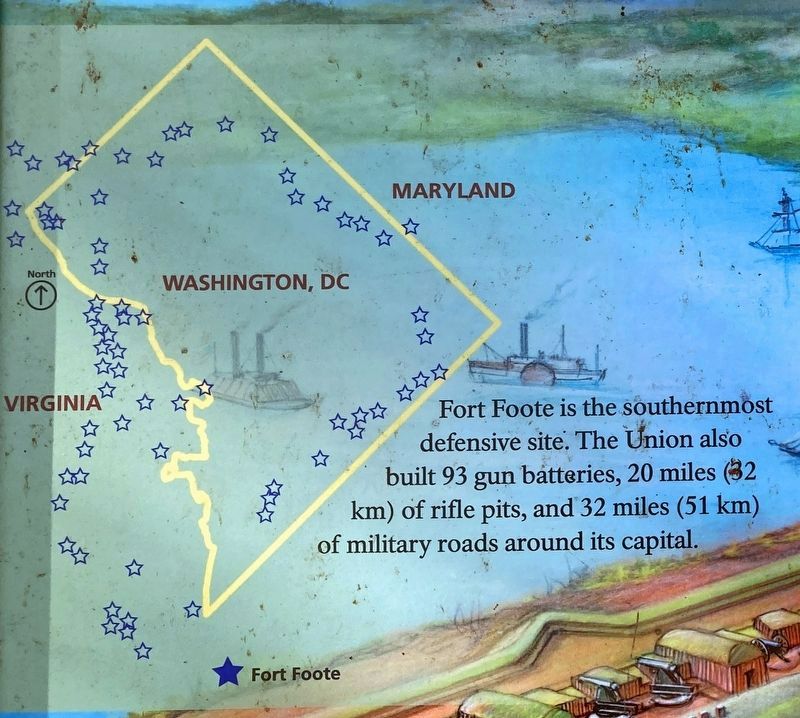
Fort Foote is the southernmost defensive site. The Union also built 93 gun batteries, 20 miles (32 km) of rifle pits, and 32 miles (51 km) of military roads around its capital.
Erected by National Park Service, U.S. Department of the Interior.
Topics. This historical marker is listed in these topic lists: Forts and Castles • War, US Civil. A significant historical date for this entry is August 13, 1863.
Location. 38° 46.113′ N, 77° 1.678′ W.
this page online

Regionally, this marker is in the Washington Metropolitan Area. It is also in the American South, specifically in the Upper South, in the Mid-Atlantic, and on the Eastern Seaboard. Globally, it is in the North Atlantic Region, North America, the Western Hemisphere, the Western World, and the Anglosphere. Historically, it finds itself in what was once one of the original Thirteen Colonies and also the Antebellum South.
Other nearby markers. At least 8 other markers are within one mile of this marker, measured as the crow flies: Reporting for Duty (within shouting distance of this marker); Another Shot (about 400 feet away); Engineering Evolution (about 400 feet away); Ironclad Killer (about 400 feet away); Load. Ready. Fire! (about 500 feet away); Capital View (about
Photographed by Allen C. Browne, November 29, 2021
2. New Forts for a New War Marker
Other markers no longer nearby. Fort Foote (was about 300 feet away, measured in a direct line but has been reported to have been replaced with another marker now near it); King's Depression Carriage (was about 300 feet away but has been permanently removed); Northwest Bastion (was about 300 feet away but has been permanently removed); 15-inch Rodman Smoothbore (was about 400 feet away but has been replaced with another marker now near it); a different marker also named 15-inch Rodman Smoothbore (was about 400 feet away but has been permanently removed); The Defenses of Washington (was about 500 feet away but has been permanently removed); a different marker also named Fort Foote (was about 500 feet away but has been reported to have been replaced with another marker now near it).
Related marker. Click here for another marker that is related to this marker. Old Marker At This Location titled "Fort Foote".
Also see . . . Fort Foote.
Photographed by Allen C. Browne, November 29, 2021
3. You Are Here
Photographed by Allen C. Browne, November 29, 2021
4. Civil War Forts around Washington
Fort Foote is the Southernmost.
Fort Foote is the Southernmost.
Photographed by Allen C. Browne, November 29, 2021
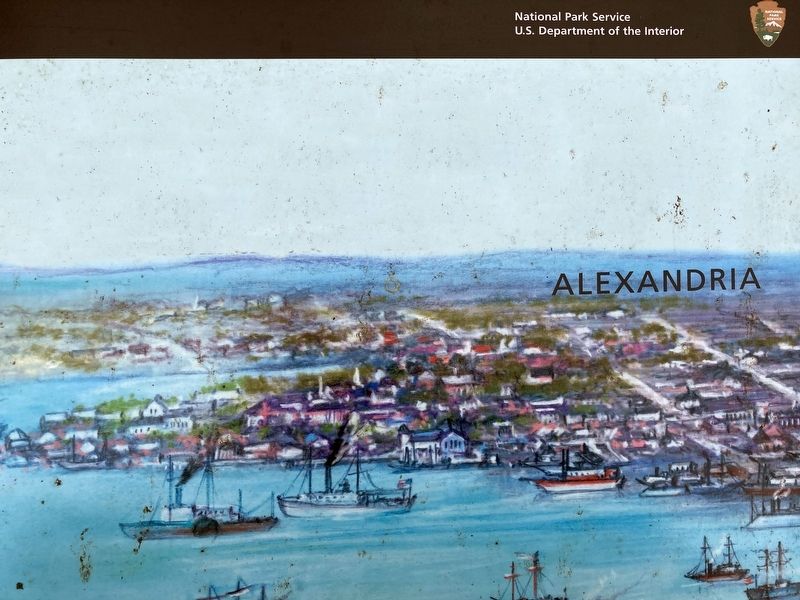
5. Alexandria
Photographed by Allen C. Browne, April 15, 2022
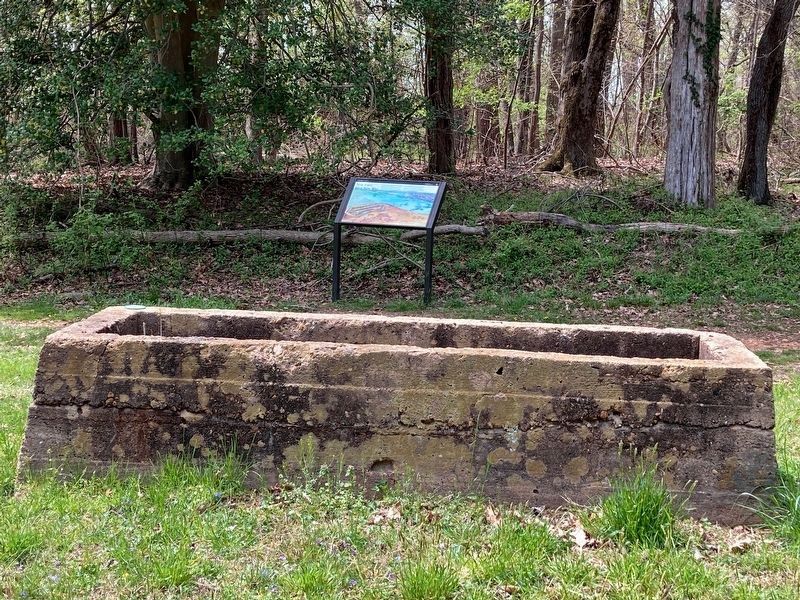
6. Horse Trough
Photographed by Allen C. Browne, November 29, 2021
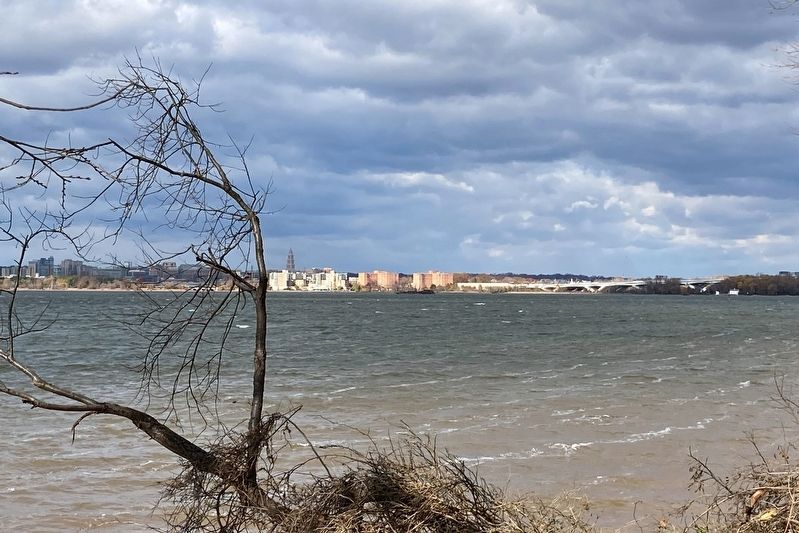
7. Alexandria and the Key Bridge
from Fort Foote.
Credits. This page was last revised on May 22, 2024. It was originally submitted on November 30, 2021, by Allen C. Browne of Silver Spring, Maryland. This page has been viewed 414 times since then and 50 times this year. Photos: 1, 2, 3, 4, 5. submitted on November 30, 2021, by Allen C. Browne of Silver Spring, Maryland. 6. submitted on April 17, 2022, by Allen C. Browne of Silver Spring, Maryland. 7. submitted on November 30, 2021, by Allen C. Browne of Silver Spring, Maryland. • Bernard Fisher was the editor who published this page.
