Helena in Lewis and Clark County, Montana — The American West (Mountains)
Helena South-Central Historic District
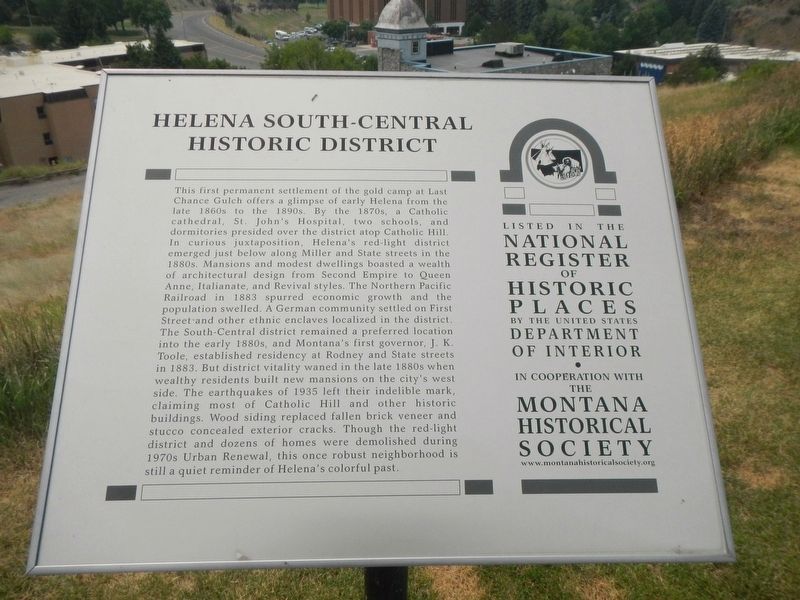
Photographed by Barry Swackhamer, July 16, 2021
1. Helena South-Central Historic District Marker
this page online
Erected by Montana Historical Society.
Topics and series. This historical marker is listed in this topic list: Notable Buildings. In addition, it is included in the Montana National Register Sign Program series list.
Location. 46° 35.101′ N, 112° 2.33′ W. Marker is in Helena, Montana, in Lewis and Clark County. It can be reached from South Warren Street near Vawter Street. This marker is located in Fire Tower Park and may be accessed from the parking lot at the intersection of South Warren and Vawter Street. Touch for map. Marker is in this post office area: Helena MT 59601, United States of America. Touch for directions.

Regionally, this marker is in andspecifically entral Montana in Gold West Country. It is also in the American Mountain West and in the Lewis & Clark Corridor. Globally, it is in North America, the Rocky Mountains, the Western Hemisphere,
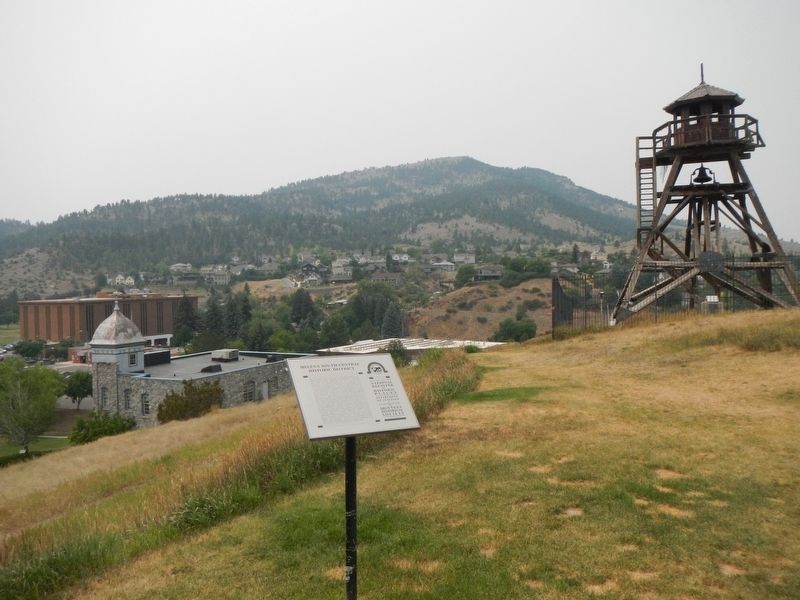
Photographed by Barry Swackhamer, July 16, 2021
2. Helena South-Central Historic District Marker
Other nearby markers. At least 8 other markers are within walking distance of this marker: Fire Tower (within shouting distance of this marker); Bluestone House (within shouting distance of this marker); U.S.S. Helena (about 500 feet away, measured in a direct line); Boston Block (about 500 feet away); 116 Broad Street (about 500 feet away); St. Louis Block (about 600 feet away); Uncle Sam's Block (about 600 feet away); The Discovery at Last Chance Gulch (about 600 feet away). Touch for a list and map of all markers in Helena.
Credits. This page was last revised on December 19, 2021. It was originally submitted on December 19, 2021, by Barry Swackhamer of Brentwood, California. This page has been viewed 315 times since then and 26 times this year. Photos: 1, 2. submitted on December 19, 2021, by Barry Swackhamer of Brentwood, California.
