Downtown in Nashville in Davidson County, Tennessee — The American South (East South Central)
James K. Polk
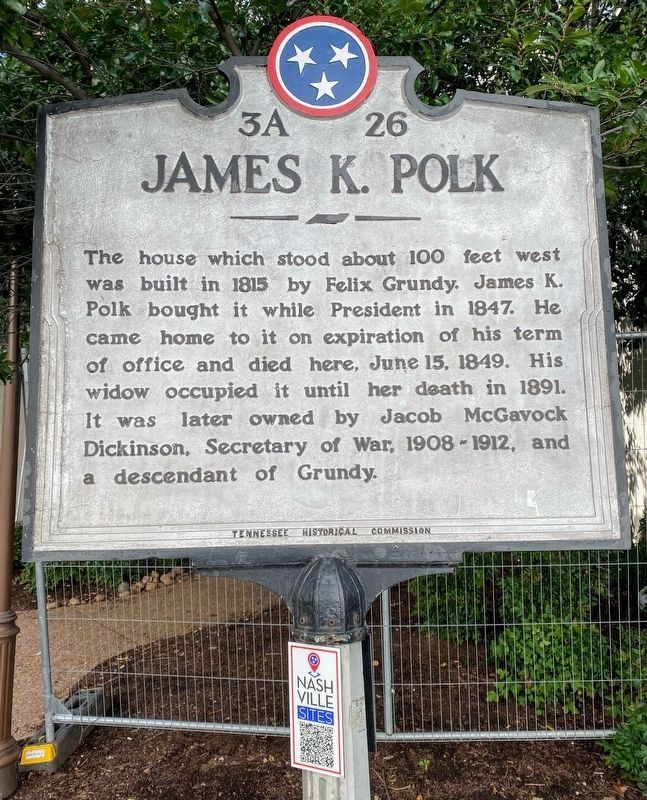
Photographed by Shane Oliver, December 20, 2021
1. James K. Polk Marker
Erected by Tennessee Historical Commission. (Marker Number 3A 26.)
Topics and series. This historical marker is listed in this topic list: Settlements & Settlers. In addition, it is included in the Tennessee Historical Commission series list. A significant historical month for this entry is June 1773.
Location. 36° 9.79′ N, 86° 47.003′ W. Marker is in Nashville, Tennessee, in Davidson County. It is in Downtown. It is on 7th Avenue North. Touch for map. Marker is in this post office area: Nashville TN 37219, United States of America. Touch for directions.

Regionally, this marker is in Middle Tennessee. It is also in the American South and specifically in the Upper South. Globally, it is in North America, the Western Hemisphere, the Western World, and the Anglosphere.
this page online
Other nearby markers. At least 8 other markers are within walking distance of this marker: War Memorial Auditorium (within shouting distance of this marker); Women of Tennessee During the War Between the States Commemoration (within shouting distance of this marker); Edwin W. Craig (within shouting distance of this marker); Votes for Women (within shouting distance of this marker); Purple Heart Medal (about 400 feet away, measured in a direct line); The Hermitage Hotel (about 400 feet away); The Bennie Dillon Building (about 400 feet away); Doctors Building (about 400 feet away). Touch for a list and map of all markers in Nashville.
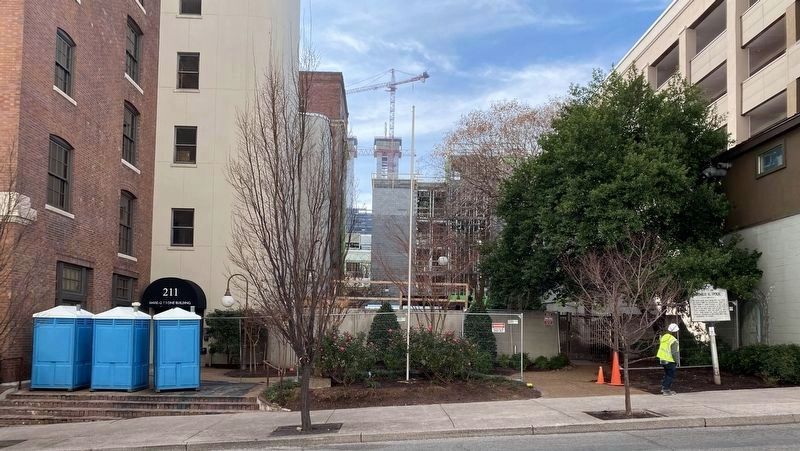
Photographed by Shane Oliver, December 20, 2021
2. James K. Polk Marker Wide View
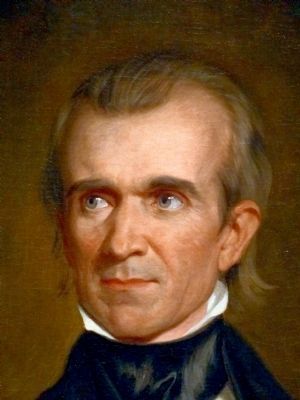
Photographed by Allen C. Browne, February 16, 2015
3. James K. Polk
This 1846 portrait of James K. Polk by George P. A. Healy hangs in the National Portrait Gallery in Washington, DC.
“It is often said that James K. Polk was the first ‘dark horse’ to claim a presidential nomination, and during his White House campaign of 1844, his opponents were fond of sneering, ‘Who is James Polk?’ Once he was in office, however, the question quickly lost its sarcastic bite. A diligent worker who abhorred the thought of time unprofitably spent, Polk set four goals for his presidency reducing tariffs, creating an independent treasury system, settling the Oregon boundary dispute with Great Britain, and acquiring California. None of the four objectives was easily reached, and gaining California meant going to war with Mexico. By his administration's close, however, all had been accomplished. Unfortunately, Polk's success came at great personal cost. A spent man., he died within four months of retiring to private life.” — National Portrait Gallery
“It is often said that James K. Polk was the first ‘dark horse’ to claim a presidential nomination, and during his White House campaign of 1844, his opponents were fond of sneering, ‘Who is James Polk?’ Once he was in office, however, the question quickly lost its sarcastic bite. A diligent worker who abhorred the thought of time unprofitably spent, Polk set four goals for his presidency reducing tariffs, creating an independent treasury system, settling the Oregon boundary dispute with Great Britain, and acquiring California. None of the four objectives was easily reached, and gaining California meant going to war with Mexico. By his administration's close, however, all had been accomplished. Unfortunately, Polk's success came at great personal cost. A spent man., he died within four months of retiring to private life.” — National Portrait Gallery
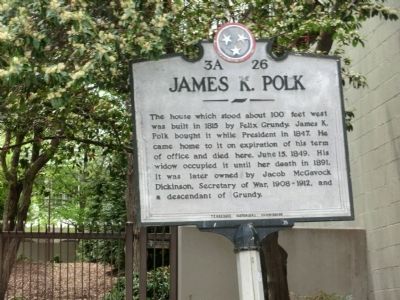
Photographed by Don Morfe, April 18, 2014
4. James K. Polk Marker
Credits. This page was last revised on February 7, 2023. It was originally submitted on June 11, 2014, by Don Morfe of Baltimore, Maryland. This page has been viewed 1,060 times since then and 36 times this year. Last updated on December 24, 2021, by Shane Oliver of Richmond, Virginia. Photos: 1, 2. submitted on December 24, 2021, by Shane Oliver of Richmond, Virginia. 3. submitted on July 17, 2015, by Allen C. Browne of Silver Spring, Maryland. 4. submitted on June 11, 2014, by Don Morfe of Baltimore, Maryland. • Mark Hilton was the editor who published this page.
