Princeton in Gibson County, Indiana — The American Midwest (Great Lakes)
Lyles Station
1849 — Present
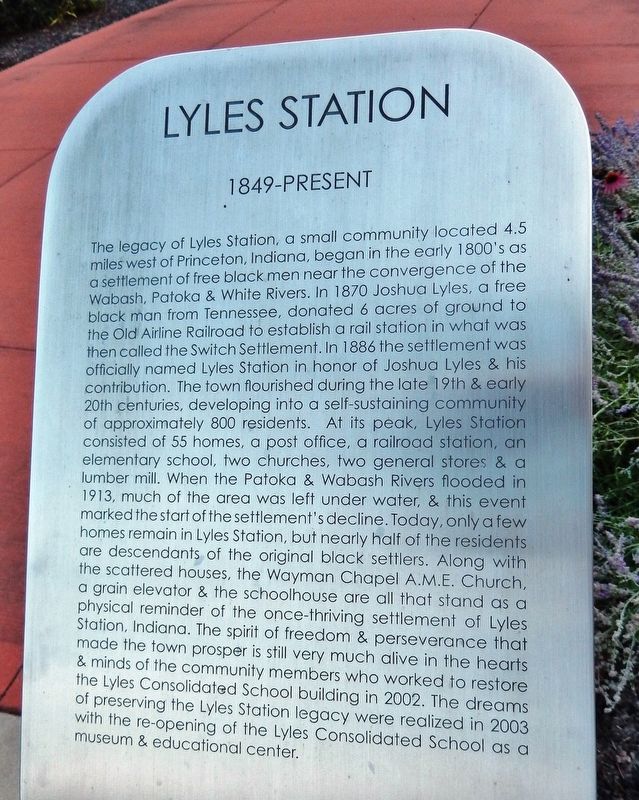
Photographed by Cosmos Mariner, August 23, 2021
1. Lyles Station Marker
this page online
Topics. This historical marker is listed in these topic lists: African Americans • Industry & Commerce • Settlements & Settlers. A significant historical year for this entry is 1870.
Location. 38° 21.332′ N, 87° 34.216′ W. Marker is in Princeton, Indiana, in Gibson County. It is at the intersection of West Broadway Street (Indiana Route 65) and North West Street, on the left when traveling east on West Broadway Street. Marker is located in the heritage plaza at the southeast corner of Downtown Princeton Park. Touch for map. Marker is at or near this postal address: 300 West Broadway Street, Princeton IN 47670, United States of America.
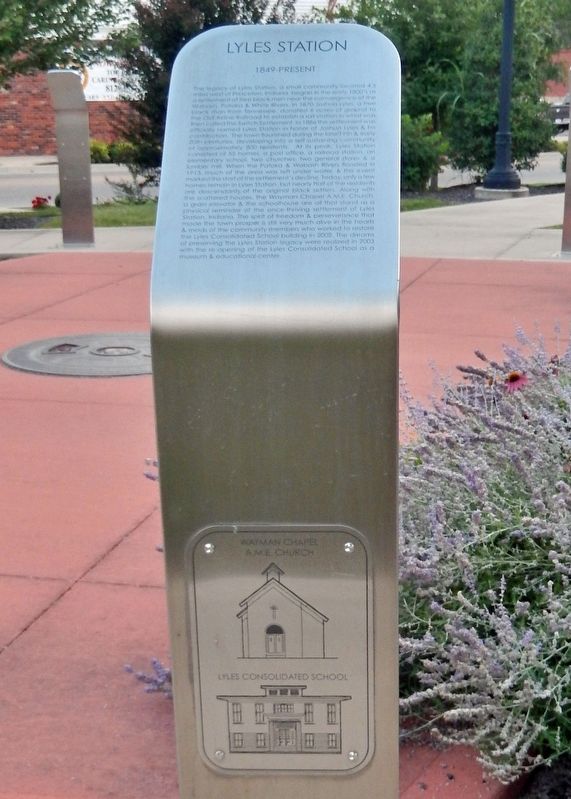
Photographed by Cosmos Mariner, August 23, 2021
2. Lyles Station Marker

Regionally, this marker is in Indiana’s Tri-State Region, in Southern Indiana, and in the Wabash Valley. It is also in the American Midwest and in the Corn Belt. Globally, it is in North America, the Western Hemisphere, the Western World, and the Anglosphere. Historically, it finds itself in what was once the territory of the Mississippian Culture and also the Northwest Territory.
Other nearby markers. At least 8 other markers are within walking distance of this marker: Industry (here, next to this marker); Tri-State Tornado (here, next to this marker); Coal Mining (here, next to this marker); Patoka Wildlife Refuge (here, next to this marker); Railroads (a few steps from this marker); Agriculture (a few steps from this marker); Prince Town (a few steps from this marker); Early Settlers (a few steps from this marker). Touch for a list and map of all markers in Princeton.
Related markers. Click here for a list of markers that are related to this marker. Princeton, Indiana
Also see . . . Lyles Station, Indiana.
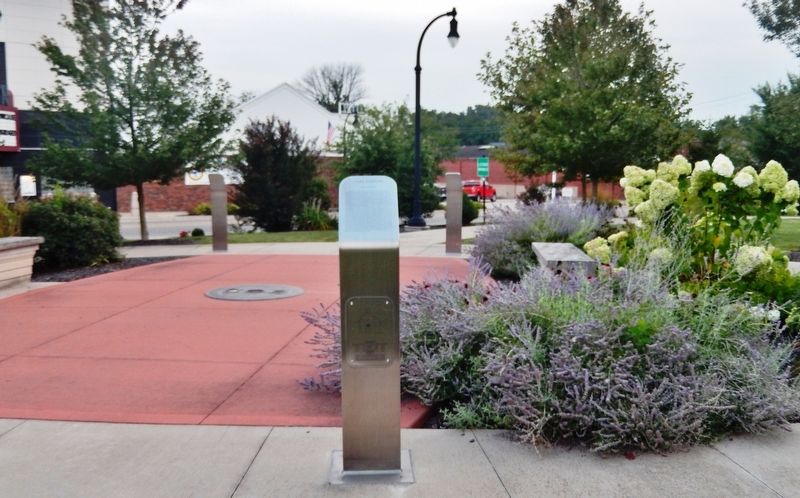
The roots of Lyles Station began around the 1840s when two free(Submitted on January 18, 2022, by Cosmos Mariner of Cape Canaveral, Florida.)African Americans from Tennessee, Joshua Lyles and his brother Sanford Lyles, purchased land near the Wabash, White, and Patoka Rivers in southwestern Indiana with help from local Quakers. They and their families improved and farmed the land, so that by the Civil War their holdings consisted of hundreds of acres. Other newly relocated blacks joined them. According to tradition, Lyles aided fugitive slaves coming north from Tennessee during the antebellum period, offering them a safe haven to either settle in or to rest until they continued on to other locations on the Underground Railroad. The community was then known as the Switch Settlement.Photographed by Cosmos Mariner, August 23, 20213. Lyles Station Marker
Credits. This page was last revised on January 20, 2022. It was originally submitted on January 17, 2022, by Cosmos Mariner of Cape Canaveral, Florida. This page has been viewed 477 times since then and 35 times this year. Photos: 1, 2, 3. submitted on January 18, 2022, by Cosmos Mariner of Cape Canaveral, Florida.
