
Troy Hill in Pittsburgh in Allegheny County, Pennsylvania — The American Northeast (Mid-Atlantic)
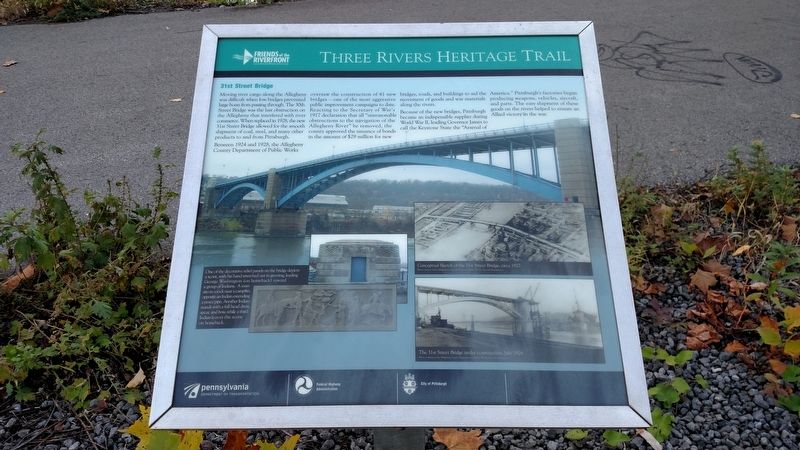
31st Street Bridge
Photographed by Mike Wintermantel, November 10, 2016
1. 31st Street Bridge Marker
Between 1924 and 1928, the Allegheny County Department of Public Works oversaw the construction of 41 new bridges-one of the most aggressive public improvement campaigns to date. Reacting to the Secretary of War's 1917 declaration that all "unreasonable obstructions to the navigation of the Allegheny River" be removed, the county approved the issuance of bonds in the amount of $29 million for new bridges, roads, and buildings to aid the movement of goods and war materials along the rivers.
Because of the new bridges, Pittsburgh became an indispensible supplier during World War II, leading Governor James to call the Keystone State the "Arsenal of America." Pittsburgh's factories began producing weapons, vehicles, aircraft, and parts. The easy shipment of these
this page online
Erected by Friends of the Riverfront.
Topics. This historical marker is listed in these topic lists: Bridges & Viaducts • Industry & Commerce • War, World II. A significant historical year for this entry is 1928.
Location. 40° 27.881′ N, 79° 58.76′ W. Marker is in Pittsburgh, Pennsylvania, in Allegheny County. It is in Troy Hill. It can be reached from the intersection of Three Rivers Heritage Trail and 31st Street Bridge. Marker is located under the 31st Street Bridge on the Three Rivers Heritage Trail. Touch for map. Marker is in this post office area: Pittsburgh PA 15212, United States of America. Touch for directions.

Regionally, this marker is in the American Northeast, in the Mid-Atlantic, in the Ohio River Valley, in Appalachia, and specifically in Northern Appalachia. Globally, it is in North America, the Western Hemisphere, the Western World, and the Anglosphere. Historically, it finds itself in what was once the Viceroyalty of New France, the Haudenosaunee (Iroquois) Confederacy, and one of the original Thirteen Colonies.
Other nearby markers. At
Photographed by Mike Wintermantel, November 10, 2016
2. 31st Street Bridge Marker
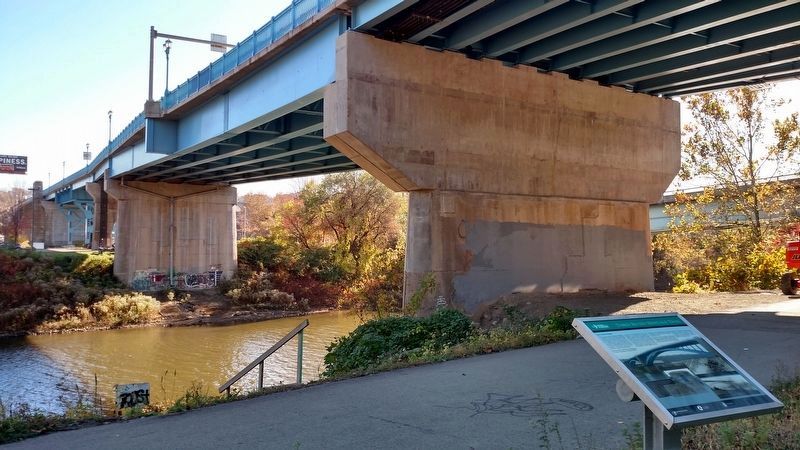
31st Street Bridge in the background
Also see . . .
1. 31st Street Bridge. Pghbridges.com (Submitted on November 11, 2016, by Mike Wintermantel of Pittsburgh, Pennsylvania.)
2. Friends of the Riverfront - Three Rivers Heritage Trail. (Submitted on November 11, 2016, by Mike Wintermantel of Pittsburgh, Pennsylvania.)
Photographed by Mike Wintermantel, November 10, 2016
3. 31st Street Bridge Marker
lower left photo
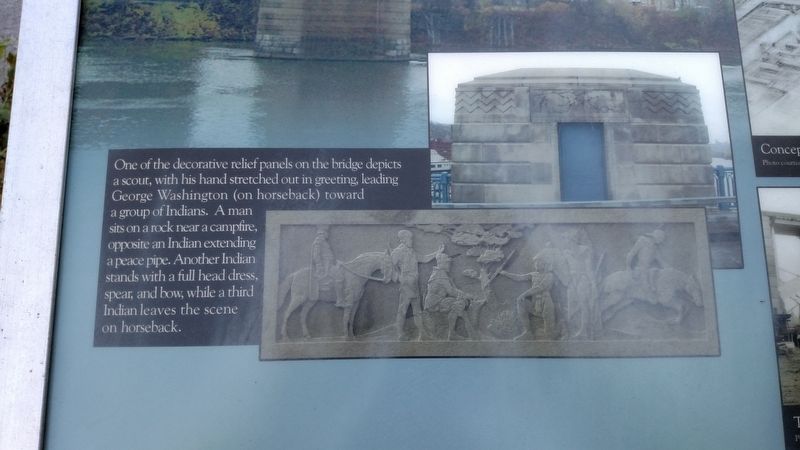
One of the decorative relief panels on the bridge depicts a scout, with his hand stretched out in greeting, leading George Washington (on horseback) toward a group of Indians. A man sits on a rock near a campfire, opposite an Indian extending a peace pipe. Another Indian stands with a full head dress, spear, and bow, while a third Indian leaves the scene on horseback.
One of the decorative relief panels on the bridge depicts a scout, with his hand stretched out in greeting, leading George Washington (on horseback) toward a group of Indians. A man sits on a rock near a campfire, opposite an Indian extending a peace pipe. Another Indian stands with a full head dress, spear, and bow, while a third Indian leaves the scene on horseback.
Photographed by Mike Wintermantel, November 10, 2016
4. 31st Street Bridge Marker
lower right photos
top photo
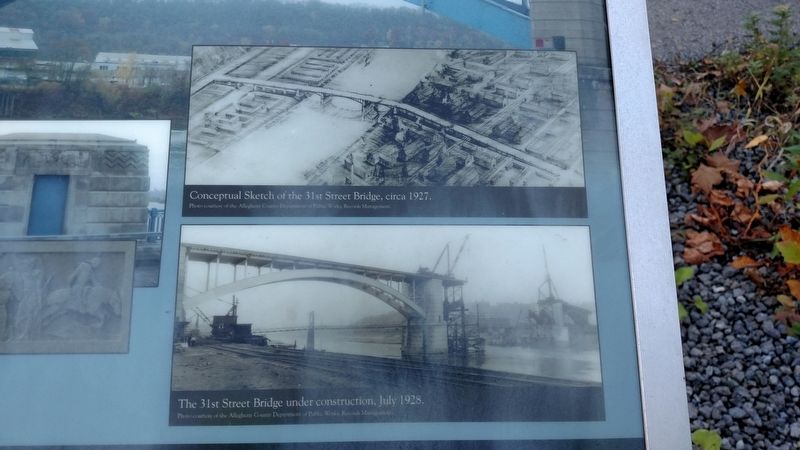
Conceptual sketch of the 31st Street Bridge, circa 1927.
bottom photo
The 31st Street Bridge under construction, July 1928.
top photo
Conceptual sketch of the 31st Street Bridge, circa 1927.
bottom photo
The 31st Street Bridge under construction, July 1928.
Credits. This page was last revised on February 2, 2023. It was originally submitted on November 11, 2016, by Mike Wintermantel of Pittsburgh, Pennsylvania. This page has been viewed 933 times since then and 50 times this year. Last updated on February 2, 2022, by Kelsey Ripper of Pittsburgh, Pennsylvania. Photos: 1, 2, 3, 4. submitted on November 11, 2016, by Mike Wintermantel of Pittsburgh, Pennsylvania. • J. Makali Bruton was the editor who published this page.
