Dalton in Whitfield County, Georgia — The American South (South Atlantic)
William C. Martin House
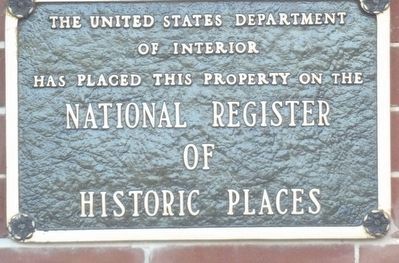
Photographed by Duane and Tracy Marsteller, June 11, 2022
1. William C. Martin House Marker
of Interior
has placed this property on the
National Register
of
Historic Places
Topics. This historical marker is listed in this topic list: Architecture. A significant historical year for this entry is 1911.
Location. 34° 46.272′ N, 84° 58.248′ W. Marker is in Dalton, Georgia, in Whitfield County. It is on South Selvidge Street south of West Crawford Street, on the left when traveling south. Touch for map. Marker is at or near this postal address: 101 S Selvidge St, Dalton GA 30720, United States of America. Touch for directions.

Regionally, this marker is in the Mountains. It is also in the American South, specifically in the Deep South, in Appalachia, and specifically in Southern Appalachia. Globally, it is in North America, the Western Hemisphere, the Western World, and the Anglosphere. Historically, it finds itself in what was once the original Cherokee Nation, the territory of the Mississippian Culture, one of the original Thirteen Colonies, one of the Confederate States of America, and the Antebellum South.
Other nearby markers. At least 8 other markers are within walking
this page online
Another marker is no longer nearby. Joseph E. Johnston Memorial (was approx. 0.2 miles away but has been permanently removed).
Regarding William C. Martin House. Excerpt from the National Register nomination:
… Architecturally it is significant as an example of a Neo-Classically styled house built in the early 20th century by one of Dalton's most prominent civic figures. Major design features of the Neo-Classical style include the two-story front portico with its six Ionic columns and a balcony. The house reflects the finest architecture available at the time consonant with the owner's economic and social status. It is significant also for retaining much of its architectural integrity, and itsoriginal location and setting, even though it is downtown, surrounded by commercial and governmental structures, and has been adaptively reused as a library. It is significant in local history for its association with William C. Martin (1861-1941), the original owner. At the time he built this house he had been a successful lawyer, bank president, state senator, and chairman of the county board of education.…Photographed by Duane and Tracy Marsteller, June 11, 20222. William C. Martin House Marker
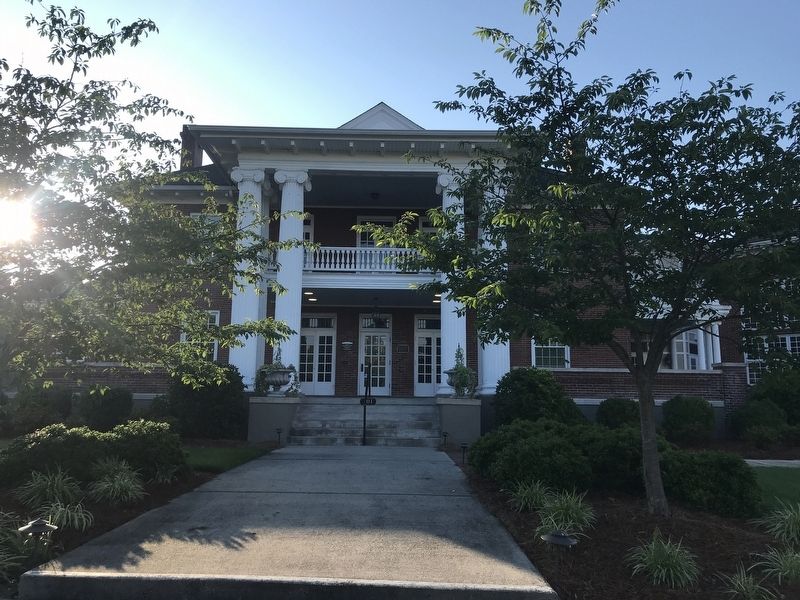
Also see . . . William C. Martin House (PDF). National Register nomination for the building, which was listed in 1982. (National Archives) (Submitted on June 13, 2022, by Duane and Tracy Marsteller of Murfreesboro, Tennessee.)
Credits. This page was last revised on June 13, 2022. It was originally submitted on June 13, 2022, by Duane and Tracy Marsteller of Murfreesboro, Tennessee. This page has been viewed 967 times since then and 85 times this year. Photos: 1, 2. submitted on June 13, 2022, by Duane and Tracy Marsteller of Murfreesboro, Tennessee.
