Cherokee in Swain County, North Carolina — The American South (South Atlantic)
People of the Mountains
Photographed by Stanley and Terrie Howard, March 14, 2009
1. People of the Mountains Marker
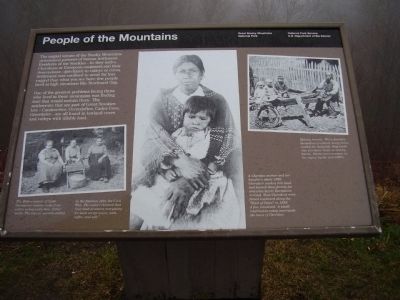
One of the greatest problems facing those who lived in these mountains was finding land that would sustain them. The settlements that are part of Great Smokies lore - Cataloochee, Oconaluftee, Cades Cove, Greenbrier - are all found in lowland coves and valleys with tillable land.
Erected by National Park Service U.S. Department of the Interior.
Topics and series. This historical marker is listed in these topic lists: Indigenous Peoples and Communities • Settlements & Settlers. In addition, it is included in the Trail of Tears series list.
Location. 35° 36.643′ N, 83° 25.514′ W. Marker is in Cherokee, North Carolina, in Swain County. It is on U.S. 441. Touch for map. Marker is in this post office area: Cherokee NC 28719, United
this page online

Regionally, this marker is in the Mountains and specifically in the Great Smoky Mountains. It is also in the American South, specifically in the Upper South, in Appalachia, and specifically in Southern Appalachia. Globally, it is in North America, the Western Hemisphere, the Western World, and the Anglosphere. Historically, it finds itself in what was once the original Cherokee Nation, the territory of the Mississippian Culture, one of the original Thirteen Colonies, one of the Confederate States of America, and the Antebellum South.
Other nearby markers. At least 8 other markers are within walking distance of this marker: Land of Diversity (a few steps from this marker in Tennessee); Hands That Built (within shouting distance of this marker); “To the free people of America” (within shouting distance of this marker); The Appalachian Trail (within shouting distance of this marker); A Mountain Sanctuary (within shouting distance of this marker); The Great Smokies (within shouting distance of this marker); Great Smoky Mountains National Park (within shouting distance of this marker);
Photographed by Bill Coughlin, August 6, 2012
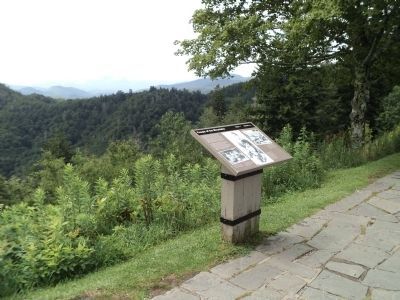
2. Marker at the Great Smoky Mountains NP
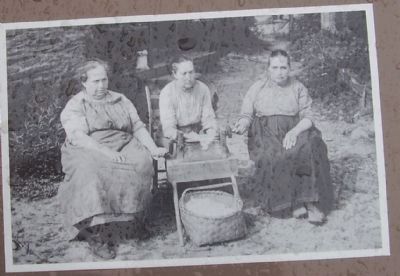
More about this marker. On the lower left is a photo showing The Walker sisters of Little Greenbrier remove seeds from cotton using a gin their father made. The sisters' parents settled in the Smokies after the Civil War. The sisters claimed that "our land produces everything we need except sugar, soda, coffee, and salt.
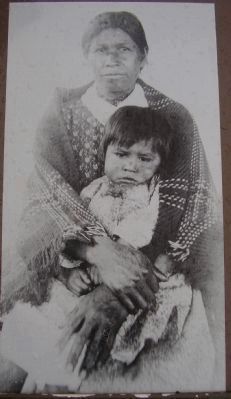
In the center is a photo of A Cherokee mother and her daughter, about 1888. Cherokees worked this land and hunted these forests for centuries before Europeans arrived. Most Cherokees were forced westward along the "Trail of Tears" in 1838. A few remained. A small reservation today surrounds the town of Cherokee.
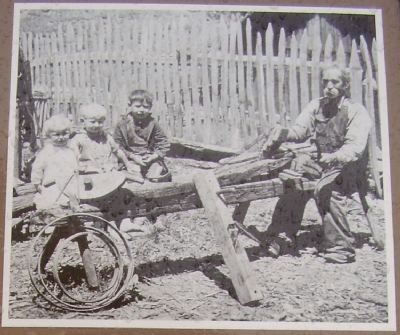
In the upper right is a photo of Making barrels. While families themselves produced many items needed for daily life, they could also purchase items in nearby towns. Stores were common in the region by the mid-1800s.
Photographed by Stanley and Terrie Howard, March 14, 2009
3. People of the Mountains Marker
A Cherokee mother and her daughter, about 1888. Cherokees worked this land and hunted these forests for centuries before Europeans arrived. Most Cherokees were forced westward along the "Trail of Tears" in 1888. A few remained. A small reservation today surrounds the town of Cherokee.
Photographed by Stanley and Terrie Howard, March 14, 2009
4. Nearby Land of Blue Smoke Marker
Photographed by Stanley and Terrie Howard, March 14, 2009
5. People of the Mountains Marker
The Walker sisters of Little Greenbrier remove seeds from cotton using a gin their father made. The sister' parents settled in the Smokies after the Civil War. The sisters claimed that "our land produces everything we need except sugar, soda, coffee, and salt."
Photographed by Stanley and Terrie Howard, March 14, 2009
6. People of the Mountains Marker
Making barrels. While families themselves produced many items needed for daily life, they could also purchase items in nearby towns. Stores were common in the region by the mid-1800s.
Credits. This page was last revised on June 16, 2016. It was originally submitted on June 18, 2009, by Stanley and Terrie Howard of Greer, South Carolina. This page has been viewed 1,593 times since then and 56 times this year. Photos: 1. submitted on June 18, 2009, by Stanley and Terrie Howard of Greer, South Carolina. 2. submitted on August 29, 2012, by Bill Coughlin of Woodland Park, New Jersey. 3, 4, 5, 6. submitted on June 18, 2009, by Stanley and Terrie Howard of Greer, South Carolina. • Craig Swain was the editor who published this page.
