
Old Sacramento in Sacramento County, California — The American West (Pacific Coastal)
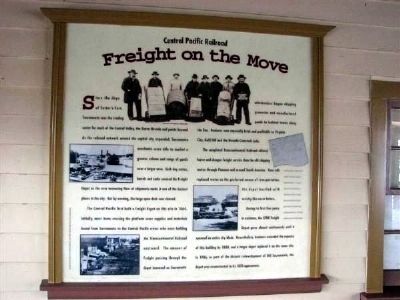
Freight on the Move
Central Pacific Railroad
Photographed by Syd Whittle, February 11, 2009
1. Freight on the Move Marker
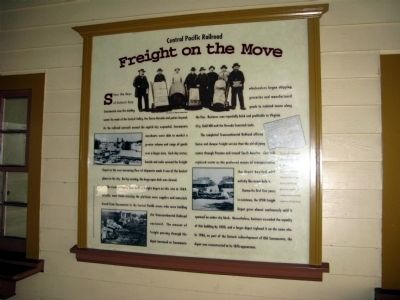
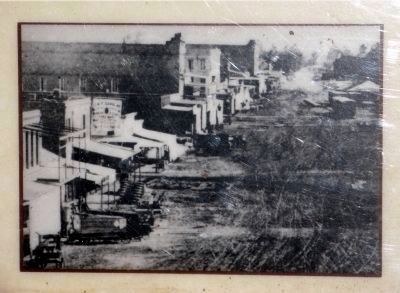
Since the days of Sutter’s Fort, Sacramento was the trading center for much of the Central Valley, the Sierra Nevada and points beyond. As the railroad network around the capital city expanded, Sacramento merchants were able to market a greater volume and range of goods over a larger area. Each day crates, barrels and sacks covered the Freight Depot as the ever increasing flow of shipments made it one of the busiest places in the city. But by evening, the large open deck was cleared. The Central Pacific first built a freight depot on this site in 1864. Initially, most items crossing the platform were supplies and materials bound from Sacramento to the Central Pacific crews who were building the Transcontinental Railroad eastward. The amount of freight passing through the depot increased as Sacramento wholesalers began shipping groceries and manufactured goods to isolated towns along the line. Business was especially brisk and profitable to Virginia City, Gold Hill and the Nevada Comstock Lode.
The completed Transcontinental Railroad offered faster and cheaper freight service than the old shipping routes through Panama
this page online
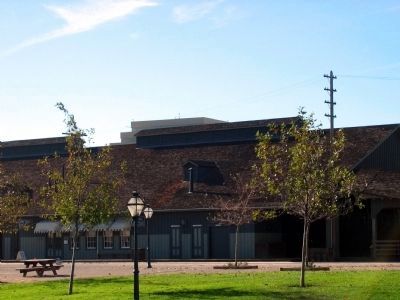
During its first five years in existence, the CPRR Freight Depot grew almost continuously until it spanned an entire city block. Nevertheless, business exceeded the capacity of this building by 1880, and a larger depot replaced it on the same site. In 1986, as part of the historic redevelopment of Old Sacramento, the depot was reconstructed to its 1876 appearance.
Topics and series. This historical marker is listed in these topic lists: Industry & Commerce • Railroads & Streetcars. In addition, it is included in the First Transcontinental Railroad series list. A significant historical year for this entry is 1864.
Location. Marker has been reported permanently removed. It was located near 38° 34.953′ N, 121° 30.367′ W. Marker was in Sacramento, California, in Sacramento County. It was in Old Sacramento. It could be reached from Front Street. Marker is mounted in the walkway between the street and railroad tracks at the Depot. Touch for map. Marker was in this post office area: Sacramento
Photographed by Syd Whittle, February 11, 2009
2. Freight on the Move Marker
We have been informed that this marker is no longer there and will not be replaced. This page is an archival view of what was.
Regionally, this marker was in the Sacramento Valley and specifically in the Central Valley. It was also on the American Pacific Coast. Globally, it was in North America, on the Ring of Fire, in the Pacific Rim, in the Western Hemisphere, in the Western World, and in the Anglosphere. Historically, it found itself in what was once New Spain and also Mexico’s Alta California.

Other nearby markers. At least 8 other markers are within walking distance of this location: Mile Marker 0 (here, next to this marker); Pony Express River Steamer “Antelope” (a few steps from this marker); Lady Adams Building (within shouting distance of this marker); Booth Building (about 300 feet away); Vernon-Brannan House (about 400 feet away); Sacramento's Early Waterfront (about 500 feet away); New England Seed Store (about 500 feet away); Eagle Theatre (about 500 feet away). Touch for a list and map of all markers in Sacramento.
Other markers no longer nearby. First Transcontinental Railroad Groundbreaking Site
Photographed by Syd Whittle, February 11, 2009
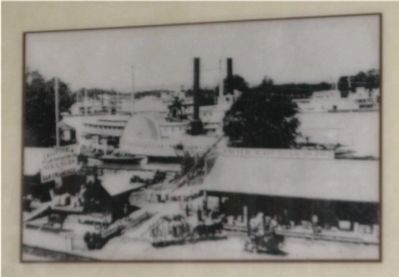
3. Close-Up of Photo on Marker
Also see . . . University of California. Photo of the Levee and Central Pacific Railroad Freight Trains, Sacramento, circa 1860/1870 (Submitted on February 11, 2009, by Syd Whittle of Mesa, Arizona.)
Photographed by Syd Whittle, February 11, 2009
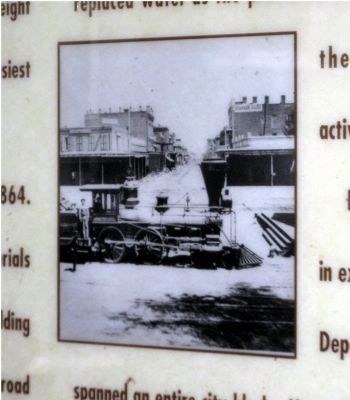
4. Close-Up of Photo on Marker
Photographed by Syd Whittle, February 11, 2009
5. Close-Up of Photo on Marker
Photographed by Syd Whittle, February 11, 2009
6. Close-Up of Photo on Marker
[Text Reads:]
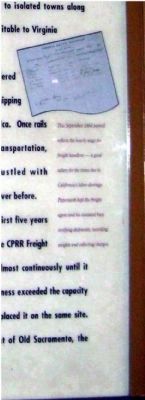
The September 1864 payroll reflects the hourly wage for freight handlers - a good salary for the times due to California's labor shortage. Paperwork kept the freight agent and his assistant busy verifying shipments, recording weights and collecting charges.
Photographed by Syd Whittle, November 14, 2005
7. Central Pacific Railroad Freight Depot
Photographed by Syd Whittle, February 11, 2009
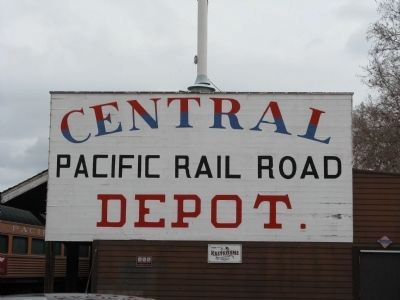
8. Central Pacific Railroad Freight Depot
Credits. This page was last revised on February 7, 2023. It was originally submitted on February 11, 2009, by Syd Whittle of Mesa, Arizona. This page has been viewed 1,712 times since then and 28 times this year. Last updated on July 4, 2022, by Joseph Alvarado of Livermore, California. Photos: 1, 2, 3, 4, 5, 6, 7, 8. submitted on February 11, 2009, by Syd Whittle of Mesa, Arizona.
