Middlesex Township near Carlisle in Cumberland County, Pennsylvania — The American Northeast (Mid-Atlantic)
HESCO Barriers
U.S. Army Heritage and Education Center
Photographed by Don Morfe, May 31, 2015
1. Hesco Barriers Marker
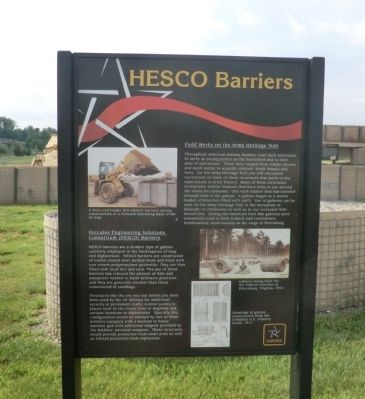
Hercules Engineering Solutions Consortium (HESCO) Barriers
HESCO Barriers are a modern type of gabion currently employed in the battlespaces of Iraq and Afghanistan. HESCO barriers are constructed of Galfan coated steel welded mesh and lined with non-woven polypropylene geotextile. They are then filled with local dirt and rock. The use of these barriers had reduced the amount of time and manpower needed to build defensive positions and they are generally sturdier than those constructed of sandbags.
Structures like the one you see before you have been used by the US Military for additional security at permanent traffic control points in places as the Green Zone in Baghdad and various locations in Afghanistan. Typically this configuration would be manned by two or three Soldiers equipped with a medium to heavy machine gun with additional support provided by the Soldiers’ personal weapons. These structures would provide protection from small arms as well as limited protection from explosions.
Field Works on the Army Heritage Trail
Throughout American history Soldiers have built structures to serve as strong points on the
this page online
(Inscription below the photo in the upper left)
A front end loader fills HESCO barriers during construction of a Forward Operating Base (FOB) in Iraq. (Inscription below the photo in the upper right) Gabions being built for the Federal trenches at Petersburg, Virginia, 1864.
(Inscription beside the drawing in the lower right)
Drawings of gabion
Photographed by Don Morfe, May 31, 2015
2. Hesco Barriers Marker
Erected by U.S. Army Heritage and Education Center.
Topics. This memorial is listed in these topic lists: War, 1st Iraq & Desert Storm • War, 2nd Iraq • War, Afghanistan.
Location. Memorial has been reported permanently removed. It was located near 40° 12.45′ N, 77° 9.546′ W. Memorial was near Carlisle, Pennsylvania, in Cumberland County. It was in Middlesex Township. It could be reached from Army Heritage Drive. Touch for map. Memorial was in this post office area: Carlisle PA 17013, United States of America.
We have been informed that this memorial is no longer there and will not be replaced. This page is an archival view of what was.
Regionally, this memorial was in South-Central Pennsylvania and in Greater Harrisburg. It was also in the American Northeast, in the Mid-Atlantic, in Appalachia, and specifically in Northern Appalachia. Globally, it was in North America, the Western Hemisphere, the Western World, and the Anglosphere. Historically, it found itself in what was once the Haudenosaunee

Photographed by Don Morfe, May 31, 2015
3. Hesco Barriers Marker
Other nearby markers. At least 8 other markers are within walking distance of this location: Bunkhouse: (here, next to this marker); The “Humvee” – High Mobility Multipurpose Wheeled Vehicle (HMMWV) (a few steps from this marker); Tactical Operations Center (TOC): (a few steps from this marker); Guard Tower: (a few steps from this marker); Afghanistan Combat Outpost, circa 2005 (a few steps from this marker); Operating for Freedom (a few steps from this marker); Improvised Explosive Devices (IED) (within shouting distance of this marker); “Buffalo” A2 Mine Protected Clearance Vehicle (MPCV) (within shouting distance of this marker). Touch for a list and map of all markers in Carlisle.
Other markers no longer nearby. HESCO in Iraq (was a few steps from this marker but has been permanently removed); HESCO in Afghanistan (was a few steps from this marker but has been permanently removed); HESCO at Home (was a few steps from this marker but has been permanently removed); Specialist (SPC) Charles Posey III (was within shouting distance of this marker but has
Photographed by Don Morfe, May 31, 2015
4. Sign at the entrance to the US Army Heritage and Education Center
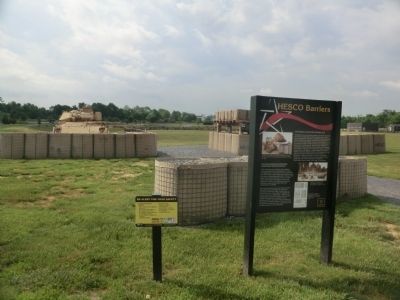
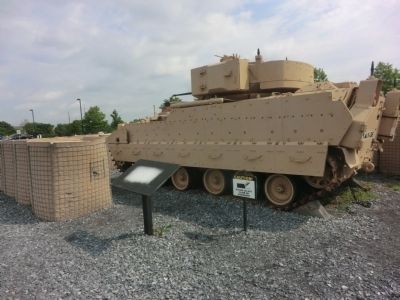
Regarding HESCO Barriers. The area is now an Afghanistan Combat Outpost, circa 2005, which incorporates the HESCO barriers but not the wayside.
Credits. This page was last revised on August 6, 2026. It was originally submitted on June 5, 2015, by Don Morfe of Baltimore, Maryland. This page has been viewed 988 times since then and 87 times this year. Last updated on July 13, 2022, by Carl Gordon Moore Jr. of North East, Maryland. Photos: 1, 2, 3, 4. submitted on June 5, 2015, by Don Morfe of Baltimore, Maryland. • J. Makali Bruton was the editor who published this page.
