Waco in McLennan County, Texas — The American South (West South Central)
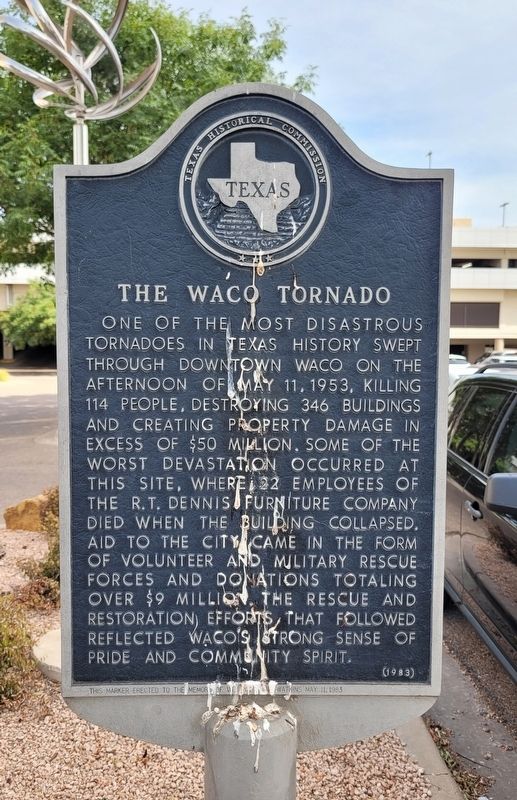
The Waco Tornado
Photographed by James Hulse, August 4, 2022
1. The Waco Tornado Marker
Erected 1983 by Texas Historical Commission. (Marker Number 5449.)
Topics. This historical marker is listed in this topic list: Disasters. A significant historical date for this entry is May 11, 1953.
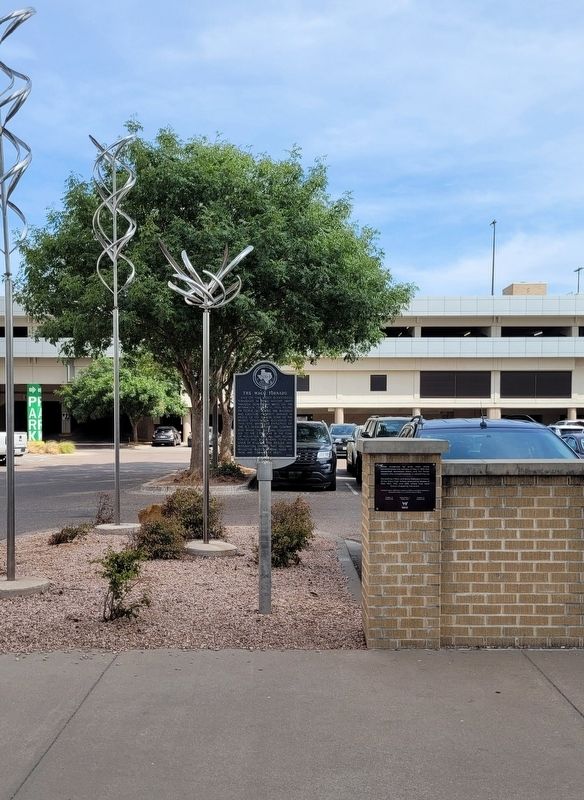
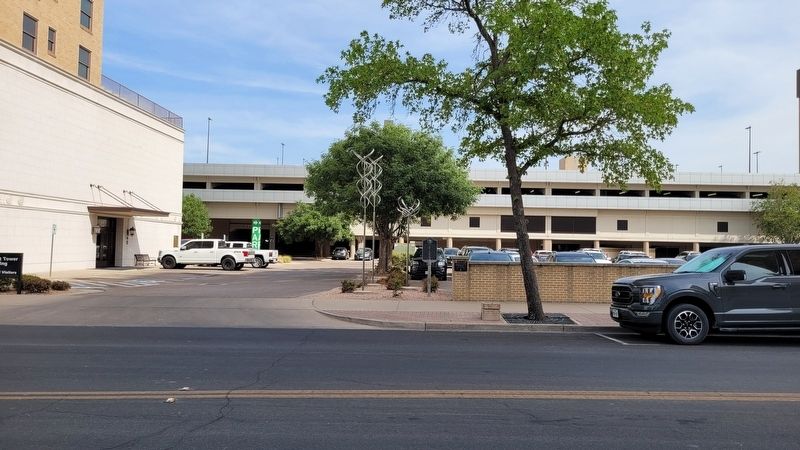
Location. 31° 33.426′ N, 97° 7.878′ W. Marker is in Waco, Texas, in McLennan County. It is on Austin Avenue 0.1 miles west of South 4th Street, on the left when traveling west. The marker is located south side of the street at the entrance to a parking lot. Touch for map. Marker is at or near this postal address: 400 Austin Avenue, Waco TX 76701, United States of America. Touch for directions.

Regionally, this marker is in the Prairies & Lakes Region. It is also in the American South. Globally, it is in North America, a Gulf of Mexico state, the Western Hemisphere, the Western World, and the Anglosphere. Historically, it finds itself in what was once New Spain, the Republic of Texas, one of the Confederate States of America, and the Antebellum South.
Other nearby markers. At least 8 other markers are within walking distance of this marker: Alico Building (within shouting distance of this marker); Brann-Davis Shootings (about 300 feet away, measured in a direct line); Gerald-Harris Shooting (about 300 feet away); The Courthouses of McLennan County
this page online
Also see . . . Waco Tornado. Waco History
On the morning of May 11, the New Orleans Weather Bureau issued a tornado warning for West and Central Texas. Yet life in Waco continued at its normal pace. Some Wacoans placed stock in the old Waco Indian legend that claimed that the hills and bluffs surrounding the city kept it safe from tornados. Others, such as Baylor geologist emeritus O.T. Hayward, argued that Waco was situated atop an an uplift on the Balcones escarpment (or fault line) served to precipitate severe weather along the I-35 corridor, which roughly follows the escarpment. Still, few took heed of the storm warnings issued by the National Weather Service that day, as the weather was the same as it had been for days: warm and muggy. Source: Amanda Sawyer(Submitted on August 8, 2022, by James Hulse of Medina, Texas.)
Photographed by James Hulse
2. The Waco Tornado Marker
Photographed by James Hulse
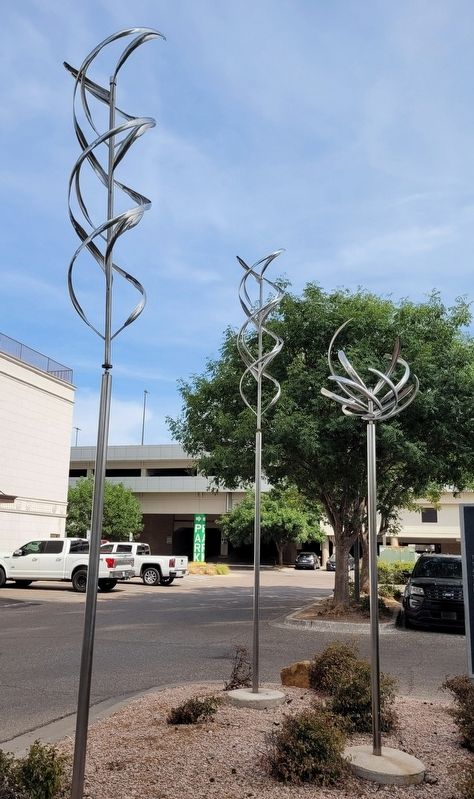
3. Sculptures by Mark White commemorate the Waco Tornado
Photographed by James Hulse, August 4, 2022
4. The view of the Waco Tornado Marker from the street
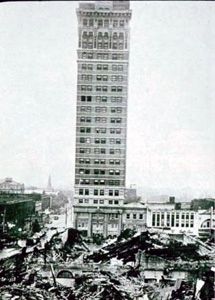
Public Domain - NWS Fort Worth/Dallas, Texas, circa May 11, 1953
5. The Waco Tornado
The ALICO building, the tallest structure in Waco, looming over the destroyed downtown area. The skyscraper itself only received minor damage.
Credits. This page was last revised on August 8, 2022. It was originally submitted on August 7, 2022, by James Hulse of Medina, Texas. This page has been viewed 1,089 times since then and 121 times this year. Photos: 1, 2, 3, 4, 5. submitted on August 8, 2022, by James Hulse of Medina, Texas.
