Rutherford College in Burke County, North Carolina — The American South (South Atlantic)
Rutherford College

Photographed by Stanley and Terrie Howard, June 28, 2009
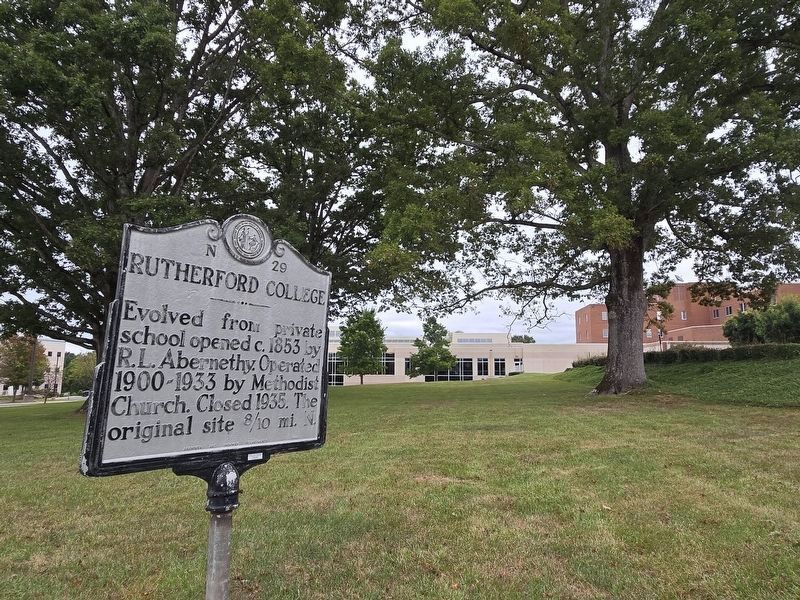
1. Rutherford College Marker
Erected 1958 by Archives and Highway Departments. (Marker Number N-29.)
Topics and series. This historical marker is listed in this topic list: Education. In addition, it is included in the North Carolina Division of Archives and History series list. A significant historical year for this entry is 1853.
Location. 35° 44.871′ N, 81° 31.48′ W. Marker is in Rutherford College, North Carolina, in Burke County. It is on Malcolm Boulevard (County Route 1001) 0.1 miles south of Campus Street, on the right when traveling north. Touch for map. Marker is at or near this postal address: 730 Malcolm Blvd, Connelly Springs NC 28612, United States of America. Touch for directions.

Regionally, this marker is in the Mountains. It is also in the American South, specifically in the Upper South, in Appalachia, and specifically in Southern Appalachia. Globally, it is in North America, the Western Hemisphere, the Western World, and the Anglosphere. Historically, it finds itself in what
this page online
Other nearby markers. At least 8 other markers are within 3 miles of this marker, measured as the crow flies: Black Lantern Tea Room (about 300 feet away, measured in a direct line); Lovelady Volunteer Fire Department (about 600 feet away); Stump Institute (about 700 feet away); Rutherford College Water Corporation Office (approx. 0.2 miles away); Rutherford College Town Hall (approx. 0.2 miles away); a different marker also named Rutherford College (approx. 0.2 miles away); Abernethy Memorial United Methodist Church (approx. ¼ mile away); History of Bocce (approx. 2.1 miles away). Touch for a list and map of all markers in Rutherford College.
Related marker. Click here for another marker that is related to this marker. A similar NC marker N-29 erected in 1954.
Also see . . . History of Rutherford College. Town website entry:
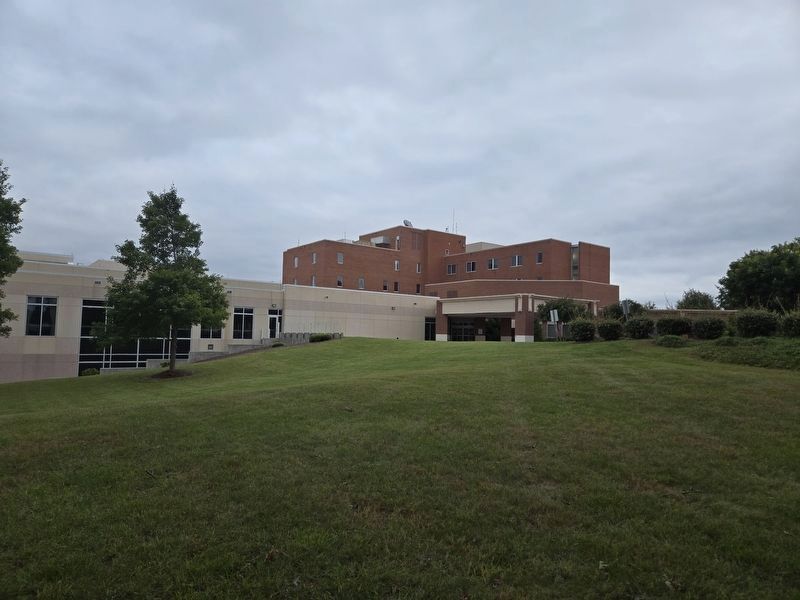
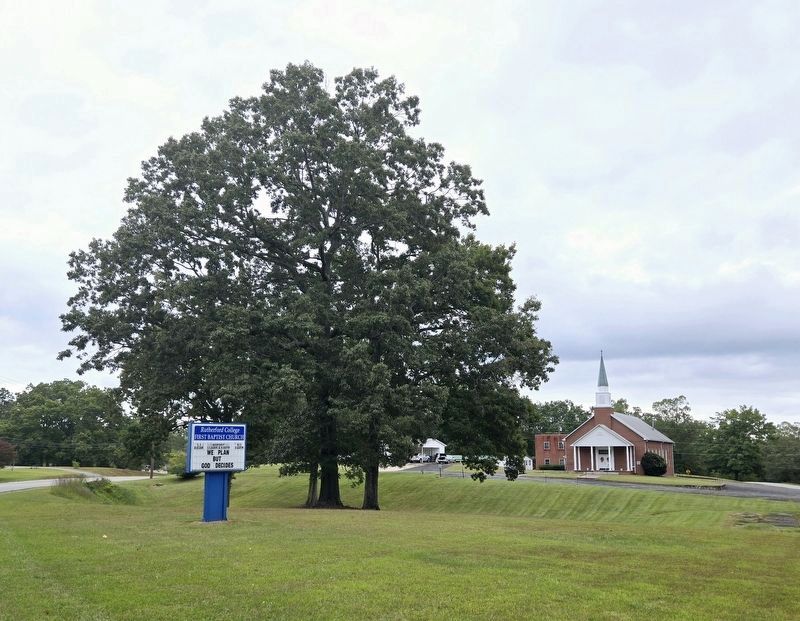
The Town of Rutherford College was named for the college that was located here years ago, in the area where Valdese General Hospital(Submitted on September 17, 2024, by Mark Parker of Hickory, North Carolina.)now resides... Owl Hollow School in the community of Rutherford College was operated by Reverend Basil Gaither Jones until 1850, when Reverend R.L. Abernethy, a preacher, a teacher, and a Lincoln County native residing in Lenoir, North Carolina, was asked to take over the school. The school expanded in 1853 and was renamed Rutherford Academy due to the financial help provided by John T. Rutherford, one of the richest men in Burke County... In 1868, R.L. Abernethy returned to the school and reopened it as Rutherford Seminary, a four-year college, and the small community around the school incorporated as Excelsior. Three years later the town was renamed Rutherford College. In 1888 Rutherford Seminary had ten professors and 200 students. In 1891, the college burned at its original site (where the First Baptist Church now stands), but was rebuilt in 1893 at the present site of Valdese General Hospital. In 1894 R.L. Abernethy died due to a fall from a horse. His son, "Will," became the president and held the position until 1899 when the school was sold to the Western North Carolina Conference of the Methodist/Episcopalian Church-South.Photographed by Mark Parker, September 17, 20242. Rutherford College Marker. UNC Blue Ridge Hospital in the backgroundUNC Blue Ridge Hospital (formerly Valdese Hospital) was the site of Rutherford College after the original site burned in 1891.The school operated until 1933, when the Methodist Conference was forced to consolidate its schools due to the great depression; thus, Rutherford College merged with Weaver College in Buncombe County and Brevard Institute in Brevard, North Carolina, becoming Brevard College, which still operates in Brevard, North Carolina.Photographed by Mark Parker, September 17, 20243. UNC Blue Ridge Hospital, site of the rebuilt Rutherford College
Photographed by Mark Parker, September 17, 2024
4. First Baptist Church Rutherford College
Original site of Rutherford College
Credits. This page was last revised on September 27, 2025. It was originally submitted on June 30, 2009, by Stanley and Terrie Howard of Greer, South Carolina. This page has been viewed 1,237 times since then and 51 times this year. Photos: 1. submitted on June 30, 2009, by Stanley and Terrie Howard of Greer, South Carolina. 2, 3, 4. submitted on September 17, 2024, by Mark Parker of Hickory, North Carolina. • Kevin W. was the editor who published this page.
