Near Frederick in Brown County, South Dakota — The American Midwest (Upper Plains)
Aurland
September 17, 2022
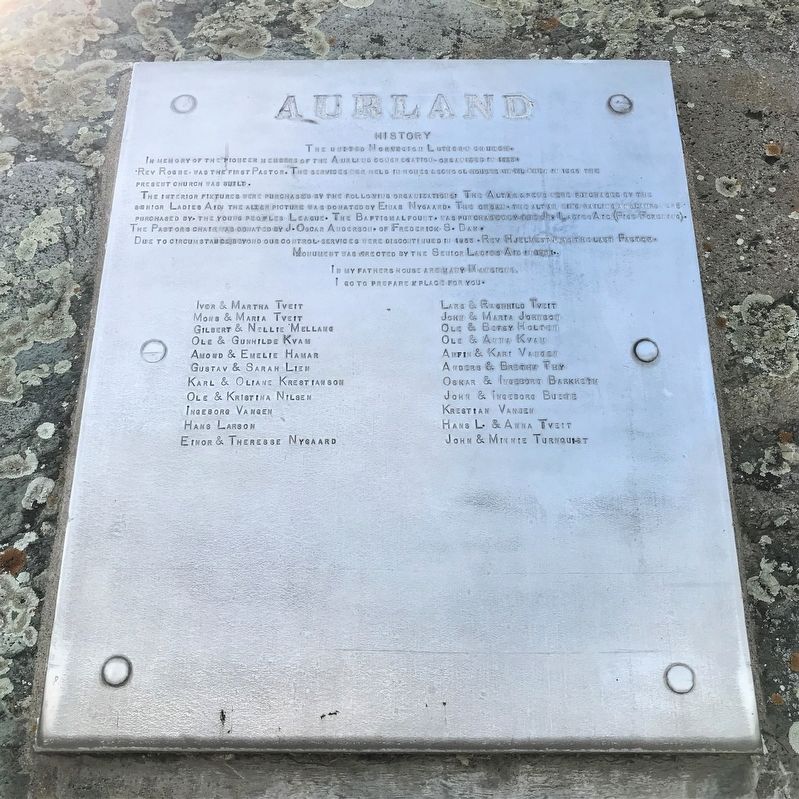
1. Aurland Marker (east side)
(east side)
The united Norwegion Luthern church.
The interior fixtures were purchased by the following organizations: The Altar & pews were purchased by the senior Ladies Aid; the altar picture was donated by Einar Nygaard. The organ, the altar ring railing and lamps were purchased by the young peoples League. The Baptismal fount. was purchased by the Jr. Ladies Aid (Pige Forening).
The Pastors chair was donated by J. Oscar Anderson, of Frederick, S. Dak.
Due to circumstances beyond our control, services were discontinued in 1953. Rev Hjelmesth was the last Pastor.
Monument was erected by the Senior Ladies Aid in 1961.
I go to prepare a place for you.
Iver & Martha Tveit · Mons & Maria Tveit · Gilbert & Nellie Mellang · Ole & Gunhilde Kvam · Amond & Emelie Hamar · Gustav & Sarah Lien · Karl & Oliane Krestianson · Ole & Kristina Nilsen
this page online
Lars & Ragnhild Tveit · John & Maria Johnson · Ole & Betsy Holten · Ole & Anna Kvam · Anfin & Kari Vangen · Anders & Bretha Thy · Oskar & Ingeborg Barkheim · John & Ingeborg Buene · Krestian Vangen · Hans L. & Anna Tveit · John & Minnie Turnquist
(south side)
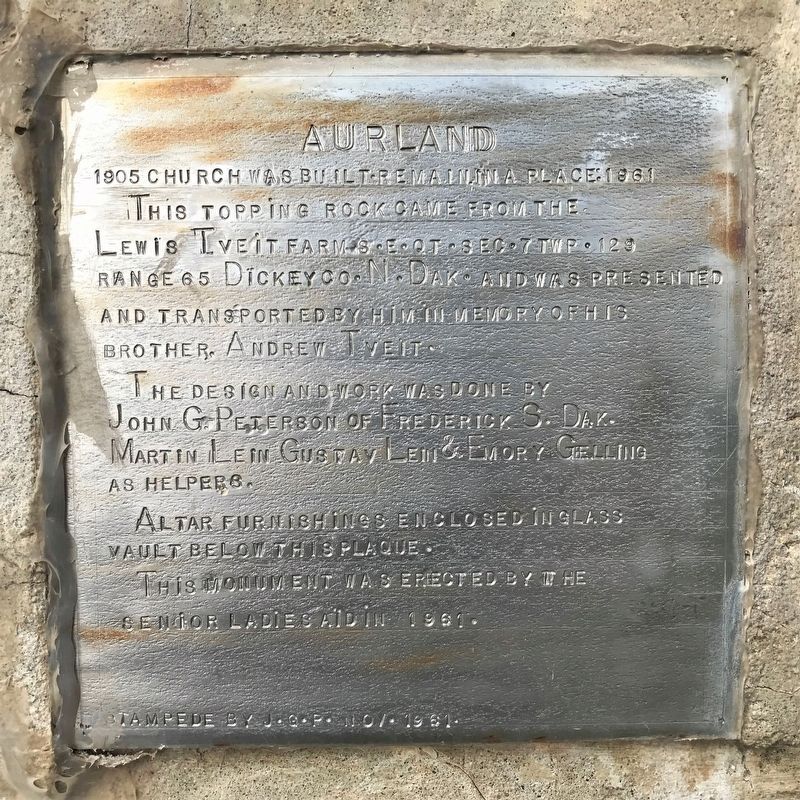
1905 church was built remain in a place: 1961
This topping rock came from the Lewis Tveit farm S.E. qt. sec. 7 twp. 129 range 65 Dickey co. N. Dak. and was presented and transported by him in memory of his brother, Andrew Tveit.
The design and work was done by John G. Peterson of Frederick S. Dak. Martin Lein Gustav Lein & Emory Gelling as helpers.
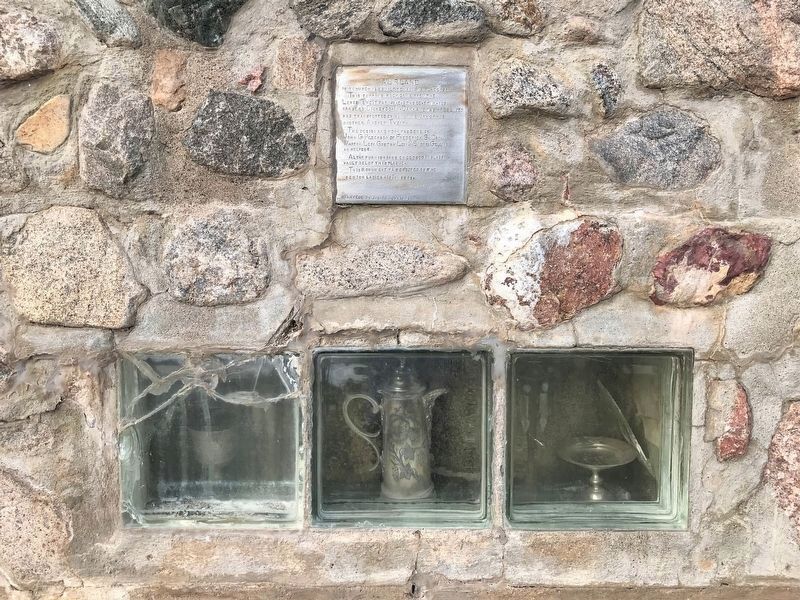
Altar furnishings enclosed in glass vault below this plaque.
This monument was erected by the senior ladies aid in 1961.
stampede by J. G. P. Nov. 1961.
Erected 1961 by the Senior Ladies Aid. (Marker Number 548.)
Topics and series. This historical marker is listed in this topic list: Religion & Religious Structures. In addition, it is included in the Norwegian-Americans, and the South Dakota State Historical Society Markers
September 17, 2022
2. Aurland Marker (south side)
Location. 45° 46.23′ N, 98° 24.898′ W. Marker is near Frederick, South Dakota, in Brown County. It is on 391st Avenue (County Road 14) half a mile north of 112th Street (State Highway 10), on the left when traveling north. Touch for map. Marker is in this post office area: Frederick SD 57441, United States of America. Touch for directions.

Regionally, this marker is in East River and specifically in the James River Valley. It is also in the American Midwest, in the Lewis & Clark Corridor, in the Corn Belt, on the prairies, and on the Northern Plains. Globally, it is in North America, the Western Hemisphere, the Western World, and the Anglosphere. Historically, it finds itself in what was once Rupert’s Land and also the Louisiana Purchase.
Other nearby markers. At least 8 other markers are within 7 miles of this marker, measured as the crow flies: Tveit Homestead (approx. 0.2 miles away); Philip Cain Gelling Homestead (approx. 0.7 miles away); Songbirds (approx. 6.1 miles away); Waterfowl (approx. 6.1 miles away); Sand Lake National Wildlife Refuge (approx.
September 17, 2022
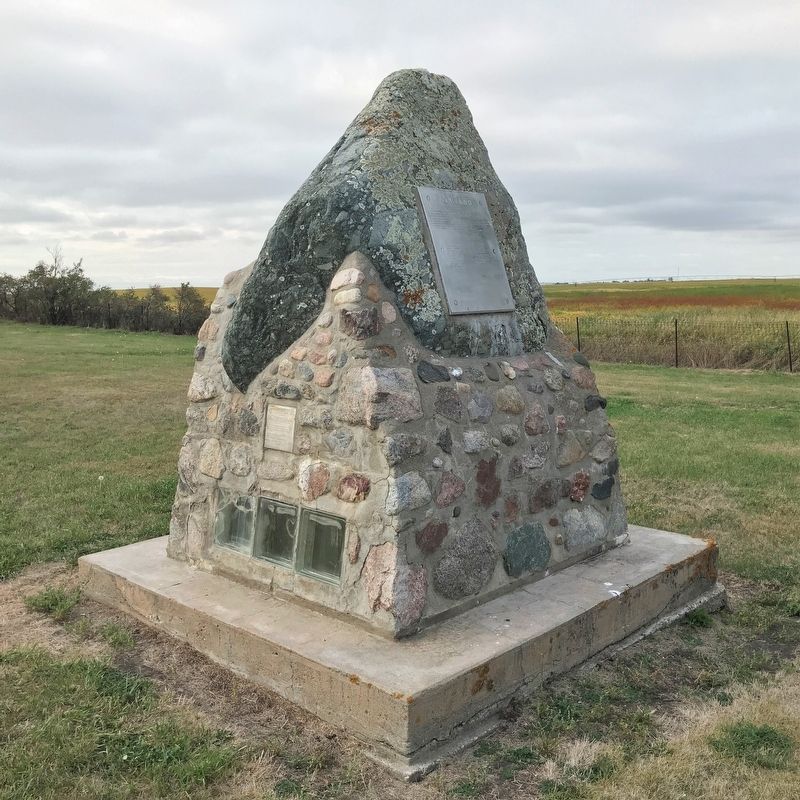
3. Aurland Monument
Also see . . .
1. South Dakota SP Aurland United Norwegian Lutheran Church - National Archives Catalog.
Statement of Significance (from 1982):(Submitted on July 2, 2023.)
"The Aurland United Norwegian Lutheran Church is significant in the areas of ethnic history, religion and vernacular architecture. As a well-preserved example of a simple, frame country church, the Aurland Church remains a symbol of Norwegian settlement in Brown County. Formed in 1885, the congregation was founded four years after initial settlement. In 1903 when the congregants decided to erect a new ediface, they patterned it on their home church in Aurland, Sogn, Norway. Although there is no pictoral record of that church among the records, tradition suggests that details, such as the pediments over the windows, may have been copied from the mother church. Another traditional feature of the church is the cemetery, which borders the buildingon two sides. The church was used actively until 1953, during which time, no alterations had been made to the church. Despite its simplicity, the church was well made and its furnishings reflect the spirit of its pioneer builders."September 17, 20224. Aurland Church & Monument
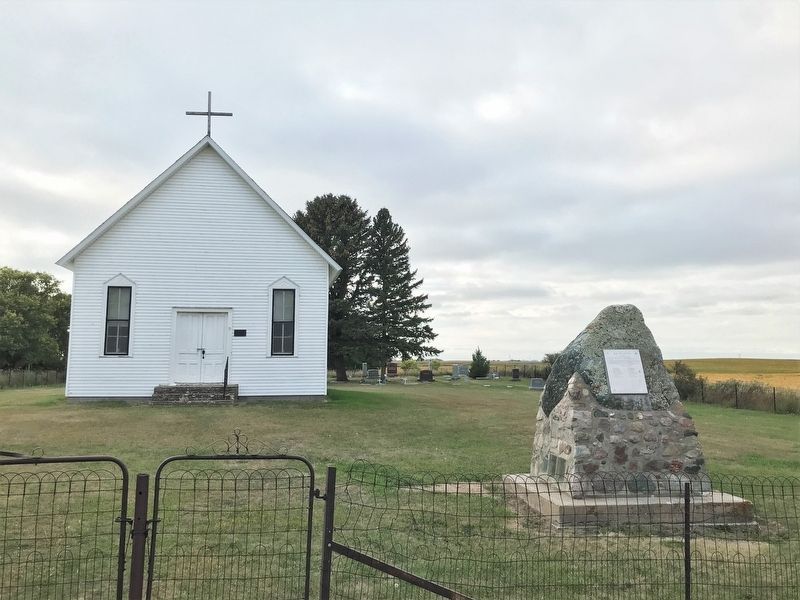
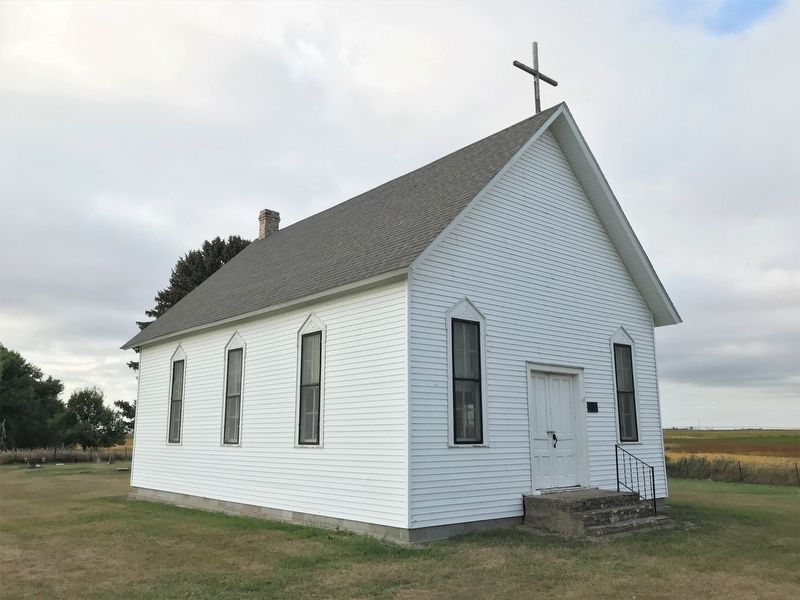
2. Aurland United Norwegian Lutheran Church. As Scandinavian and other Northern Europeans immigrated to America and settled the mid West, large numbers came to the Dakota Territories. Among the many Northern Europeans were a large group of Norwegians. Like many Northern Europeans/Scandinavians, these immigrants were of the Lutheran faith. In what would become the town of Frederick, these Norwegian immigrants would construct for themselves this church. (Submitted on May 28, 2025, by Luci j Baker Johnson of Seattle, Washington.)
September 17, 2022
5. Altar furnishings enclosed in glass vault
September 17, 2022
6. Aurland Church
September 17, 2022
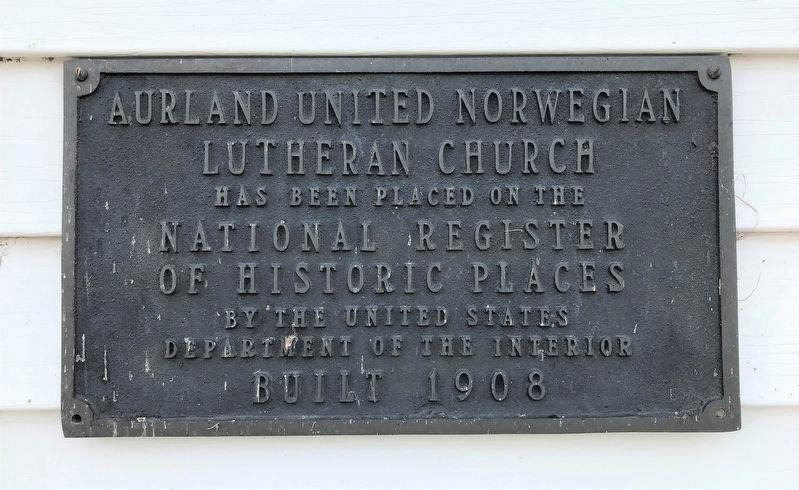
7. Aurland Church NRHP Marker
has been placed on the
National Register of Historic Places
by the United States Department of the Interior
Built 1908
Credits. This page was last revised on May 29, 2025. It was originally submitted on September 25, 2022. This page has been viewed 304 times since then and 25 times this year. Photos: 1, 2, 3, 4, 5, 6, 7. submitted on September 26, 2022.
