Near Ewing in Lee County, Virginia — The American South (Mid-Atlantic)
Settling an Old Dispute
Cumberland Gap National Historical Park
| — | National Park Service, U.S. Department of the Interior | — |
September 29, 2022
1. Settling an Old Dispute Marker
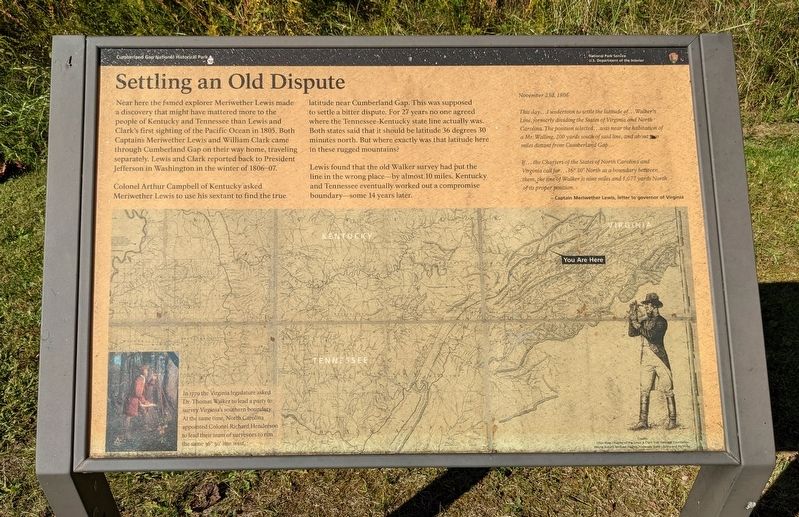
Near here the famed explorer Meriwether Lewis made a discovery that might have mattered more to the people of Kentucky and Tennessee than Lewis and Clark's first sighting of the Pacific Ocean in 1805. Both Captains Meriwether Lewis and William Clark came through Cumberland Gap on their way home, traveling separately. Lewis and Clark reported back to President Jefferson in Washington in the winter of 1806–07.
Colonel Arthur Campbell of Kentucky asked Meriwether Lewis to use his sextant to find the true latitude near Cumberland Gap. This was supposed to settle a bitter dispute. For 27 years no one agreed where the Tennessee-Kentucky state line actually was. Both states said that it should be latitude 36 degrees 30 minutes north. But where exactly was that latitude here in these rugged mountains?
Lewis found that the old Walker survey had put the line in the wrong place—by almost 10 miles. Kentucky and Tennessee eventually worked out a compromise boundary—some 14 years later.
November 23d, 1806
This day...I undertook to settle the latitude of...Walker's Line, formerly dividing the States of Virginia and North Carolina. The position selected...was near the habitation of a Mr. Walling, 200 yards south of said line, and about two miles distant from Cumberland Gap...
If...the Charters of the States of North Carolina and Virginia call for...36° 30’ North as a boundary between them, the line of Walker is nine miles and 1,077 yards North of its proper position.
– Captain Meriwether Lewis, letter to governor of Virginia
(caption) In 1779 the Virginia legislature asked Dr. Thomas Walker to lead a party to survey Virginia's southern boundary. At the same time, North Carolina appointed Colonel Richard Henderson to lead their team of surveyors to run the same 36° 30’ line west.
Erected by National
this page online
Topics. This historical marker is listed in this topic list: Exploration. A significant historical date for this entry is November 23, 1806.
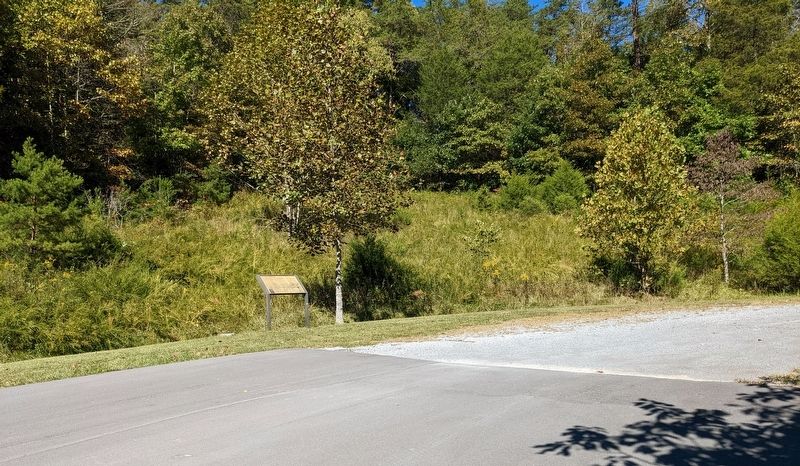
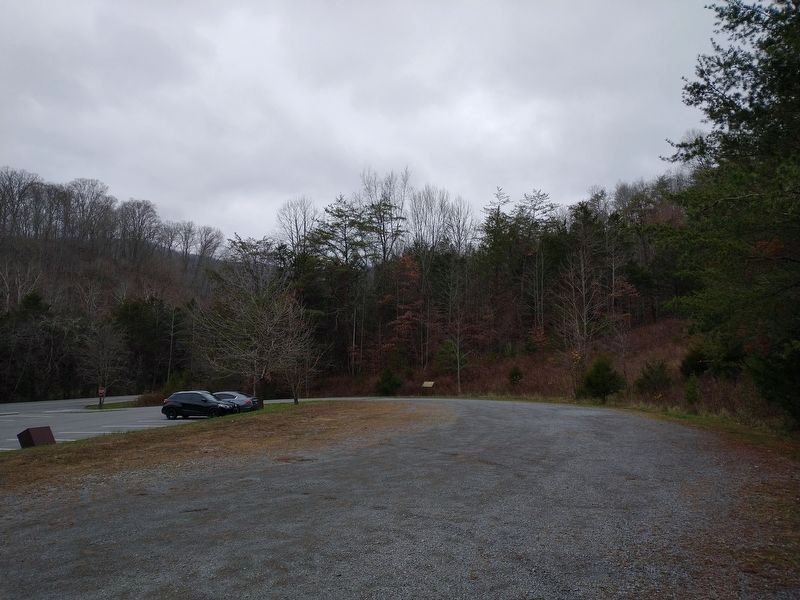
Location. 36° 36.2′ N, 83° 38.135′ W. Marker is near Ewing, Virginia, in Lee County. It is on National Park Road 0.3 miles north of Wilderness Road (U.S. 58), on the right when traveling north. Marker is a wayside exhibit in the parking lot for the Colson Trail. Touch for map. Marker is in this post office area: Ewing VA 24248, United States of America. Touch for directions.

Regionally, this marker is in Southwest Virginia. It is also in the American South, specifically in the Upper South, in Appalachia, and specifically in Southern Appalachia. Globally, it is in North America, the Western Hemisphere, the Western World, and the Anglosphere. Historically, it finds itself in what was once the original Cherokee Nation, the territory of the Mississippian Culture, one of the original Thirteen Colonies, one of the Confederate States of America, and the Antebellum South.
Other nearby markers. At least 8 other markers are within 2 miles of this marker, measured
September 29, 2022
2. Settling an Old Dispute Marker
Photographed by Tom Bosse, November 13, 2022
3. Settling an Old Dispute Marker
Photographed by Tom Bosse, November 13, 2022
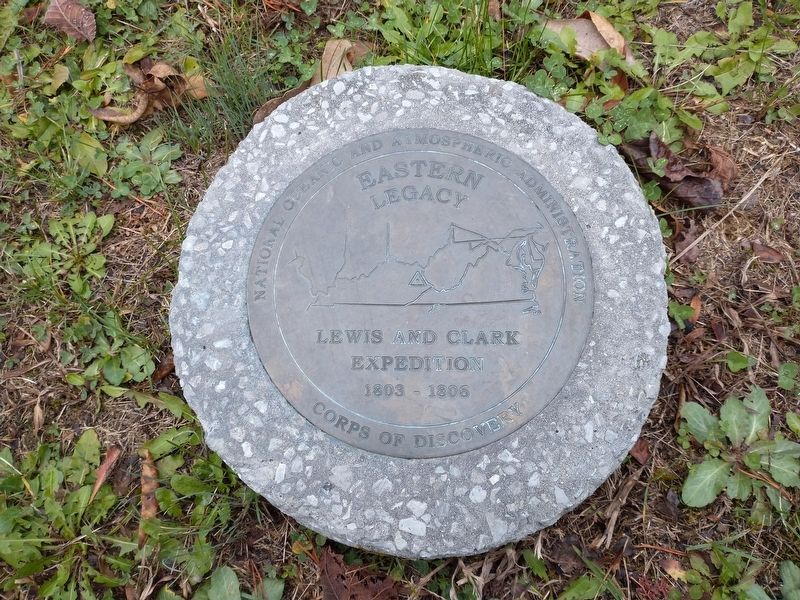
4. N.O.A.A. Plaque Commemorating the Lewis & Clark Expedition
Credits. This page was last revised on May 3, 2026. It was originally submitted on October 11, 2022. This page has been viewed 565 times since then and 38 times this year. Last updated on October 12, 2022. Photos: 1, 2. submitted on October 11, 2022. 3, 4. submitted on December 29, 2022, by Tom Bosse of Jefferson City, Tennessee. • Bernard Fisher was the editor who published this page.
