Downtown in Sioux Falls in Minnehaha County, South Dakota — The American Midwest (Upper Plains)
Calvary Cathedral
October 17, 2022
1. Calvary Cathedral Marker
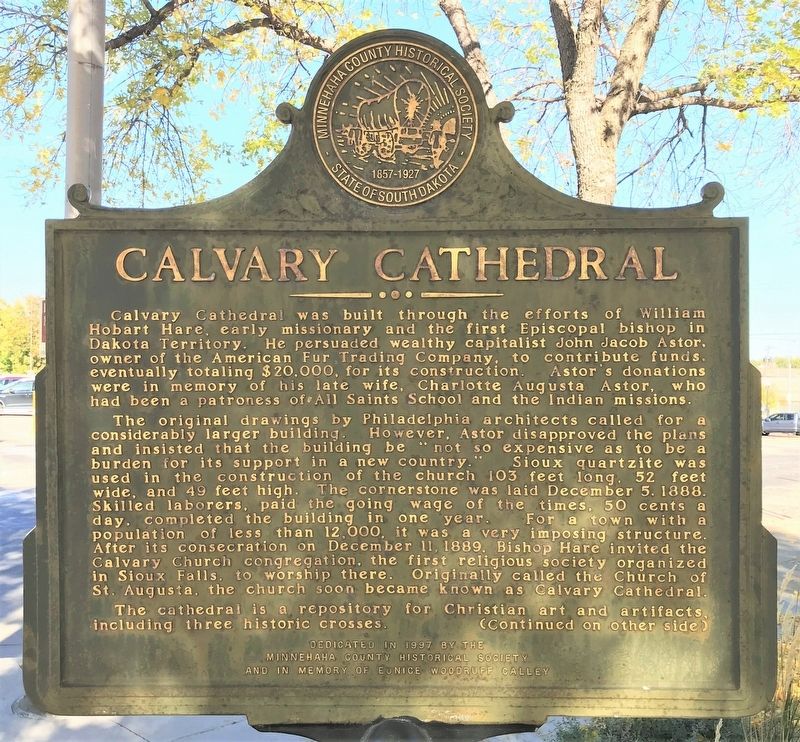
The original drawings by Philadelphia architects called for a considerably larger building. However, Astor disapproved the plans and insisted that the building be "not so expensive as to be a burden for its support in a new country." Sioux quartzite was used in the construction of the church 103 feet long, 52 feet wide, and 49 feet high. The cornerstone was laid December 5, 1888. Skilled laborers, paid the going wage of the times, 50 cents a day, completed the building in one year. For a town with a population of less than 12,000, it was a very imposing structure. After its consecration on December 11, 1889, Bishop Hare invited the Calvary Church congregation, the first religious
this page online
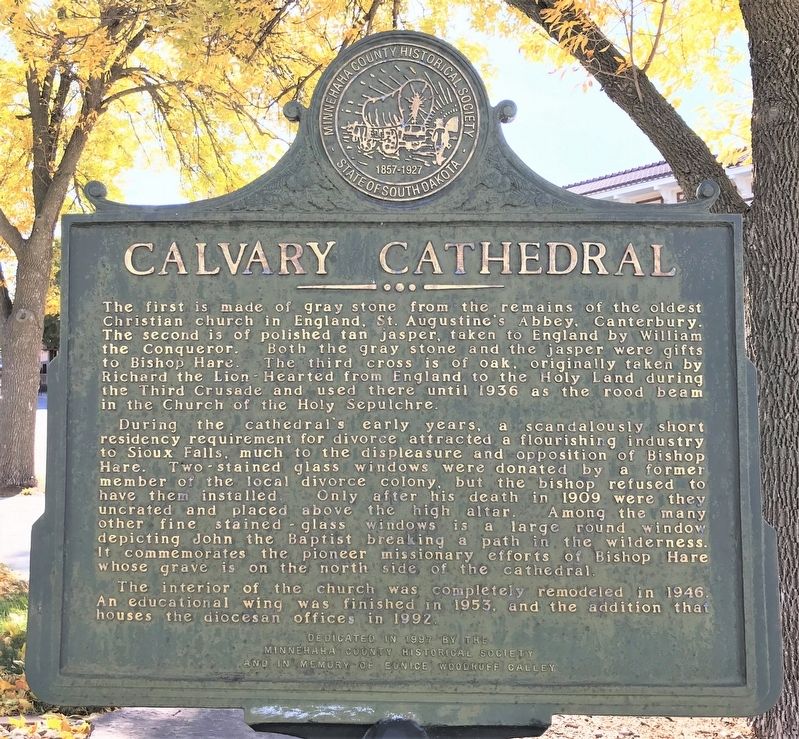
The cathedral is a repository for Christian art and artifacts, including three historic crosses. The first is made of gray stone from the remains of the oldest Christian church in England, St. Augustine's Abbey, Canterbury. The second is of polished tan jasper, taken to England by William the Conqueror. Both the gray stone and the jasper were gifts to Bishop Hare. The third cross is of oak, originally taken by Richard the Lion-Hearted from England to the Holy Land during the Third Crusade and used there until 1936 as the rood beam in the Church of the Holy Sepulchre.
During the cathedral's early years, a scandalously short residency requirement for divorce attracted a flourishing industry to Sioux Falls, much to the displeasure and opposition of Bishop Hare. Two-stained glass windows were donated by a former member of the local divorce colony, but the bishop refused to have them installed. Only after his death in 1909 were they uncrated and placed above the high altar. Among the many
October 17, 2022
2. Calvary Cathedral Marker
The interior of the church was completely remodeled in 1946. An educational wing was finished in 1953, and the addition that houses the diocesan offices in 1992.
Erected 1997 by the Minnehaha County Historical Society and in memory of Eunice Woodruff Calley.
Topics. This historical marker is listed in this topic list: Religion & Religious Structures. A significant historical date for this entry is December 5, 1888.
Location. 43° 32.542′ N, 96° 43.688′ W. Marker is in Sioux Falls, South Dakota, in Minnehaha County. It is in Downtown. It is at the intersection of South Main Avenue and West 13th Street, on the left when traveling south on South Main Avenue. Touch for map. Marker is at or near this postal address: 500 S Main Ave, Sioux Falls SD 57104, United States of America. Touch for directions.

Regionally, this marker is in East River. It is also in the American Midwest, in the Lewis & Clark Corridor, in
October 17, 2022
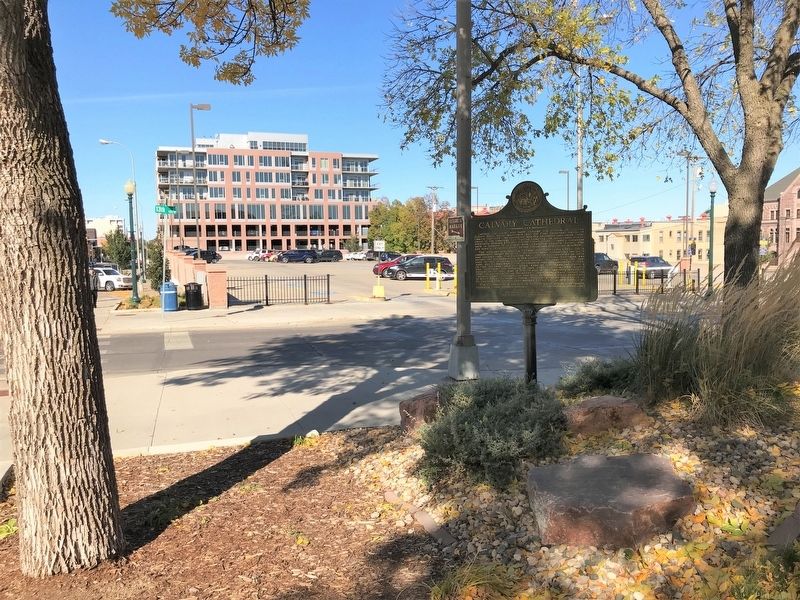
3. Calvary Cathedral Marker, from the south
Other nearby markers. At least 8 other markers are within walking distance of this marker: Official Olympic Flagpole (about 400 feet away, measured in a direct line); The First School House (about 400 feet away); Washington High School (about 400 feet away); The Government Building (about 500 feet away); Eliza Tupper Wilkes (about 500 feet away); First Lutheran Church (about 600 feet away); Seacoast Gun (about 700 feet away); Nils A. Boe (about 700 feet away). Touch for a list and map of all markers in Sioux Falls.
October 17, 2022
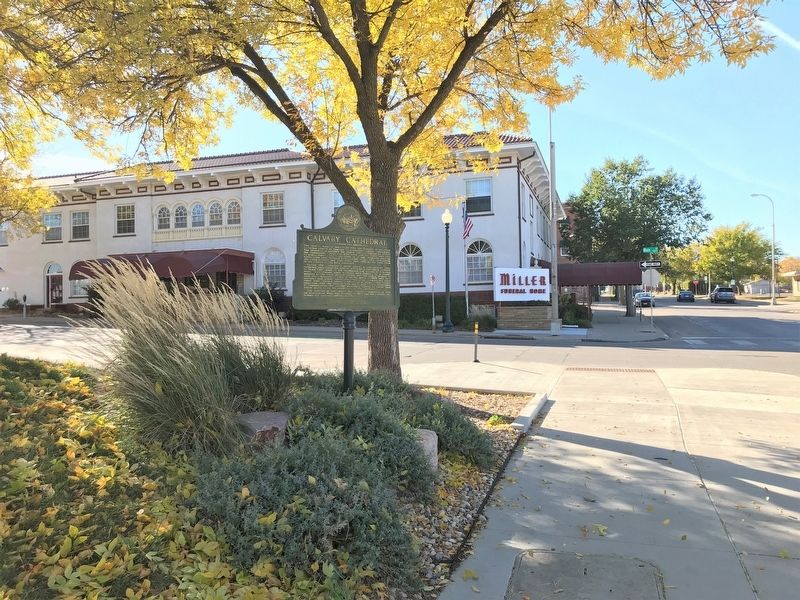
4. Calvary Cathedral Marker, from the east
October 17, 2022
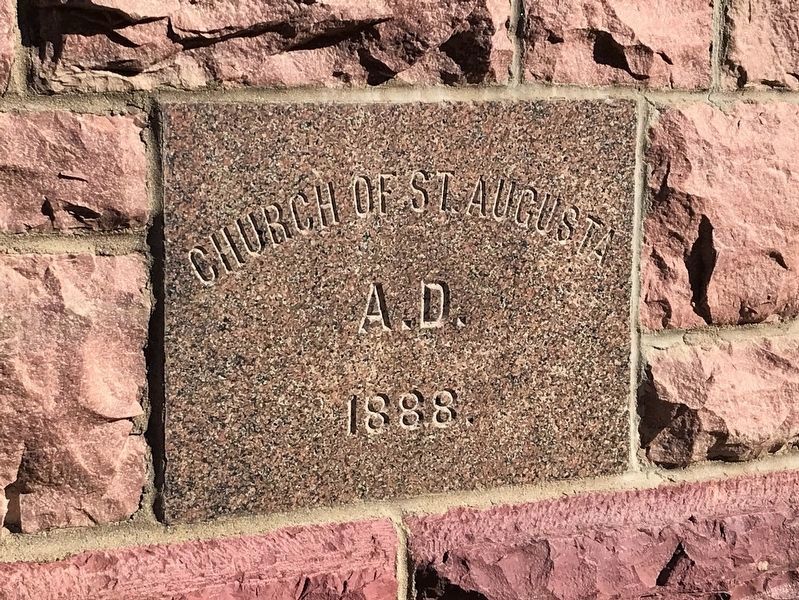
5. Calvary Cathedral Cornerstone
A.D. 1888.
October 17, 2022
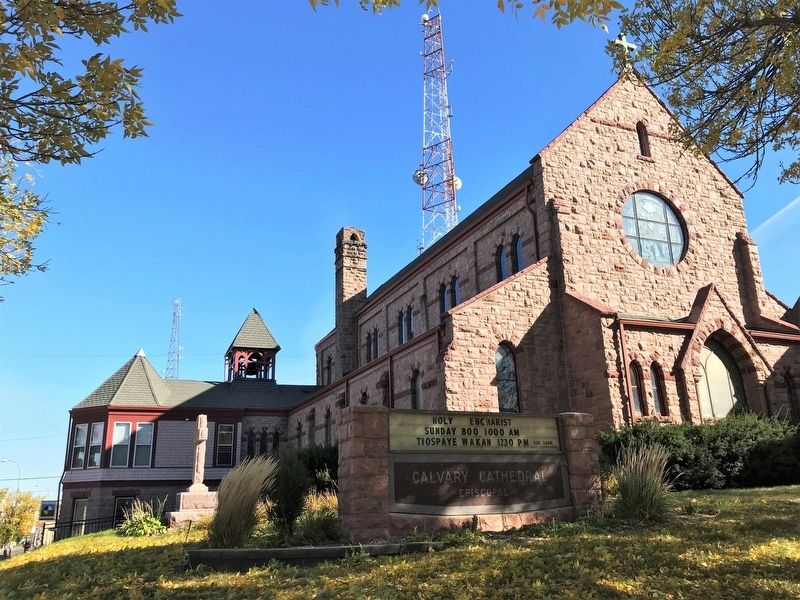
6. Calvary Cathedral
October 17, 2022
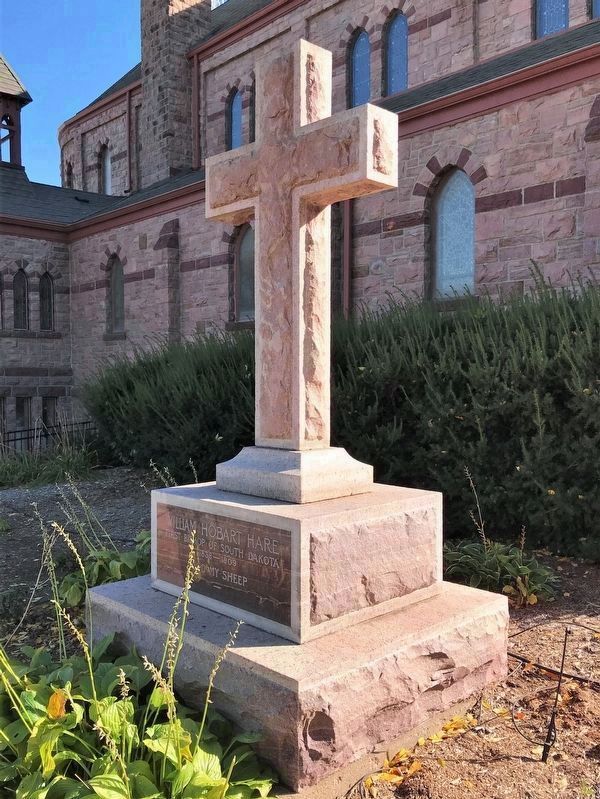
7. Bishop Hare's Gravestone
First Bishop of South Dakota
1838—1909
Feed My Sheep
Credits. This page was last revised on February 16, 2023. It was originally submitted on October 26, 2022. This page has been viewed 876 times since then and 93 times this year. Photos: 1, 2, 3, 4, 5, 6, 7. submitted on October 26, 2022.
