Hot Springs in Garland County, Arkansas — The American South (West South Central)
Alerted at the Arlington
| — | Hot Springs Central Avenue Historic District | — |
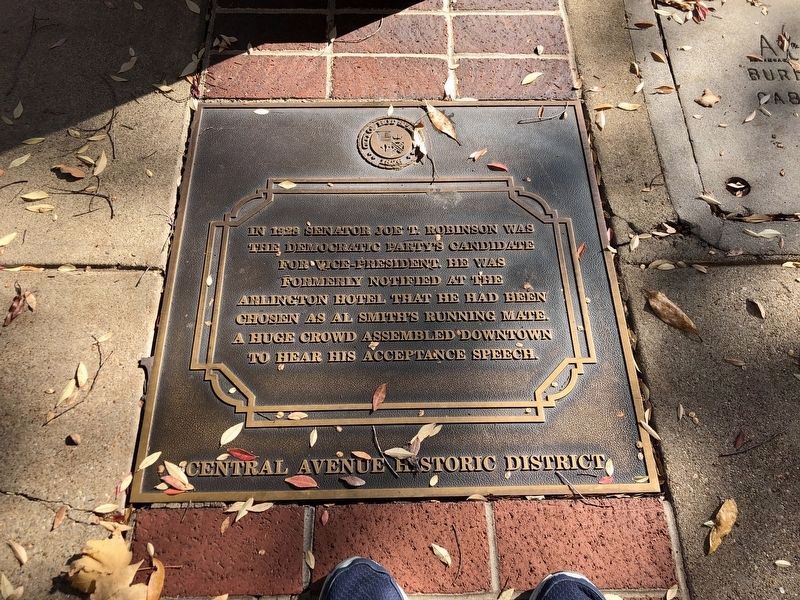
Photographed by Duane and Tracy Marsteller, November 5, 2022
1. Alerted at the Arlington Marker
Erected by City of Hot Springs.
Topics. This historical marker is listed in this topic list: Government & Politics. A significant historical year for this entry is 1928.
Location. 34° 30.72′ N, 93° 3.247′ W. Marker is in Hot Springs, Arkansas, in Garland County. It can be reached from Central Avenue (Arkansas Route 7) north of Court Street, on the right when traveling south. Marker is on the sidewalk, by a streetlamp post. Touch for map. Marker is at or near this postal address: 520 Central Ave, Hot Springs National Park AR 71901, United States of America. Touch for directions.

Regionally, this marker is in the Ouachita Mountains. It is also in the American South and specifically in the Upper South. Globally, it is in North America, the Western Hemisphere, the Western World, and the Anglosphere. Historically, it finds itself in what was once the
this page online
Other nearby markers. At least 8 other markers are within walking distance of this marker: First Circuit Court Site (here, next to this marker); Bathhouse Row (within shouting distance of this marker); Buckstaff Bathhouse (within shouting distance of this marker); The Roosevelts in Hot Springs (within shouting distance of this marker); “We Bathe the World” (within shouting distance of this marker); U.S. Park Ranger James Alexander Cary (within shouting distance of this marker); a different marker also named Bathhouse Row (within shouting distance of this marker); Lamar Bathhouse (within shouting distance of this marker). Touch for a list and map of all markers in Hot Springs.
Regarding Alerted at the Arlington. Smith and Robinson lost the presidential election in a landslide to the Republican ticket of Herbert Hoover and Charles Curtis. The Republicans received 58.2 percent of the popular vote, carried 40 states and took the Electoral College by a 444-87 margin. The Republicans were boosted by
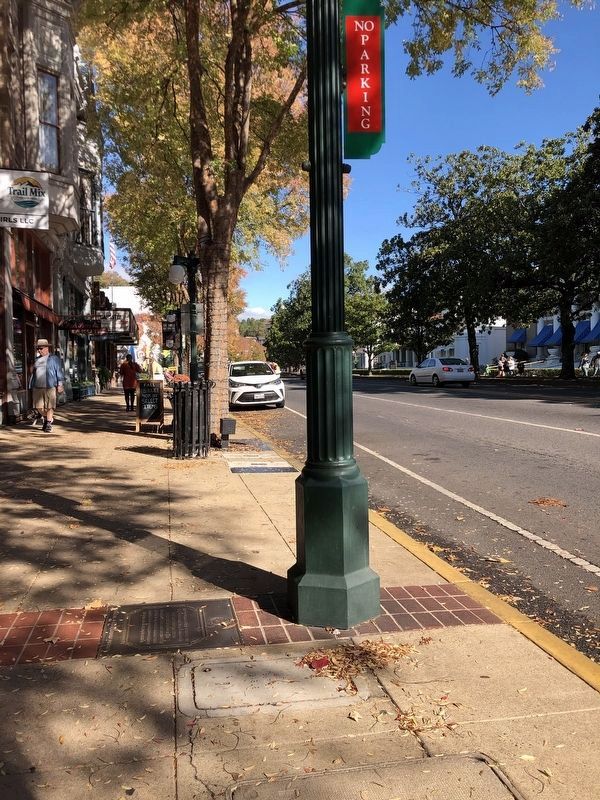
Photographed by Duane and Tracy Marsteller, November 5, 2022
2. Alerted at the Arlington Marker
Also see . . . Joseph Taylor Robinson. Wikipedia entry on the Arkansas politician, one of the "Big 4" Democrats in the early 1930s. (Submitted on November 24, 2022, by Duane and Tracy Marsteller of Murfreesboro, Tennessee.)
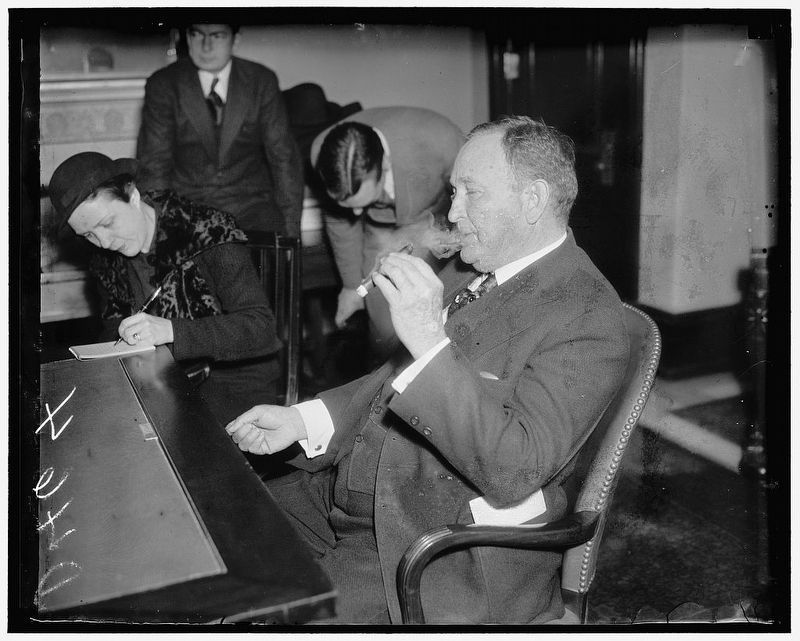
Harris & Ewing, via Library of Congress Prints and Photographs Division (Public Domain), January 2, 1937
3. Joseph T. Robinson (1872-1937)
His political career began in 1894, when he was elected to the Arkansas legislature. He served in the U.S. House of Representatives from 1903 to 1913, when he resigned to become Arkansas' 23rd governor. He served just 55 days as governor, resigning after the state legislature elected him to the U.S. Senate to serve the remaining term of the late Sen. Jefferson Davis. Robinson was the last Senator to be elected by a state legislature instead of direct popular vote; the U.S. Constitutional amendment requiring direct election of senators took effect a month after Robinson joined the Senate. A Democrat, he spent 24 years in the chamber, including four years as Senate Majority Leader and ten as Minority Leader.
Credits. This page was last revised on November 24, 2022. It was originally submitted on November 24, 2022, by Duane and Tracy Marsteller of Murfreesboro, Tennessee. This page has been viewed 289 times since then and 29 times this year. Photos: 1, 2, 3. submitted on November 24, 2022, by Duane and Tracy Marsteller of Murfreesboro, Tennessee.
