Westchester in Los Angeles in Los Angeles County, California — The American West (Pacific Coastal)
Hangar #1
LAX
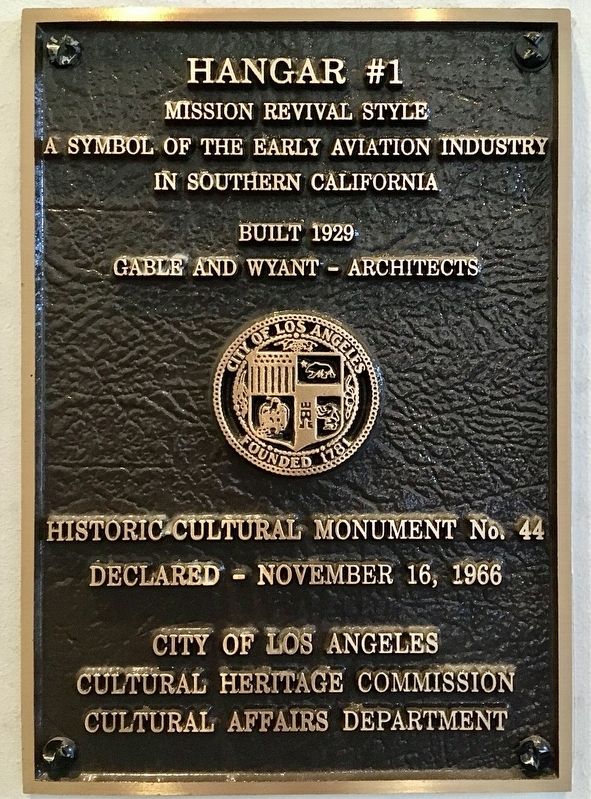
Photographed by Craig Baker, September 24, 2019
1. Hangar #1 Marker
Erected 1966 by City of Los Angeles. (Marker Number 44.)
Topics and series. This historical marker is listed in these topic lists: Air & Space • Architecture. In addition, it is included in the Los Angeles Historic-Cultural Monument series list. A significant historical year for this entry is 1929.
Location. 33° 56.023′ N, 118° 23.062′ W. Marker is in Los Angeles, California, in Los Angeles County. It is in Westchester. It is on Douglas Street 0.2 miles north of Imperial Highway, on the left when traveling north. Touch for map. Marker is at or near this postal address: 5701 W Imperial Hwy, Los Angeles CA 90045, United States of America. Touch for directions.

Regionally, this marker is in the Transverse Ranges. It is also on the American Pacific Coast. Globally, it is in North America, on the Ring of Fire, on the Pacific Rim, in the Western
this page online
Other nearby markers. At least 8 other markers are within 2 miles of this marker, measured as the crow flies: Capt. Lou Lenart, USMC (Ret.) (approx. 0.4 miles away); Tuskegee Airmen (approx. 0.4 miles away); Eagle Squadrons (approx. 0.4 miles away); The American Volunteer Group (approx. 0.4 miles away); 49th Fighter Group (approx. 0.4 miles away); SV-5D Lifting Body (approx. 1.1 miles away); The Trans-Polar Air Route (approx. 1.2 miles away); Los Angeles International Airport (approx. 1.2 miles away). Touch for a list and map of all markers in Los Angeles.
Regarding Hangar #1. Hangar One was built in 1929 and was the first structure built on what was then known as Mines Field, a dirt landing strip in the middle of bean and barley fields. The building was constructed by the city and leased to the Curtiss Wright Flying Service. The hangar was used by Charles Lindbergh, and the German Graf Zeppelin was tied down near its doors during its stop in Los Angeles. In 1930, an oiled
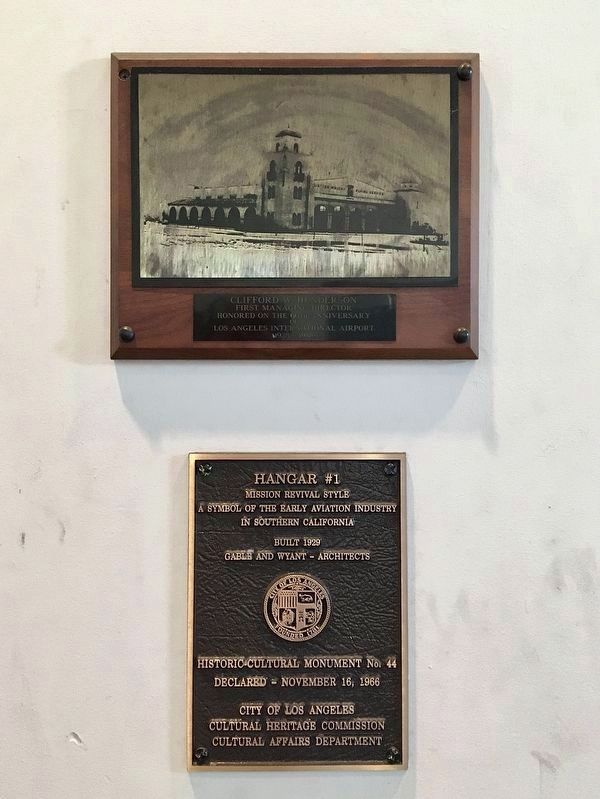
Photographed by Craig Baker, September 24, 2019
2. Hangar #1 Marker
With a 1988 plaque honoring the first managing director Clifford W Henderson.
A renovation of Hangar One in 1990 brought the building up to modern earthquake codes and restored its 1930s appearance.
It was listed on the National Register of Historic Places in 1992.
Today, Hangar One is used for cargo, and not open to the public.
Additional keywords. Hangar One, Hanger 1, Terminal One, Los Angeles International Airport, LAWA, LAX
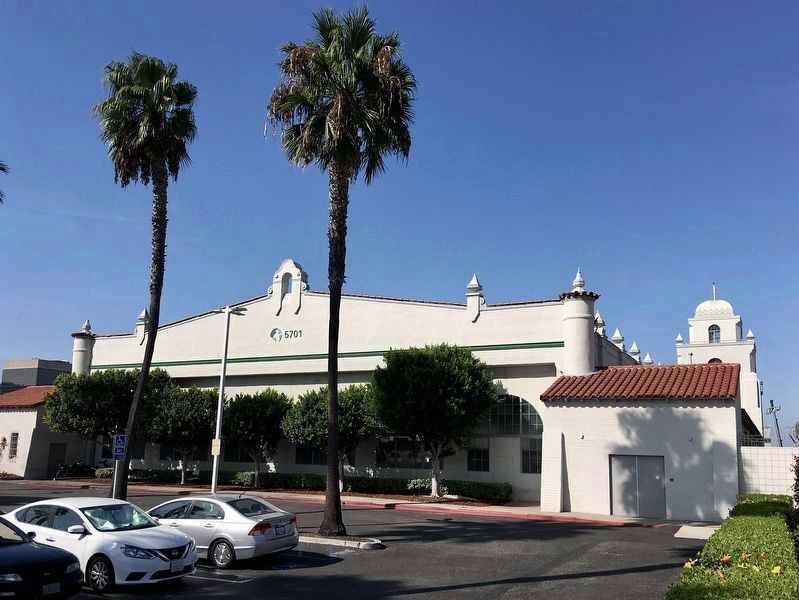
Photographed by Craig Baker, September 24, 2019
3. Hangar One
This view is from Douglas Street. The marker is inside the building - not open to the public.
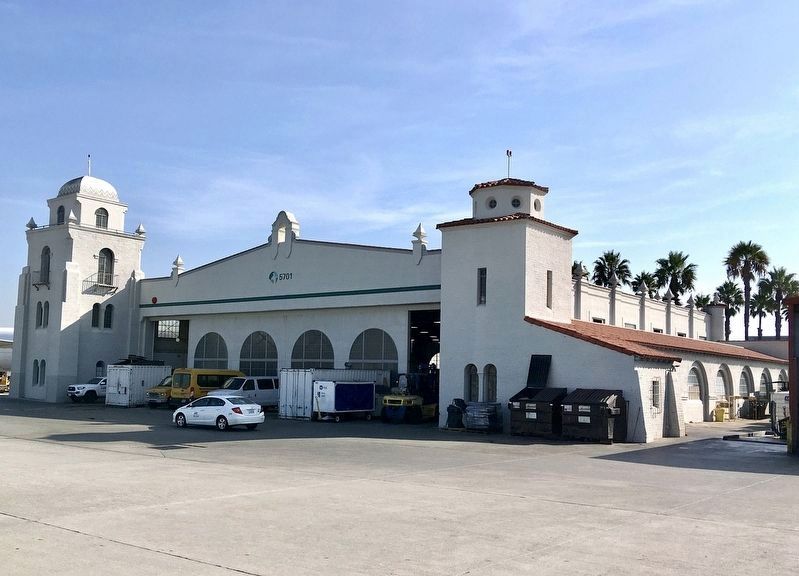
Photographed by Craig Baker, September 24, 2019
4. Hangar One
This view is from inside the airport.
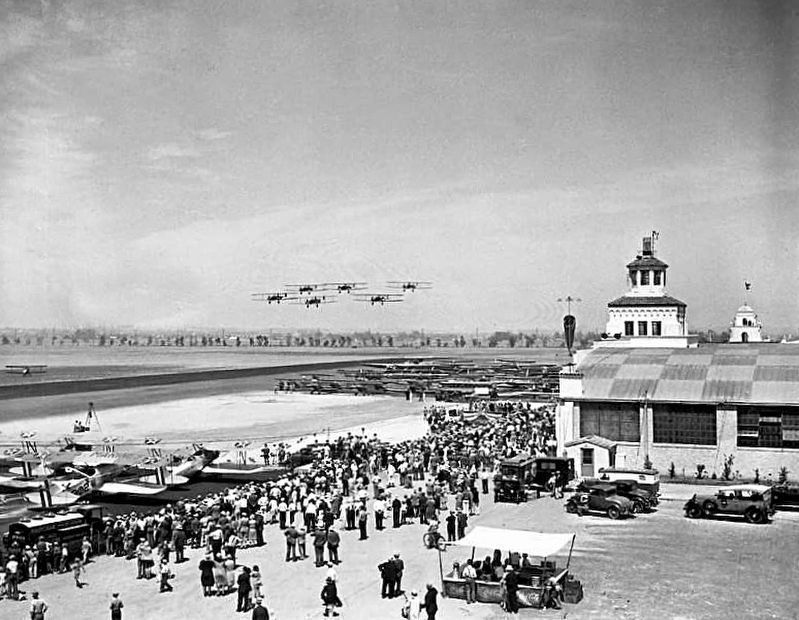
courtesy Security Pacific National Bank Collection, Los Angeles Public Library, 1930
5. L.A. Airport Dedication on June 7, 1930
Hangar One tower is visible in the background at far right.
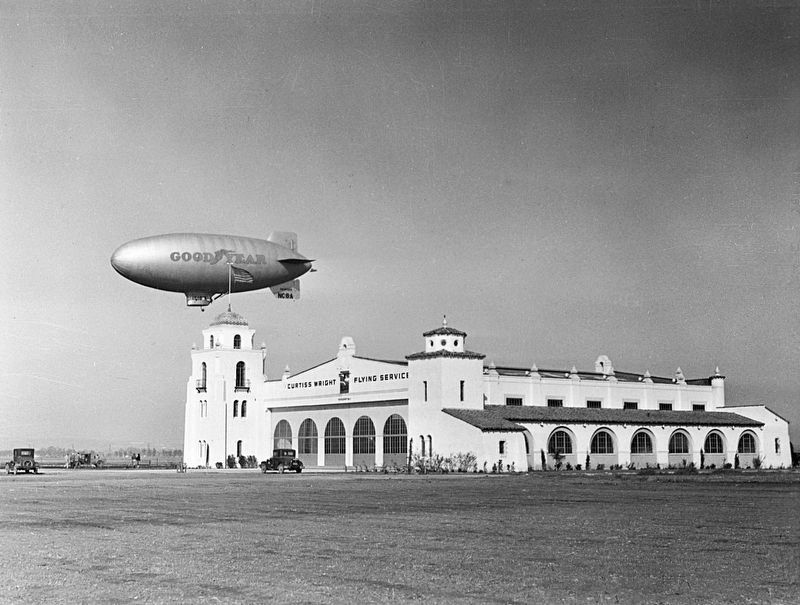
courtesy USC Libraries
6. Hangar One
Goodyear Blimp at Mines Field, February 7, 1930.
Credits. This page was last revised on September 4, 2026. It was originally submitted on November 30, 2022, by Craig Baker of Sylmar, California. This page has been viewed 1,300 times since then and 229 times this year. Photos: 1. submitted on November 30, 2022, by Craig Baker of Sylmar, California. 2. submitted on January 24, 2023, by Craig Baker of Sylmar, California. 3, 4, 5. submitted on November 30, 2022, by Craig Baker of Sylmar, California. 6. submitted on August 19, 2026, by Craig Baker of Sylmar, California.
