Frisco in Collin County, Texas — The American South (West South Central)
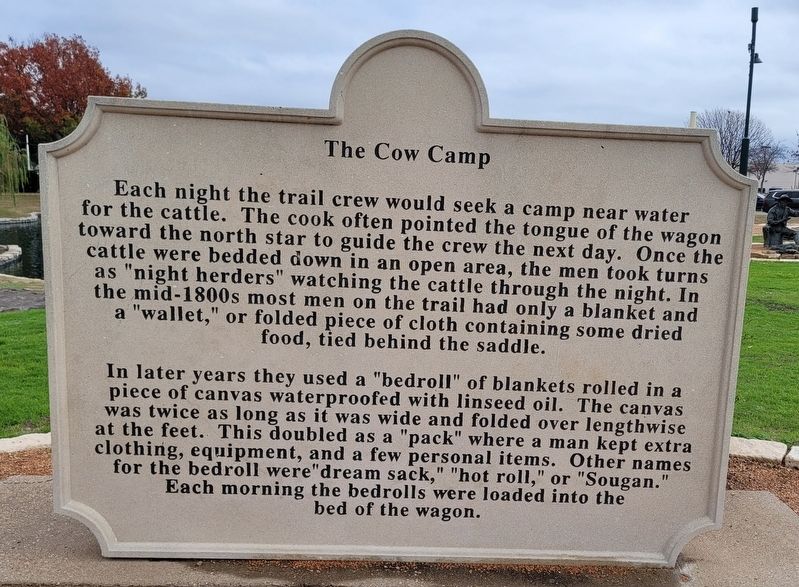
The Cow Camp
Photographed by James Hulse, December 11, 2022
1. The Cow Camp Marker
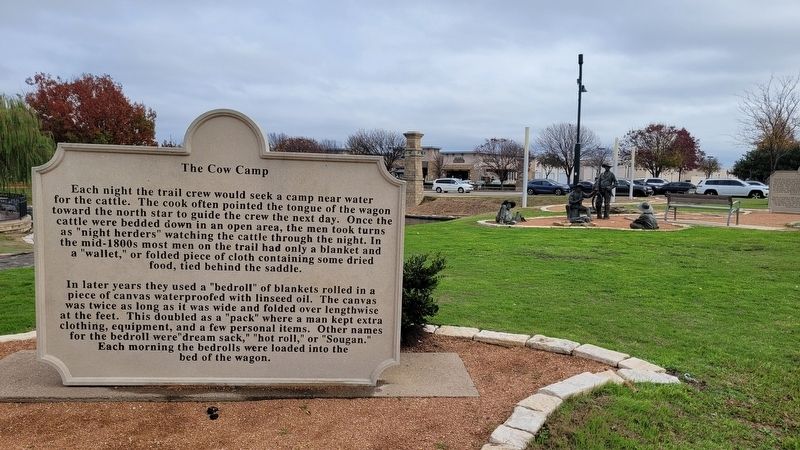
In later years they used a "bedroll" of blankets rolled in a piece of canvas waterproofed with linseed oil. The canvas was twice as long as it was wide and folded over lengthwise at the feet. This doubled as a "pack" where a man kept extra clothing, equipment, and a few personal items. Other names for the bedroll were "dream sack," "hot roll," or "Sougan." Each morning the bedrolls were loaded into the bed of the wagon.
Erected by City of Frisco.
Topics. This historical marker is listed in these topic lists: Animals • Industry & Commerce.
Location. 33° 6.274′ N, 96° 48.592′ W. Marker is in Frisco, Texas, in Collin
this page online

Regionally, this marker is in the Prairies & Lakes Region and in the Dallas-Fort Worth Metropolitan Area. Globally, it is in North America, a Gulf of Mexico state, the Western Hemisphere, the Western World, and the Anglosphere. Historically, it finds itself in what was once New Spain, the Republic of Texas, one of the Confederate States of America, and the Antebellum South.
Other nearby markers. At least 8 other markers are within walking distance of this marker: The Trail Crew (a few steps from this marker); The Texas Longhorn (about 500 feet away, measured in a direct line); Trail Driving Prior to 1845 (approx. 0.2 miles away); Origins: Cattle Country (approx. 0.2 miles away); Site of Lebanon (approx. ¼ mile away); American Bison (approx. ¼ mile away); The Trail Drive Company (approx. 0.3 miles away); Military Survey of Preston Road
Photographed by James Hulse, December 11, 2022
2. The Cow Camp Marker
Also see . . . Cowboy. Wikipedia
A cowboy is an animal herder who tends cattle on ranches in North America, traditionally on horseback, and often performs a multitude of other ranch-related tasks. The historic American cowboy of the late 19th century arose from the vaquero traditions of northern Mexico and became a figure of special significance and legend. A subtype, called a wrangler, specifically tends the horses used to work cattle. In addition to ranch work, some cowboys work for or participate in rodeos. Cowgirls, first defined as such in the late 19th century, had a less-well documented historical role, but in the modern world work at identical tasks and have obtained considerable respect for their achievements. Cattle handlers in many other parts of the world, particularly South America and Australia, perform work similar to the cowboy.(Submitted on January 16, 2023, by James Hulse of Medina, Texas.)
Photographed by James Hulse, December 11, 2022
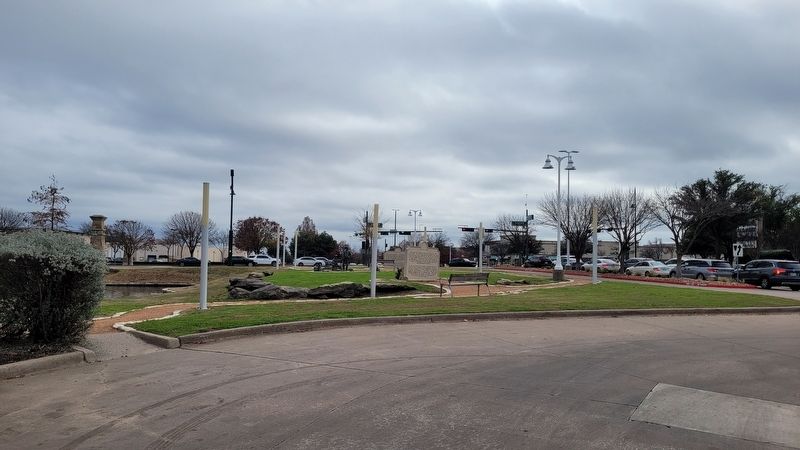
3. The view of the Cow Camp Marker from the parking lot
Photographed by James Hulse, December 11, 2022
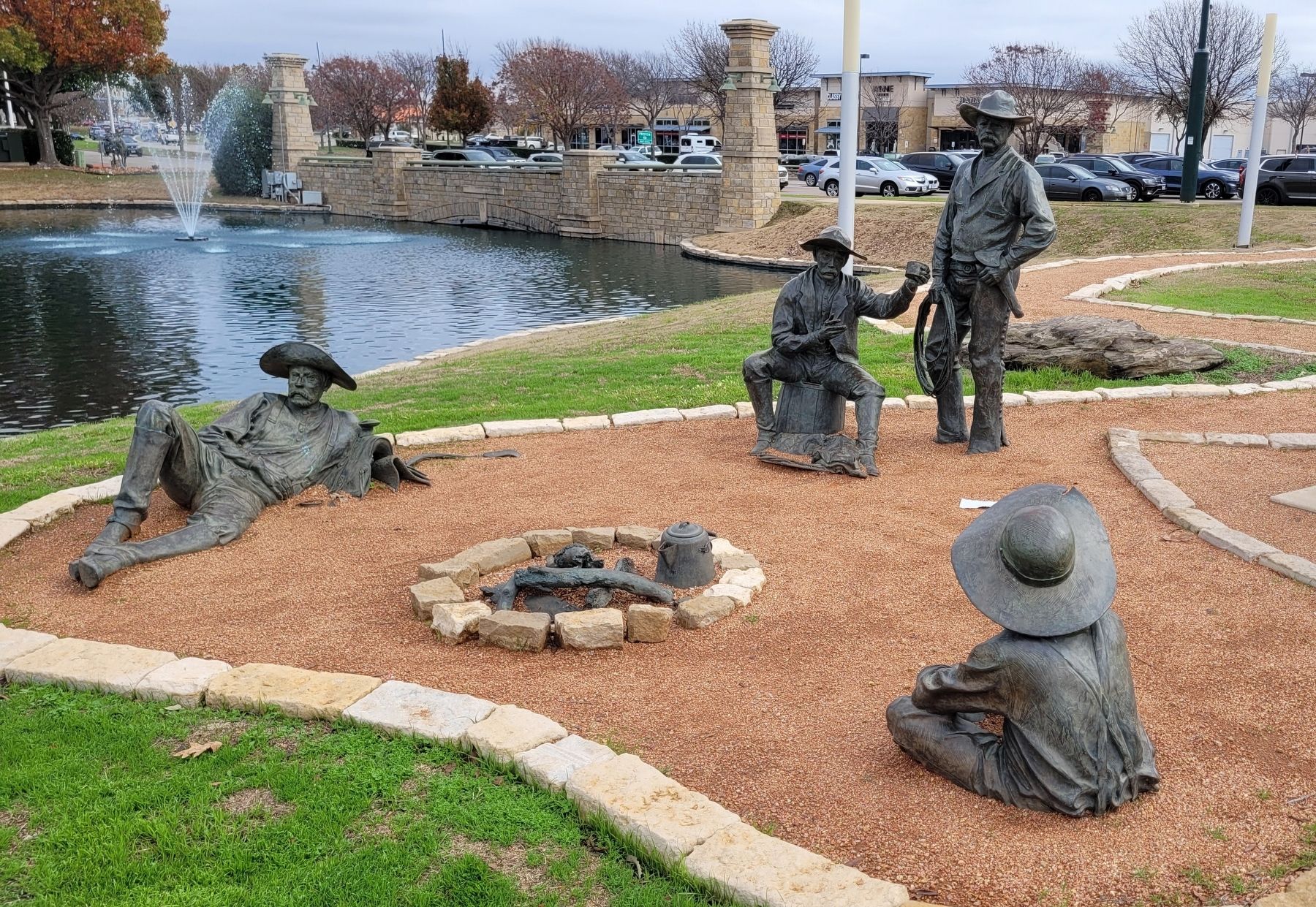
4. The Cow Camp
Credits. This page was last revised on January 16, 2023. It was originally submitted on January 16, 2023, by James Hulse of Medina, Texas. This page has been viewed 484 times since then and 66 times this year. Photos: 1, 2, 3, 4. submitted on January 16, 2023, by James Hulse of Medina, Texas.
