Lincolnville in Highland County, Ohio — The American Midwest (Great Lakes)
People of the Forest, 2000 B.P.
Photographed by Craig Doda, November 18, 2018
1. People of the Forest, 2000 B.P. Marker
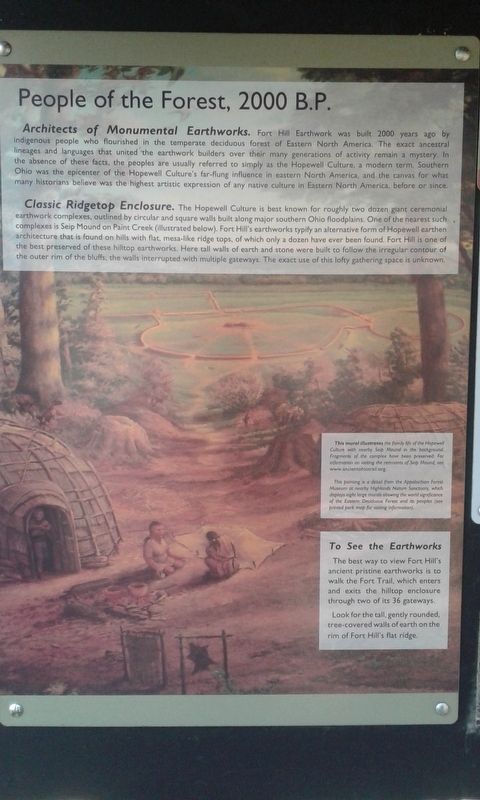
Classic Ridgetop Enclosure. The Hopewell Culture is best known for roughly two dozen giant ceremonial earthwork complexes, outlined by circular and square walls built along major southern Ohio floodplains. One of the nearest such complexes is Seip Mound on Paint Creek (illustrated below). Fort Hill's earthworks typify an alternative form of Hopewell earthen architecture that is found on hills with flat, mesa-like ridge tops, of which only a dozen have ever been found. Fort Hill is one of the best preserved of these hilltop earthworks. Here tall walls of earth and stone were built to follow the irregular contour of the outer rim of the bluffs, the walls interrupted with multiple gateways. The exact use of this lofty gathering space is unknown.
Topics. This historical marker is listed in this topic list: Indigenous Peoples and Communities. A significant historical year for this entry is 2000.
Location. 39° 7.295′ N, 83° 23.781′ W. Marker is in Lincolnville, Ohio, in Highland County. It is on Fort Hill Road, on the right when traveling east. Touch for map. Marker is in this post office area: Hillsboro OH 45133, United States of America.
this page online

Regionally, this marker is in Southern Ohio Hill Country. It is also in the American Midwest, in the Corn Belt, in Appalachia, and specifically in Northern Appalachia. Globally, it is in North America, the Western Hemisphere, the Western World, and the Anglosphere. Historically, it finds itself in what was once the Haudenosaunee (Iroquois) Confederacy, the territory of the Mississippian Culture, and the Northwest Territory.
Other nearby markers. At least 8 other markers are within 7 miles of this marker, measured as the crow flies: Governor Charles Willing Byrd (approx. 3.3 miles away); Sinking Spring Veterans Memorial (approx. 3.3 miles away); Welcome / History (approx. 5.6 miles away); The Serpent In American Indian Manetto Indiangkum, Traditions (approx. 6.8 miles away); A Missing Coil? (approx. 6.8 miles away); The Shawnee And The King Of The Serpent (approx. 6.9 miles away); What Is An Effigy Mound? (approx. 6.9 miles away); The Serpent Mound (approx. 6.9 miles away).
Photographed by Craig Doda, November 18, 2018
2. People of the Forest, 2000 B.P. Marker
Photographed by Craig Doda, November 18, 2018
3. People of the Forest, 2000 B.P. Marker
Photographed by Craig Doda, November 18, 2018
4. People of the Forest, 2000 B.P. Marker
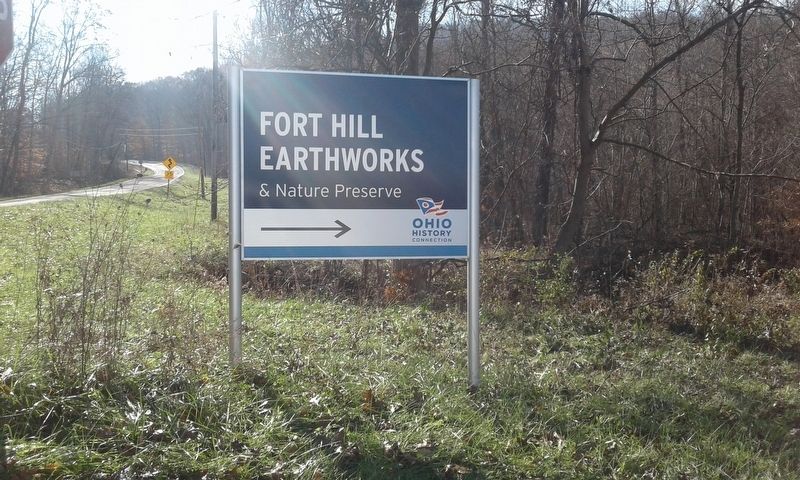
Photographed by Craig Doda, November 18, 2018
5. People of the Forest, 2000 B.P. Marker
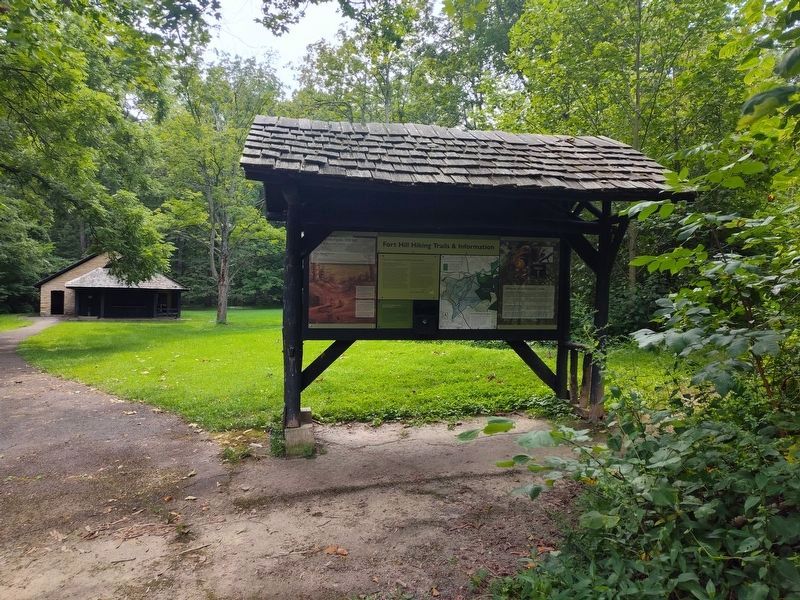
Photographed by Craig Doda, August 2, 2025
6. People of the Forest, 2000 B.P. Marker
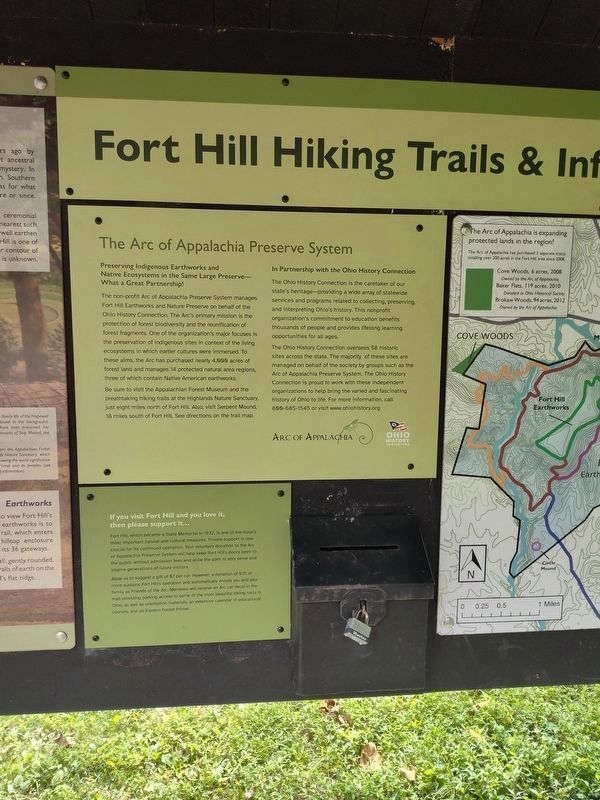
Photographed by Craig Doda, August 2, 2025
7. People of the Forest, 2000 B.P. Marker
Credits. This page was last revised on August 5, 2025. It was originally submitted on January 25, 2023, by Craig Doda of Napoleon, Ohio. This page has been viewed 305 times since then and 23 times this year. Photos: 1, 2, 3, 4, 5. submitted on January 25, 2023, by Craig Doda of Napoleon, Ohio. 6, 7. submitted on August 5, 2025, by Craig Doda of Napoleon, Ohio. • Bill Pfingsten was the editor who published this page.
