North Capitol in Nashville in Davidson County, Tennessee — The American South (East South Central)
East Tennessee's possible re-entry to the Union
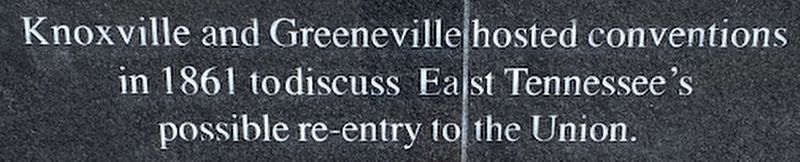
Photographed by Darren Jefferson Clay, December 3, 2022
1. East Tennessee's possible re-entry to the Union Marker
Topics. This historical marker is listed in this topic list: Government & Politics. A significant historical year for this entry is 1861.
Location. 36° 10.255′ N, 86° 47.281′ W. Marker is in Nashville, Tennessee, in Davidson County. It is in North Capitol. It is on 7th Avenue North, on the left when traveling south. Touch for map. Marker is in this post office area: Nashville TN 37219, United States of America. Touch for directions.

Regionally, this marker is in Middle Tennessee. It is also in the American South and specifically in the Upper South. Globally, it is in North America, the Western Hemisphere, the Western World, and the Anglosphere. Historically, it finds itself in what was once the territory of the Mississippian Culture, one of the Confederate States of America, and the Antebellum South.
Other nearby markers. At least 8 other markers are within walking distance of this marker: Fort Henry and Fort Donelson (here, next to this marker); Occupation of Nashville (here, next to this marker);
this page online
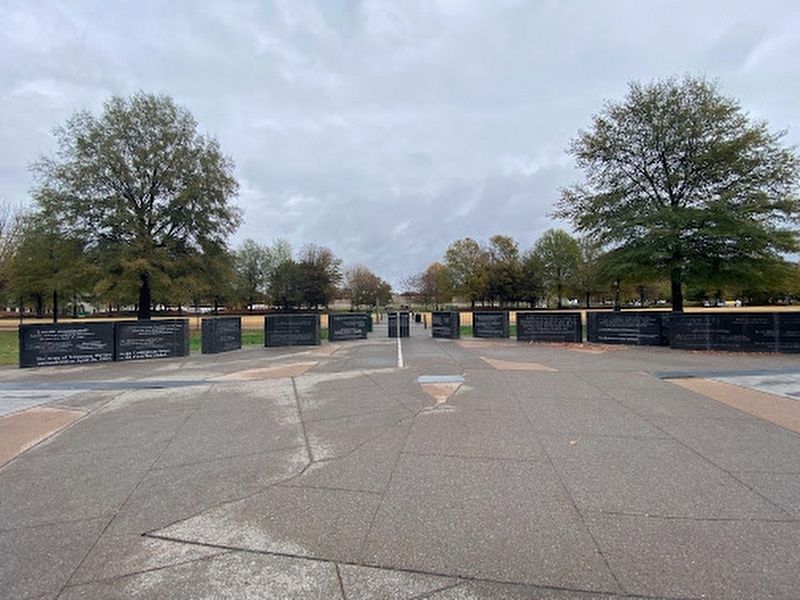
Photographed by Darren Jefferson Clay, December 3, 2022
2. East Tennessee's possible re-entry to the Union Marker
Credits. This page was last revised on February 6, 2023. It was originally submitted on February 4, 2023, by Darren Jefferson Clay of Duluth, Georgia. This page has been viewed 123 times since then and 15 times this year. Photos: 1, 2. submitted on February 4, 2023, by Darren Jefferson Clay of Duluth, Georgia. • Bill Pfingsten was the editor who published this page.
