Stockbridge Township in Ingham County, Michigan — The American Midwest (Great Lakes)
Seasonal Labor
Photographed by Joel Seewald, October 9, 2022
1. Seasonal Labor Marker
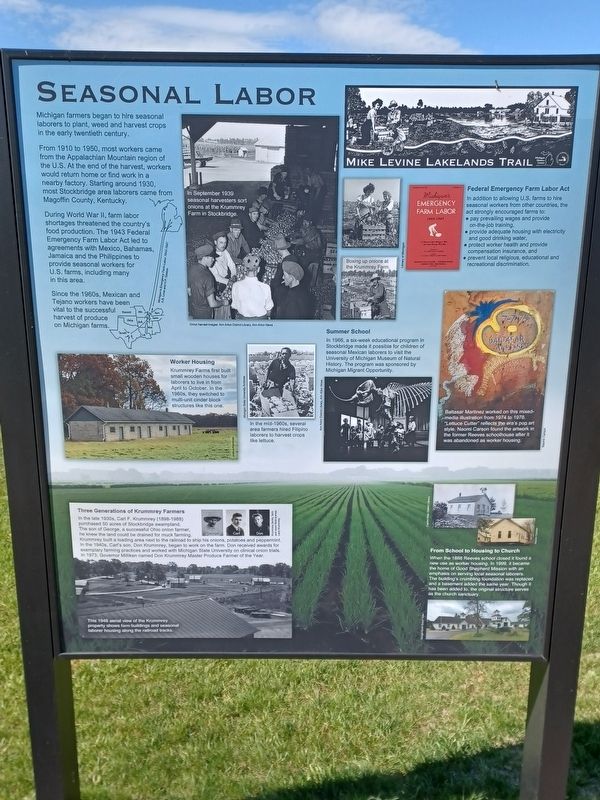
Michigan farmers began to hire seasonal laborers to plant, weed and harvest crops in the early twentieth century.
From 1910 to 1950, most workers came from the Appalachian Mountain region of the U.S. At the end of the harvest, workers would return home or find work in a nearby factory. Starting around 1930, most Stockbridge area laborers came from Magoffin County, Kentucky.
During World War II, farm labor shortages threatened the country's food production. The 1943 Federal Emergency Farm Labor Act led to agreements wtih Mexico, Bahamas, Jamaica and the Philippines to provide seasonal workers for U.S. farms, including many in this area.
Since the 1960s, Mexican and Tejano workers have been vital to the successful harvest of produce on Michigan farms.
Erected 2021 by Mike Levine Lakelands Trail, Michigan History Center, Michigan Department of Natural Resources.
Topics. This historical marker is listed in these topic lists: Agriculture • Industry & Commerce. A significant historical year for this entry is 1910.
Location. 42° 26.079′ N, 84° 11.61′ W. Marker is near Stockbridge, Michigan, in Ingham County.
this page online

Regionally, this marker is in Mid-Michigan and in Greater Lansing. It is also in the American Midwest. Globally, it is in North America, the Western Hemisphere, the Western World, and the Anglosphere. Historically, it finds itself in what was once the Northwest Territory.
Other nearby markers. At least 8 other markers are within 7 miles of this marker, measured as the crow flies: Stockbridge (approx. 1.1 miles away); Stockbridge Town Hall (approx. 1.3 miles away); Stockbridge Civil War Memorial (approx. 1.3 miles away); First Presbyterian Church of Stockbridge (approx. 1.4 miles away); Gregory (approx. 5.8 miles away); Plainfield Methodist Church (approx. 6 miles away); Millville United Methodist Church (approx. 6.4 miles away); This Boulder (approx. 6.7 miles away). Touch for a list and map
Ann Arbor District Library or Ann Arbor News
2. Seasonal Labor Marker — top middle image
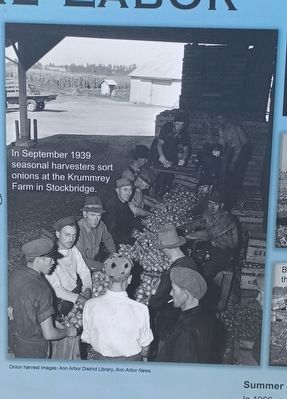
In September 1939 seasonal harvesters sort onions at the Krummrey Farm in Stockbridge.
book cover: Library of Michigan; Onion harvest: Ann Arbor District Library, Ann Arbor News
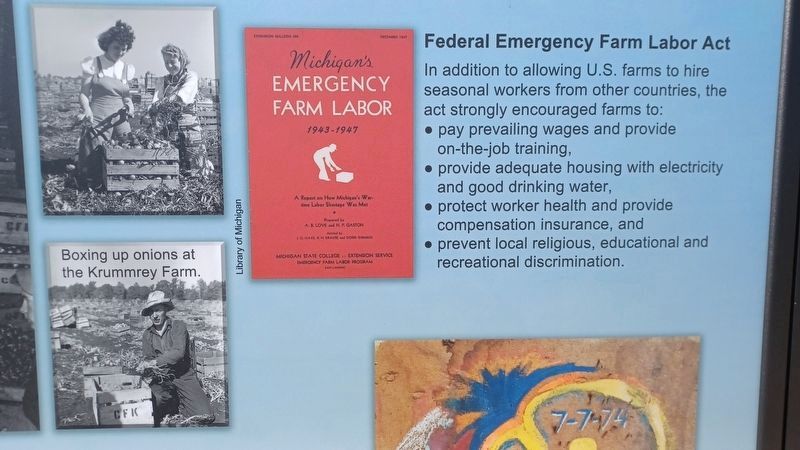
3. Federal Emergency Farm Labor Act
In addition to allowing U.S. farms to hire seasonal workers from other countries, the act strongly encouraged farms to:
• pay prevailing wages and provide on-the-job training,
• provide adequate housing with electricity and good drinking water
• protect worker health and provide compensation insurance, and
• prvent local religious, educational and recreation discrimination.
Bottom left image caption: Boxing up onions at the Krummrey Farm.
• pay prevailing wages and provide on-the-job training,
• provide adequate housing with electricity and good drinking water
• protect worker health and provide compensation insurance, and
• prvent local religious, educational and recreation discrimination.
Bottom left image caption: Boxing up onions at the Krummrey Farm.
Photographed by Joshua Kaminski
4. Worker Housing
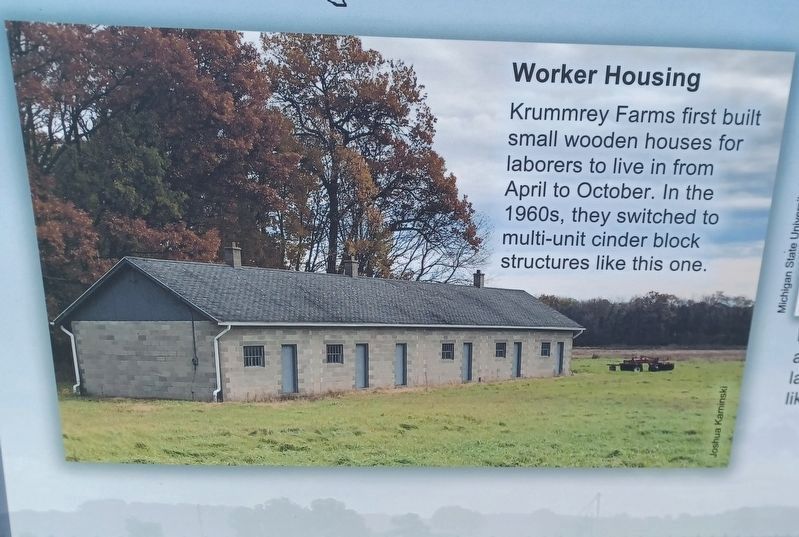
Krummrey Farms first built small wooden houses for laborers to live in from April to October. In the 1960s, they switched to multi-unit cinder block structures like this one.
Michigan State University Archives
5. Seasonal Labor Marker — middle row, near left image
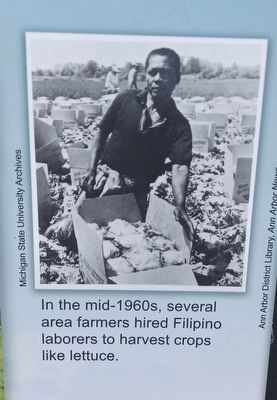
In the mid-1960s, several area farmers hired Filipino laborers to harvest crops like lettuce.
Ann Arbor District Library, Ann Arbor News
6. Summer School
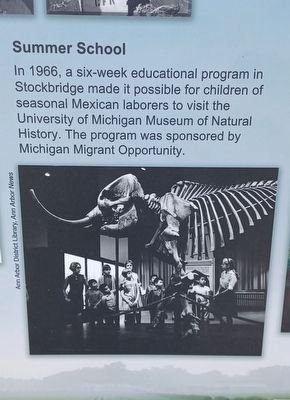
In 1966, a six-week educational program in Stockbridge made it possible for children of seasonal Mexican laborers to visit the University of Michigan Museum of Natural History. The program was sponsored by Michigan Migrant Opportunity.
Photographed by Naomi Carson
7. Seasonal Labor Marker — middle row far right image
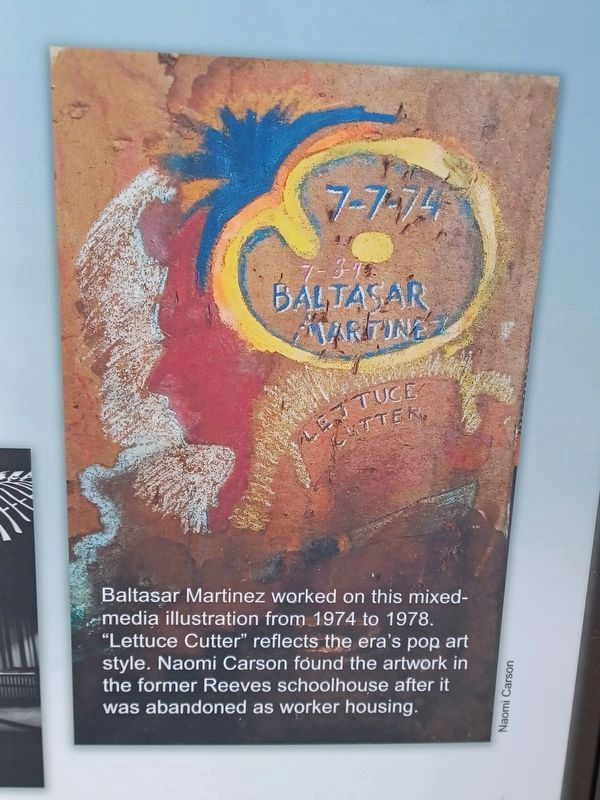
Baltasar Martinez worked on this mixed-media illustration from 1974 to 1978. "Lettuce Cutter" reflects the era's pop art style. Naomi Carson found the artwork in the former Reeves schoolhouse after it was abandoned as worker housing.
Photographed by Larry Krummrey
8. Three Generations of Krummrey Farms
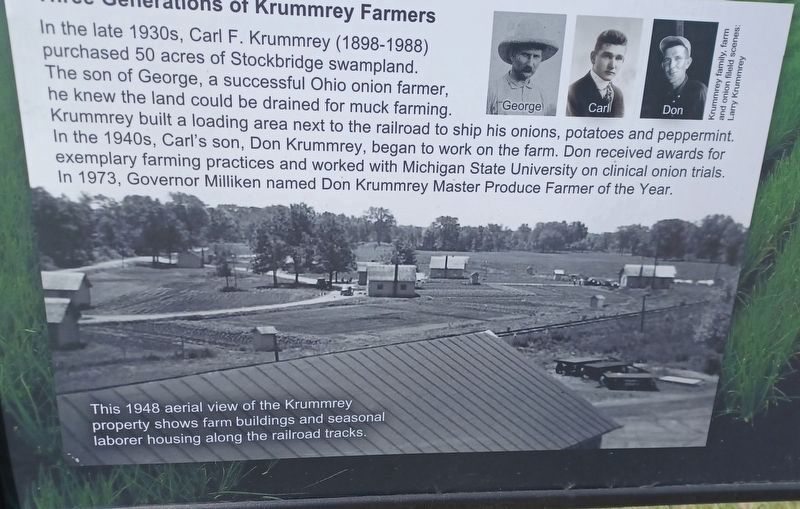
In the late 1930s, Carl F. Krummrey (1898-1988) purchased 50 acres of Stockbridge swampland. The son of George, a successful Ohio onion farmer, he knew the land could be drained for muck farming. Krummrey built a loading area next to the railroad to ship his onions, potatoes and peppermint. In the late 1940s, Carl's son, Don Krummrey, began to work on the farm. Don received awards for exemplary farming practices and worked with Michigan State University on clinical onion trials. In 1973, Governor Milliken named Don Krummrey Master Prodcue Farmer of the Year.
Lower photo caption: This 1948 aerial view of the Krummrey property shows farm buildings and seasonal laborer housing along the railroad tracks.
Lower photo caption: This 1948 aerial view of the Krummrey property shows farm buildings and seasonal laborer housing along the railroad tracks.
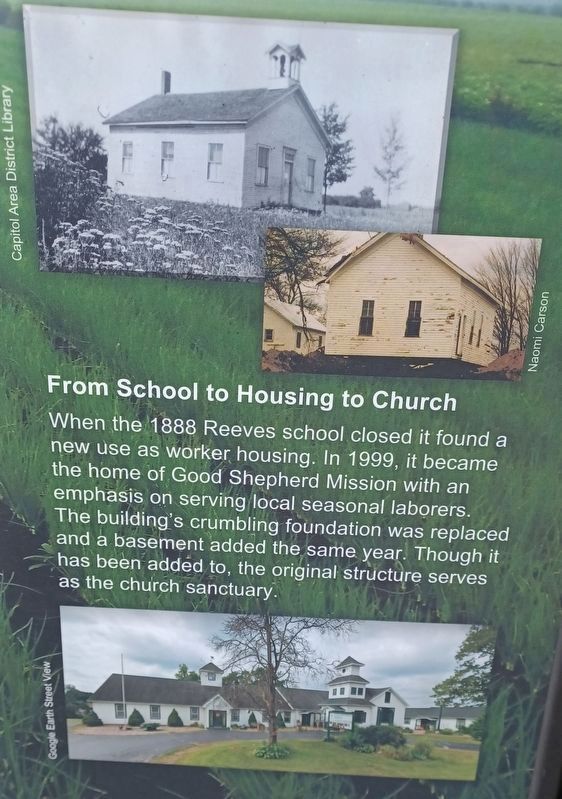
Top: Capitol Area District Library; middle: Naomi Carson; bottom: Google Earth Street View
9. From School to Housing to Church
When the 1888 Reeves school closed it found a new use as worker housing. In 1999, it became the home of Good Shepherd Mission with an emphasis on serving local seasonal laborers. The building's crumbling foundation was replaced and a basement added the same year. Though it has been added to, the original structure serves as the church sanctuary.
Photographed by Joel Seewald, October 9, 2022
10. Seasonal Labor Marker
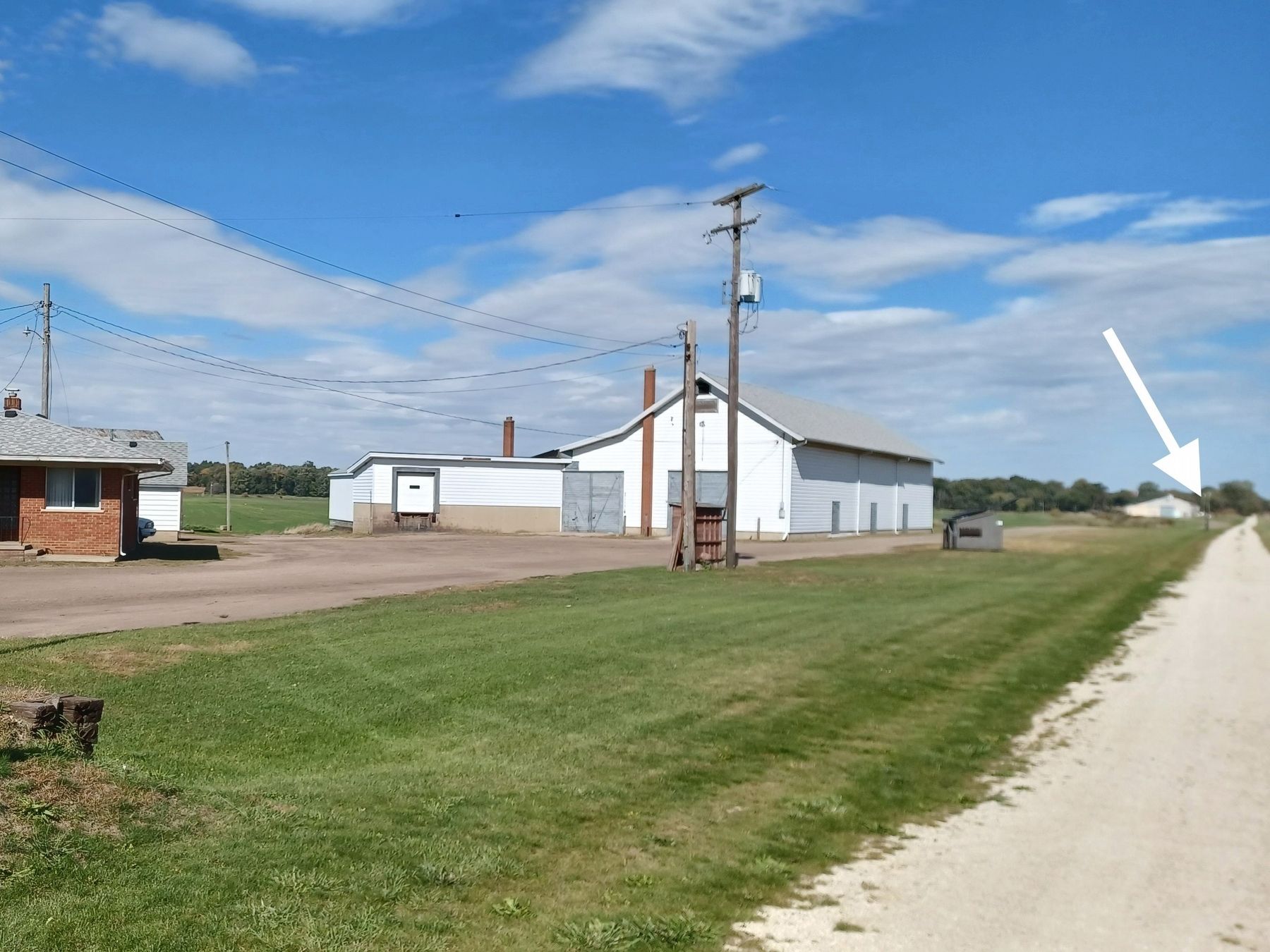
View looking toward the northeast along the Mike Levine Lakelands Trail from Krummrey Lane.
Credits. This page was last revised on June 5, 2023. It was originally submitted on May 1, 2023, by Joel Seewald of Madison Heights, Michigan. This page has been viewed 273 times since then and 23 times this year. Photos: 1, 2, 3, 4, 5, 6, 7, 8, 9, 10. submitted on May 1, 2023, by Joel Seewald of Madison Heights, Michigan.
