Glencoe Village near Burlington in Alamance County, North Carolina — The American South (South Atlantic)
Glencoe - Life in the Mill Village
From Farm to Factory
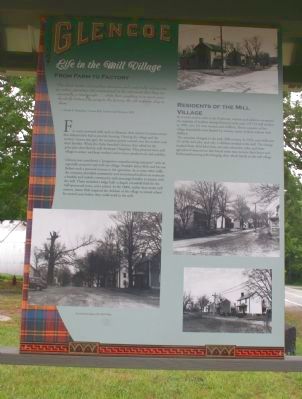
Photographed by Patrick G. Jordan, May 22, 2010
1. Glencoe - Life in the Mill Village Marker
- Daniel A. Tompkins, Cotton Mill, Commercial Features, 1899.
For water powered mills such as Glencoe, their remote locations meant that industrialists had to provide housing. Owning the mill village and the workers’ houses also gave the company greater control over the workers and their families. When the Holts founded Glencoe, they relied on the principles described by mill developer Tompkins. They planned their mill village to attract and keep workers and to foster productivity and stability.
Glencoe was considered a “progressive manufacturing enterprise” with an especially attractive and well-run village. Founder James Holt and his son Robert took a personal interest in the operation. As at some other mills, the company provided community and recreational facilities to maintain a healthy and orderly community and encourage families to
this page online
Reverse side of marker
Residents of the Mill Village
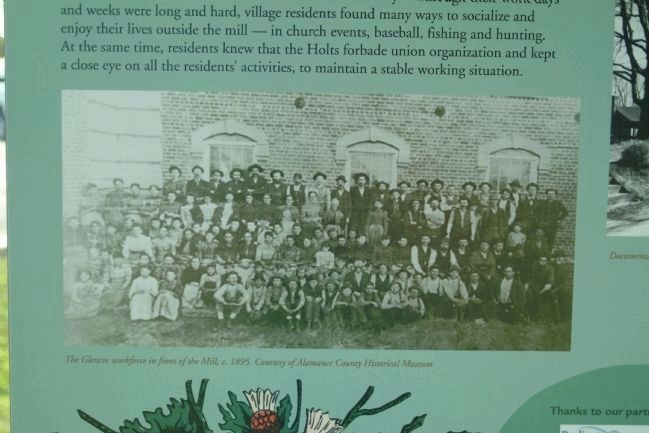
As at most cotton mills in the Piedmont, women and children comprised the majority of workers during Glencoe’s early years. Of 133 mill workers in 1890, over 2/3 were women and children. About a quarter of the village households were headed by women, many of them widows with children.
The situation changed in the early 20th century. In 1924, men held over 2/3 of the mill jobs, and only 2 children worked in the mill. The change resulted from child labor laws and state education rules, and from the agricultural depressions that forced more men to leave their farms and find manufacturing jobs, bringing their whole family to the mill village.
Village Design and Facilities
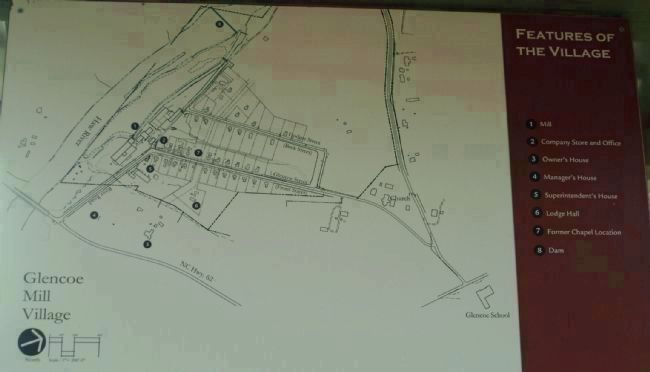
In typical form the mill stands beside the river. Nearby are the company store and office, and the residence of the superintendent.
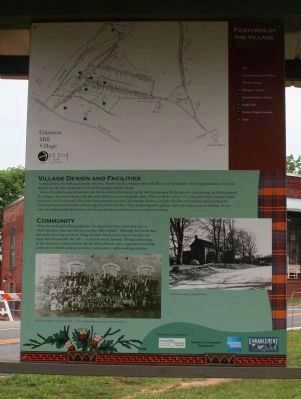
Photographed by Patrick G. Jordan, May 22, 2010
2. Glencoe - Life in the Mill Village Marker reverse
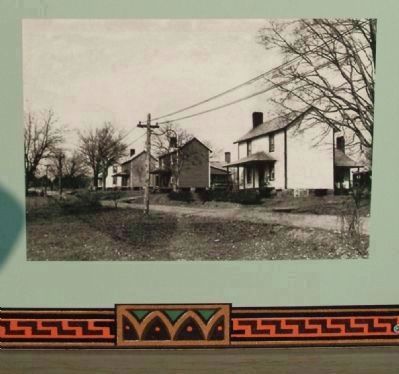
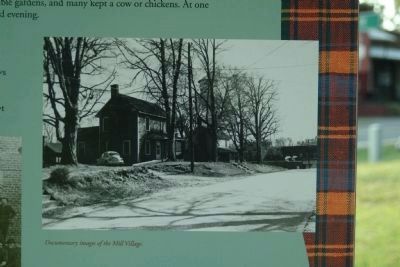
Rows of modest houses for workers line the two streets that stretch up the hill. In keeping with the idea of a rural setting, the Holts planned the village to have good-sized yards, plus individual and common garden plots. There are both 1-story, 1 ½-story and 2-story houses, which had from 3 to 6 rooms each. Most have front porches and many had separate kitchens in back. Families used outdoor privies behind the individual houses and shared a well among two to four families. They tended vegetable gardens and many kept a cow or chickens. At one time, the mill provided electricity to the houses during certain hours in morning and evening.
Community
From the working family’s perspective, the community was a close-knit one, in which members often cared for one another “like a family.” Although their work days and weeks were long and hard, village residents found many ways to socialize and enjoy their lives outside the mill – in church events, baseball, fishing and hunting. At the same time, residents knew that the Holts forbade union organizations and kept
Photographed by Patrick G. Jordan, June 27, 2010
3. Glencoe - Life in the Mill Village Marker reverse
Topics. This historical marker is listed in these topic lists: Industry & Commerce • Notable Places • Settlements & Settlers. A significant historical year for this entry is 1899.
Location. 36° 8.327′ N, 79° 25.66′ W. Marker is near Burlington, North Carolina, in Alamance County. It is in Glencoe Village. It is on Glencoe Street, on the right when traveling west. Glencoe Village is 3 miles north of Burlington, NC from NC Highway 62. Touch for map. Marker is at or near this postal address: 2401 Glencoe St, Burlington NC 27217, United States of America. Touch for directions.

Regionally, this marker is in the Piedmont and specifically in Piedmont Triad. It is also in the American South and specifically in the Upper South. Globally, it is in North America, the Western Hemisphere, the Western World, and the Anglosphere. Historically, it finds itself in what was once the territory of the Mississippian Culture, one of the original Thirteen Colonies, one of the Confederate States of America, and the Antebellum South.
Other nearby markers. At least 8 other markers are within walking distance of this marker: A Legacy of Community (a few steps from this marker); Glencoe Management Houses (within shouting distance of this marker); African Americans in the Mill Village (within shouting distance of this marker); The Mill Buildings (within shouting distance of this marker); Men in the Mill Village (within shouting distance of this marker); After the Whistle Blows (within shouting distance of this marker); Picker House and Dye House (within shouting distance of this marker); Glencoe - Company Office and Store (within shouting distance of this marker). Touch for a list and map of all markers in Burlington.
Additional keywords. Alamance
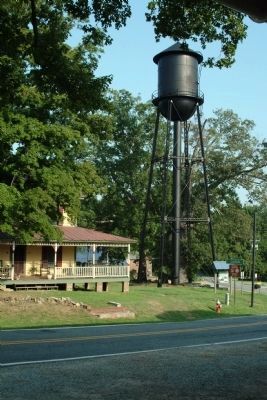
Photographed by Patrick G. Jordan, July 25, 2010
4. Glencoe - Life in the Mill Village Marker and Water Tower
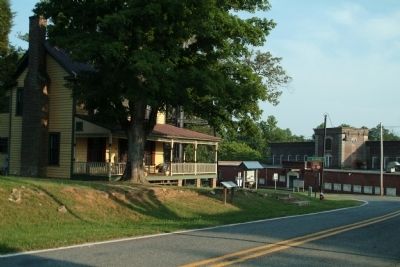
Photographed by Patrick G. Jordan, June 27, 2010
5. Glencoe - Life in the Mill Village Marker and Management House
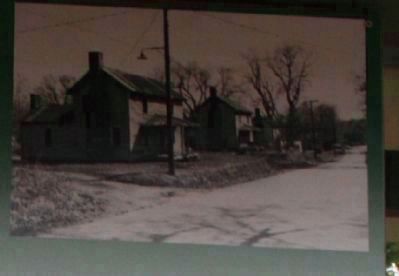
Photographed by Patrick G. Jordan, May 22, 2010
6. Documentary images of the Mill Village.
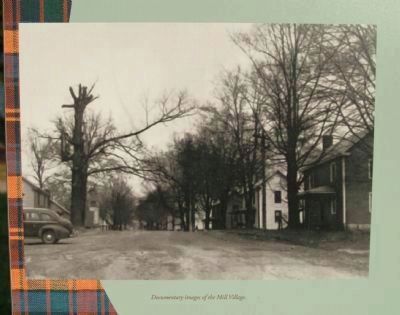
Photographed by Patrick G. Jordan, June 27, 2010
7. Documentary images of the Mill Village.
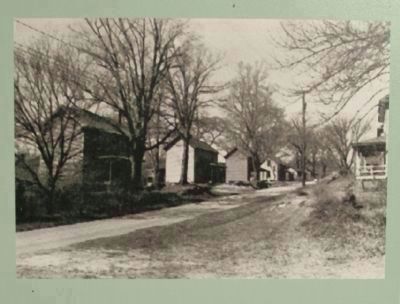
Photographed by Patrick G. Jordan, June 27, 2010
8. Documentary images of the Mill Village.
Photographed by Patrick G. Jordan, June 27, 2010
9. Documentary images of the Mill Village.
Photographed by Patrick G. Jordan, June 27, 2010
10. Documentary image of Mill Village.
Photographed by Patrick G. Jordan, June 27, 2010
11. Glencoe - Life in the Mill Village Marker
reverse side of marker
Photographed by Patrick G. Jordan, June 27, 2010
12. The Glencoe workforce in front of the Mill, c. 1895.
Credits. This page was last revised on May 12, 2023. It was originally submitted on July 25, 2010, by Patrick G. Jordan of Graham, North Carolina. This page has been viewed 1,250 times since then and 42 times this year. Last updated on May 9, 2023, by Michael Buckner of Durham, North Carolina. Photos: 1, 2, 3, 4, 5, 6, 7, 8, 9, 10, 11, 12. submitted on July 25, 2010, by Patrick G. Jordan of Graham, North Carolina. • J. Makali Bruton was the editor who published this page.
