Glencoe Village near Burlington in Alamance County, North Carolina — The American South (South Atlantic)
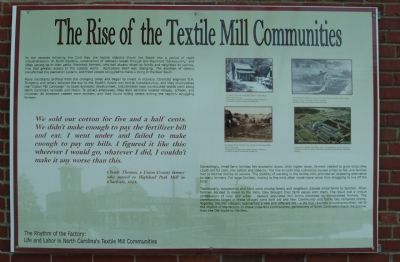
The Rise of the Textile Mill Communities
Photographed by Patrick G. Jordan, June 27, 2010
1. The Rise of the Textile Mill Communities Marker
Many merchants profited from the changing times and began to invest in industry. Charlotte engineer D.A. Tompkins and others believed the key to the South’s future was textile manufacturing, and they championed the “Cotton Mill Campaign” to boost economic development. Industrialists soon constructed textile mills along North Carolina’s railroads and rivers. To attract employees, they built centrally located villages, schools, and churches. All investors needed were workers, and they found willing takers among the region’s struggling farmers.
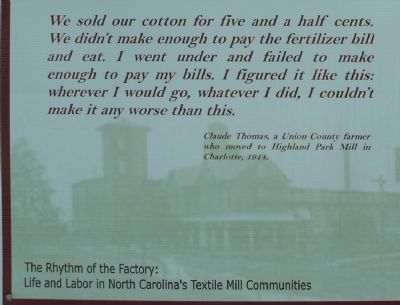
We sold our cotton for five and a half cents. We didn’t make enough to pay the fertilizer bill and eat. I went under and failed to make enough to pay my bills. I figured it like this: wherever I would go, whatever I did, I couldn’t make it any worse than this.
Claude Thomas, a Union County farmer who moved to Highland Park Mill in Charlotte, 1914.
Increasingly,
this page online
Traditionally, cooperation and hard work among family and neighbors allowed small farms to function. When families decided to move to the mills, they brought their farm values with them. The result was a unique combination of rural and urban – densely populated mill towns inhabited by transplanted farmers. The communities forged in these villages were both old and new. Community and family remained strong. Together, the mill villagers approached a new and different life – a life that revolved around production, set to the rhythm of the factory. In these close-knit communities, generations of North Carolinians made the journey from the Old South to the New.
Topics. This historical marker is listed
Photographed by Patrick G. Jordan, June 27, 2010
2. The Rise of the Textile Mill Communities Marker
Location. 36° 8.344′ N, 79° 25.682′ W. Marker is near Burlington, North Carolina, in Alamance County. It is in Glencoe Village. It is on Glencoe Street, on the left when traveling west. Glencoe Village is 3 miles north of Burlington, NC from NC Highway 62. Touch for map. Marker is at or near this postal address: 2406 Glencoe St, Burlington NC 27217, United States of America. Touch for directions.

Regionally, this marker is in North Carolina’s Piedmont and specifically in Piedmont Triad. It is also in the American South and specifically in the Upper South. Globally, it is in North America, the Western Hemisphere, the Western World, and the Anglosphere. Historically, it finds itself in what was once the territory of the Mississippian Culture, one of the original Thirteen Colonies, one of the Confederate States of America, and the Antebellum South.
Other nearby markers. At least 8 other markers are within walking distance of this marker: Cotton Dust and Poverty (here, next to this marker); Calling the Mill Village 'Home'
Photographed by Patrick G. Jordan, June 27, 2010
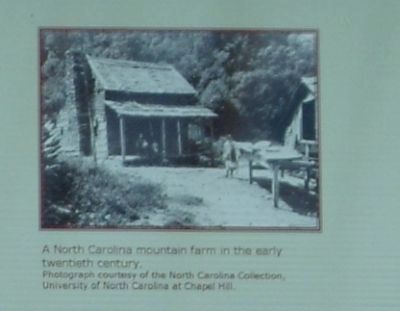
3. A North Carolina mountain farm in the early twentieth century.
Related markers. Click here for a list of markers that are related to this marker. To better understand the relationship, study each marker in the order shown.
Additional keywords. Alamance Cotton Mill, Glencoe, Fabric, Textiles, Company Shops, Holt
Photographed by Patrick G. Jordan, June 27, 2010
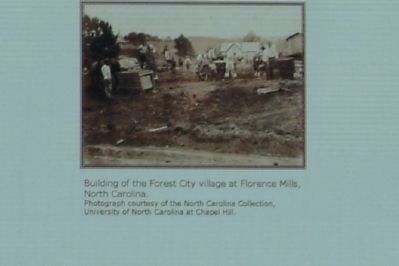
4. Building of the Forest City village at Florence Mills, North Carolina.
Photographed by Patrick G. Jordan, June 27, 2010
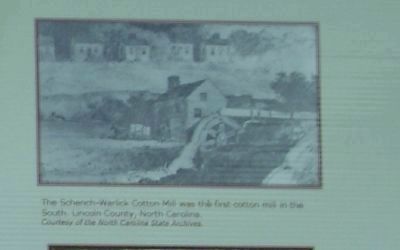
5. The Schench-Warlick Cotton Mill was the first cotton mill in the South.
Lincoln County, North Carolina.
Photographed by Patrick G. Jordan, June 27, 2010
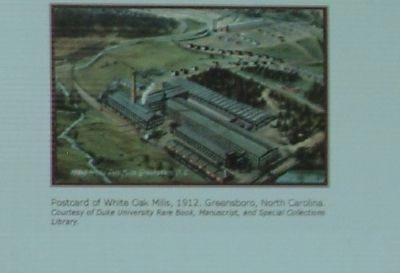
6. Postcard of White Oak Mills, 1912. Greensboro, North Carolina.
Photographed by Patrick G. Jordan, June 27, 2010
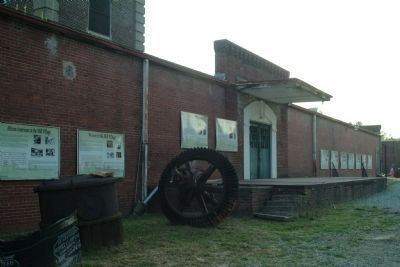
7. Rhythm of the Factory - Series of Markers on Glencoe Mill
Photographed by Patrick G. Jordan, June 27, 2010
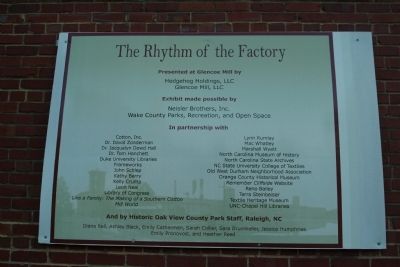
8. Rhythm of the Factory Marker
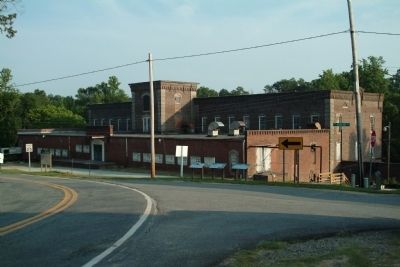
Photographed by Patrick G. Jordan, June 27, 2010
9. Glencoe Mill
Credits. This page was last revised on May 12, 2023. It was originally submitted on July 24, 2010, by Patrick G. Jordan of Graham, North Carolina. This page has been viewed 1,640 times since then and 48 times this year. Last updated on May 9, 2023, by Michael Buckner of Durham, North Carolina. Photos: 1, 2, 3, 4, 5, 6, 7, 8, 9. submitted on July 24, 2010, by Patrick G. Jordan of Graham, North Carolina. • J. Makali Bruton was the editor who published this page.
