Historisch centrum in Antwerpen, Flanders, Belgium — Northwestern Europe
Antoon van Dijck
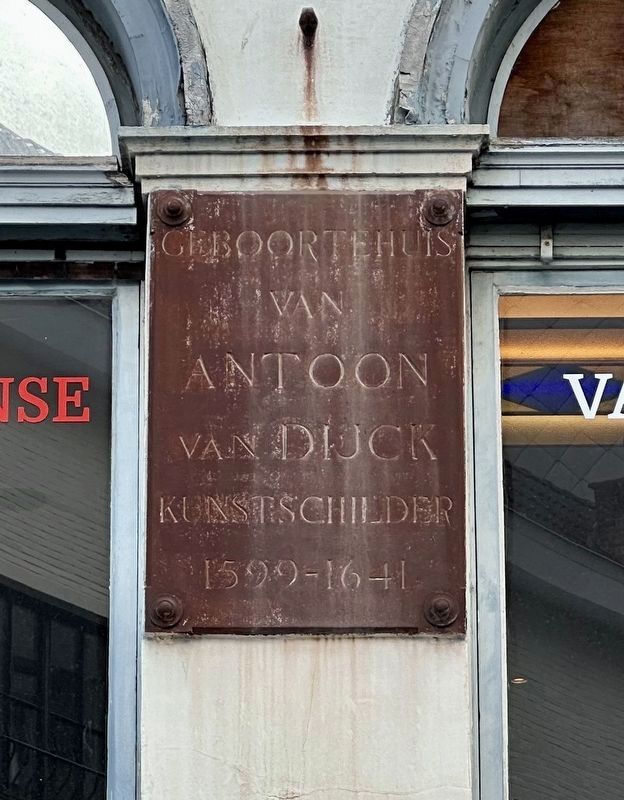
Photographed by Andrew Ruppenstein, May 12, 2023
1. Antoon van Dijck Marker

van
Antoon
van Dijck
Kunstschilder
1599 - 1641
Birthplace of the painter Antoon van Dijck (1599 - 1641).
Topics. This historical marker is listed in this topic list: Arts, Letters, Music. A significant historical date for this entry is March 22, 1599.
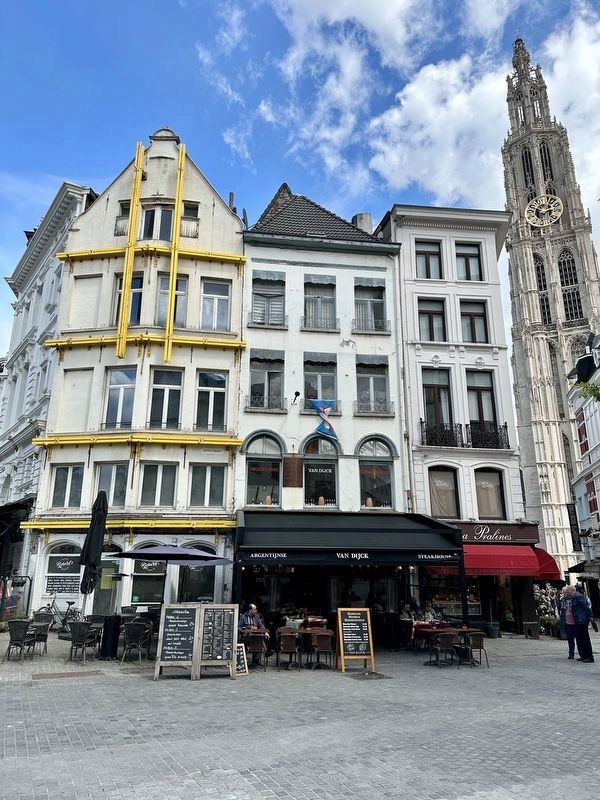
Location. 51° 13.242′ N, 4° 23.962′ E. Marker is in Antwerpen, Vlaanderen (Flanders). It is in Historisch centrum. It is on Grote Markt, on the right when traveling north. Touch for map. Marker is at or near this postal address: Grote Markt 4, Antwerpen, Vlaanderen 2000, Belgium. Touch for directions.

Regionally, it is in Europe, the European Union, Atlantic Europe, the Benelux Low Countries, the Schengen Area, Western Europe, and the Western World. Historically, it finds itself in what was once the Roman Empire and specifically also the Holy Roman Empire.
Other nearby markers. At least 8 other markers are within walking distance of this marker: Ruihuis (about 90 meters away, measured in a direct line); Willem Ogier (about 120 meters away); Ernest van Dyck (about 120 meters away); Snoepje Napoleon / Napoleon Candy (about
this page online
Also see . . .
1. Anthony van Dyck (Wikipedia).
Overview and importance: Sir Anthony van Dyck (many variant spellings; 22 March 1599 – 9 December 1641) was a Flemish Baroque artist who became the leading court painter in England after success in the Spanish Netherlands and Italy.(Submitted on May 23, 2023.)
With the exception of Holbein, van Dyck and his contemporary Diego Velázquez were the first painters of pre-eminent talent to work mainly as court portraitists, revolutionising the genre. He is best known for his portraits of the aristocracy, most notably Charles I, and his family and associates. Van Dyck became the dominant influence on English portrait-painting for the next 150 years. He also painted mythological and biblical subjects, including altarpieces, displayed outstanding facility as a draughtsman, and was an important innovator in watercolour andetching.Photographed by Andrew Ruppenstein, May 12, 20232. Antoon van Dijck Marker - wide viewThe marker is visible here between the two windows, directly above the black awning.
His influence extends into the modern period. The Van Dyke beard is named after him...
2. Anthony van Dyck in 60 seconds (YouTube, 72 seconds).
Who was Anthony van Dyck? Why was he so adored by King Charles I? Our Artistic Director Tim Marlow explores his life and work in this short introduction. - Royal Academy of Arts(Submitted on May 23, 2023.)
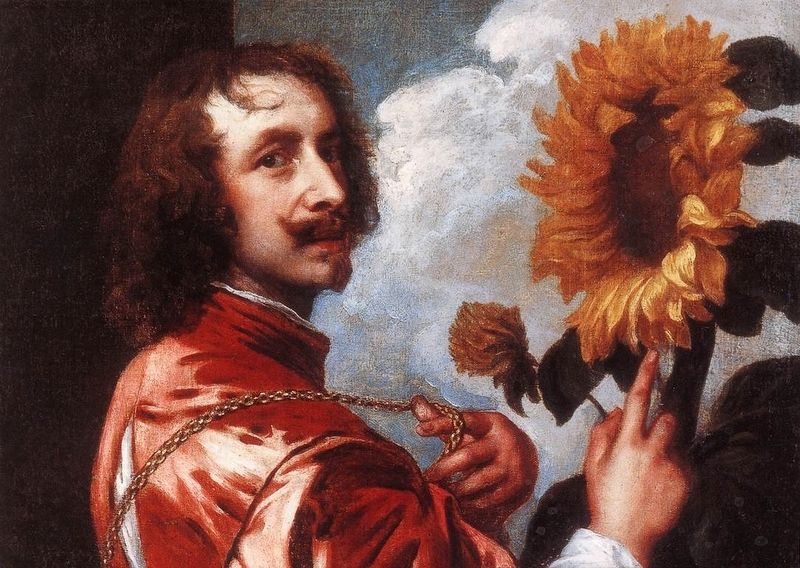
Photographed by Antoon van Dijck (via Wikimedia Commons)
3. Anthony van Dyck, Self-portrait with a Sunflower (after 1633)
Credits. This page was last revised on May 23, 2023. It was originally submitted on May 23, 2023, by Andrew Ruppenstein of Lamorinda, California. This page has been viewed 190 times since then and 28 times this year. Photos: 1, 2, 3. submitted on May 23, 2023, by Andrew Ruppenstein of Lamorinda, California.
