Amersfoort, Utrecht, Netherlands — Northwestern Europe
“Groot Tinnenburg” (Tynnenborch)
Photographed by Andrew Ruppenstein, May 10, 2023
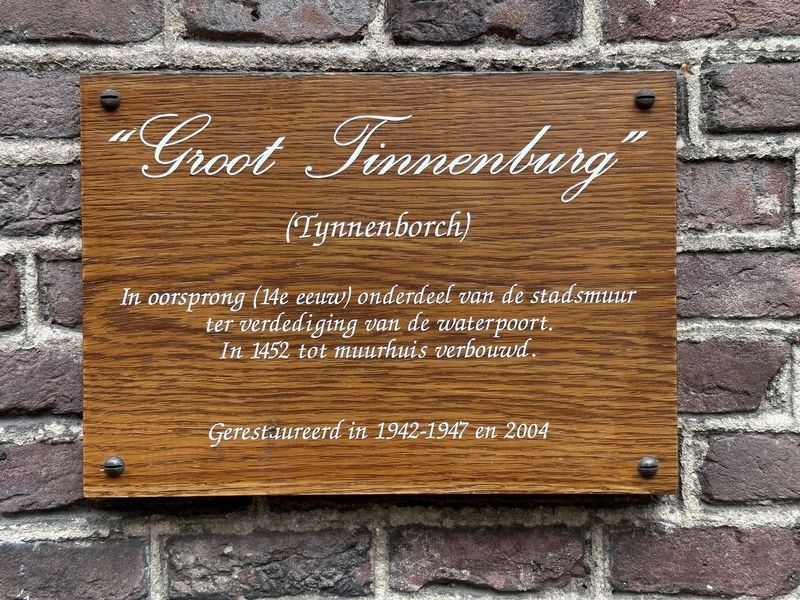
1. “Groot Tinnenburg” (Tynnenborch) Marker

In oorsprong (14e eeuw) onderdeel van de stadsmuur ter verdediging van de waterpoort. In 1452 tot muurhuis verbouwd.
Gerestaureerd in 1942-1947 en 2004
Originally (14th century) part of the city wall to defend the water gate. Converted into a wall house in 1452.
Restored in 1942-47 and 2004.
Topics. This historical marker is listed in this topic list: Forts and Castles. A significant historical year for this entry is 1452.
Location. 52° 9.271′ N, 5° 23.489′ E. Marker is in Amersfoort, Utrecht. It is on Muurhuizen, on the right when traveling north. Touch for map. Marker is at or near this postal address: Muurhuizen 25, Amersfoort, Utrecht 3811 KJ, Netherlands. Touch for directions.

Regionally, it is in Europe, the European Union, Atlantic Europe, the Benelux Low Countries, the Schengen Area, Western Europe, and the Western World. Historically, it finds itself in what was once the Roman Empire and specifically also the Holy Roman Empire.
Other nearby markers. At least 8 other markers are within walking distance of this marker: Het Koetshuys / The Coach House (a few steps
this page online
Also see . . . Huis Tinnenburg (Wikipedia, in Dutch).
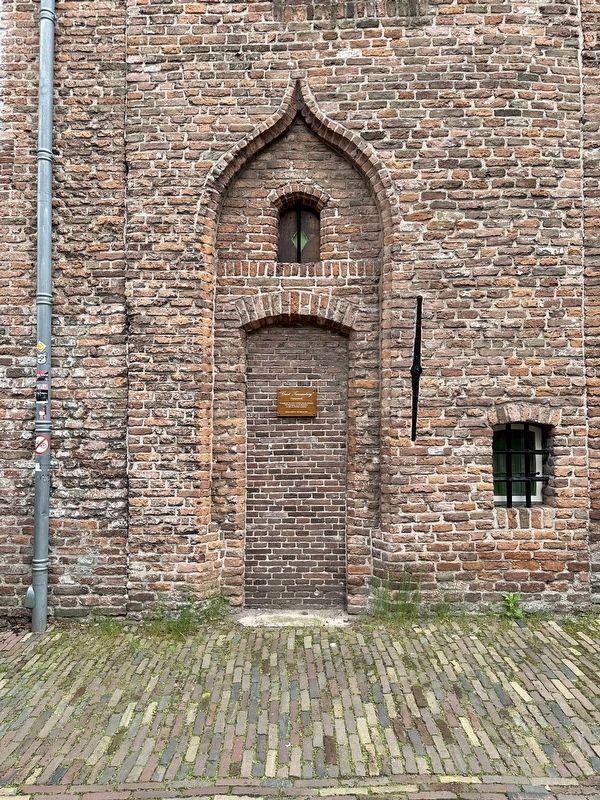
Background (in translation): After Amersfoort received city rights in 1259, a city wall was erected, possibly Tinnenburg was already included in the wall as a fortification to defend the water supply from the Heiligenbergerbeek. The house is first mentioned in 1414. Together with the Rommelenburg house, Tinnenburg formed a water gate on the other side of the canal. After the second city wall was completed in the 15th century, the first was demolished and the stones were used for the construction of wall houses. Due to the construction of the Monnikendam, the(Submitted on May 24, 2023.)water gate at Tinnenburg became redundant and was demolished. Rommelenburg was demolished in the first half of the 19th century.Photographed by Andrew Ruppenstein, May 10, 20232. “Groot Tinnenburg” (Tynnenborch) Marker - wide view
Photographed by Andrew Ruppenstein, May 10, 2023
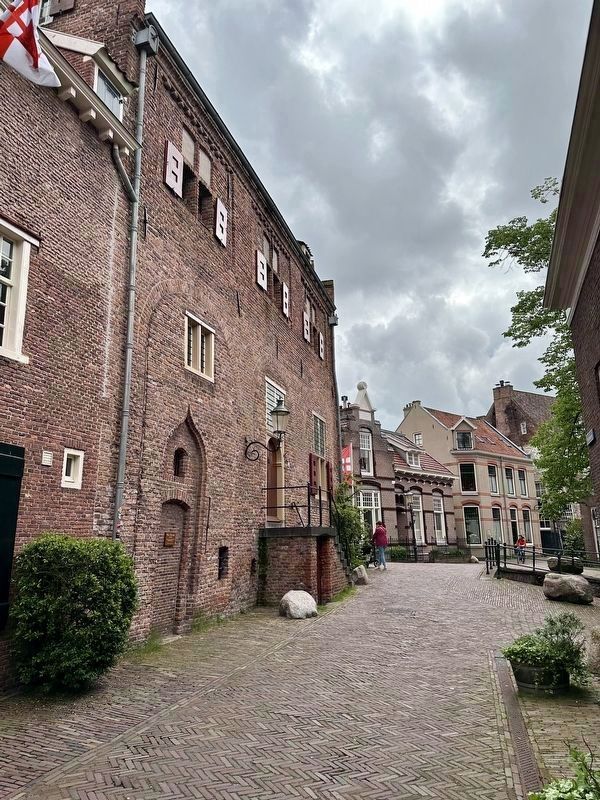
3. “Groot Tinnenburg” (Tynnenborch) Marker - wider view, looking south on Muurhuizen
Photographed by Andrew Ruppenstein, May 10, 2023
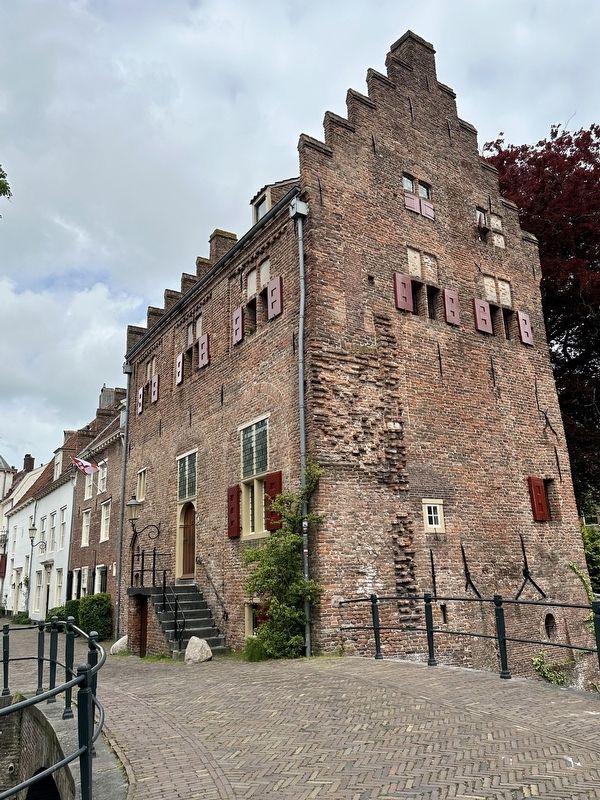
4. “Groot Tinnenburg” (Tynnenborch) - looking north on Muurhuizen
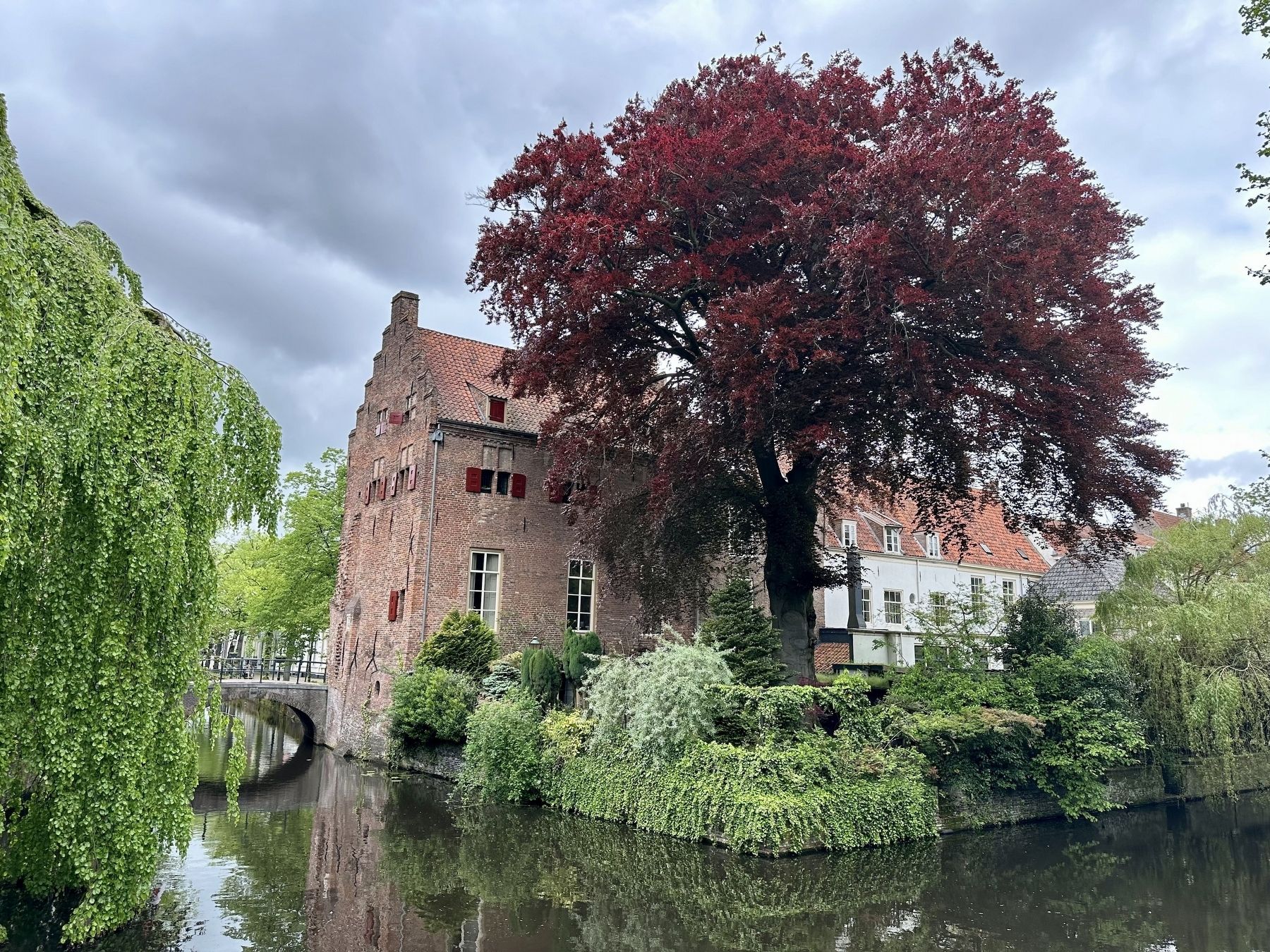
Photographed by Andrew Ruppenstein, May 10, 2023
5. “Groot Tinnenburg” (Tynnenborch) - view from the east
Credits. This page was last revised on December 24, 2023. It was originally submitted on May 24, 2023, by Andrew Ruppenstein of Lamorinda, California. This page has been viewed 374 times since then and 46 times this year. Photos: 1, 2, 3, 4, 5. submitted on May 24, 2023, by Andrew Ruppenstein of Lamorinda, California.
