Centrum in Den Haag, South Holland, Netherlands — Northwestern Europe
Koning Willem II
⎯⎯⎯
King William II
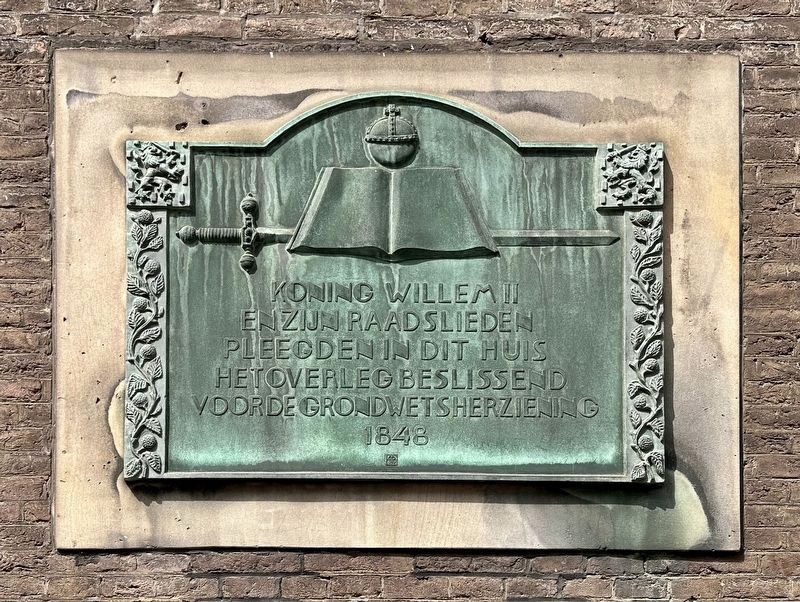
Photographed by Andrew Ruppenstein, May 8, 2023
1. Koning Willem II / King William II Marker

Koning Willem II en zijn raadslieden pleegden in dit huis het overleg beslissend voor de grondwetsherziening 1848
King Willem II and his counselors held consultations in this house that were decisive for the 1848 constitutional revision.
Topics. This historical marker is listed in this topic list: Government & Politics. A significant historical year for this entry is 1848.
Location. 52° 4.867′ N, 4° 18.513′ E. Marker is in Den Haag, Zuid-Holland (South Holland). It is in Centrum. It is at the intersection of Heulstraat and Kneuterdijk, on the right when traveling west on Heulstraat. Touch for map. Marker is at or near this postal address: Heulstraat 14, Den Haag, Zuid-Holland 2514 EN, Netherlands. Touch for directions.

Regionally, it is in Europe, the European Union, Atlantic Europe, the Benelux Low Countries, the Schengen Area, Western Europe, and the Western World. Historically, it finds itself in what was once the Roman Empire and specifically also the Holy Roman Empire.
Other nearby markers. At least 8 other markers are within walking distance of this marker: Paleis Kneuterdijk / Palace Kneuterdijk
this page online
Also see . . . William II of the Netherlands.
Excerpt: William II (Dutch: Willem Frederik George Lodewijk, anglicized as William Frederick George Louis; 6 December 1792 – 17 March 1849) was King of the Netherlands, Grand Duke of Luxembourg, and Duke of Limburg...(Submitted on June 6, 2023.)
On 7 October 1840, on his father's abdication, he acceded to the throne as William II. Although he shared his father's conservative inclinations, he did not intervene in governmental affairs nearly as much as his father had. There was increased agitation for broad constitutional reform and a wider electoral franchise.Although William was certainly no democrat, he acted with sense and moderation.Photographed by Andrew Ruppenstein, May 8, 20232. Koning Willem II / King William II Marker - wide view
The Revolutions of 1848 broke out all over Europe. In Paris the Bourbon-Orléans monarchy that had stolen "his" southern provinces fell. Warned that the revolution might spread to the Netherlands next, William decided to institute a more liberal regime, believing it was better to grant reforms instead of having them imposed on him on less favourable terms later. As he later put it, "I changed from conservative to liberal in one night". He chose a committee headed by the prominent liberal Johan Rudolf Thorbecke to create a new constitution.
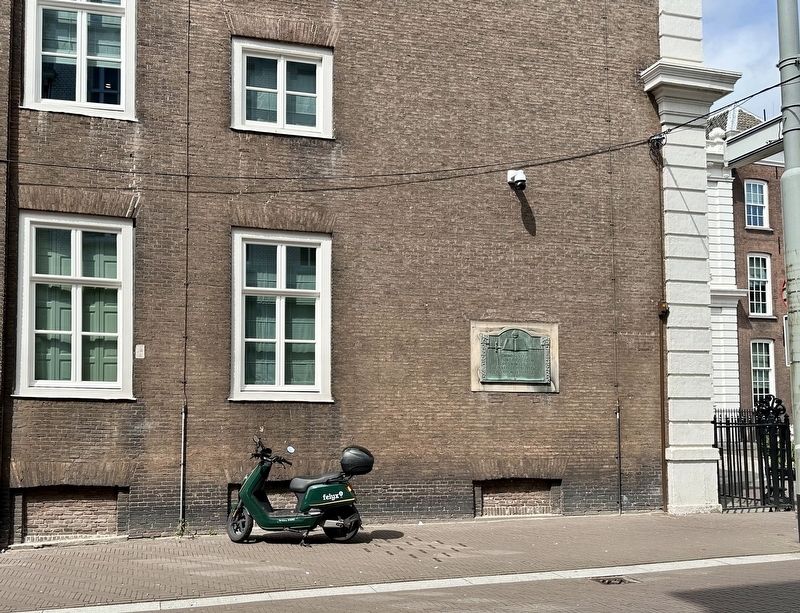
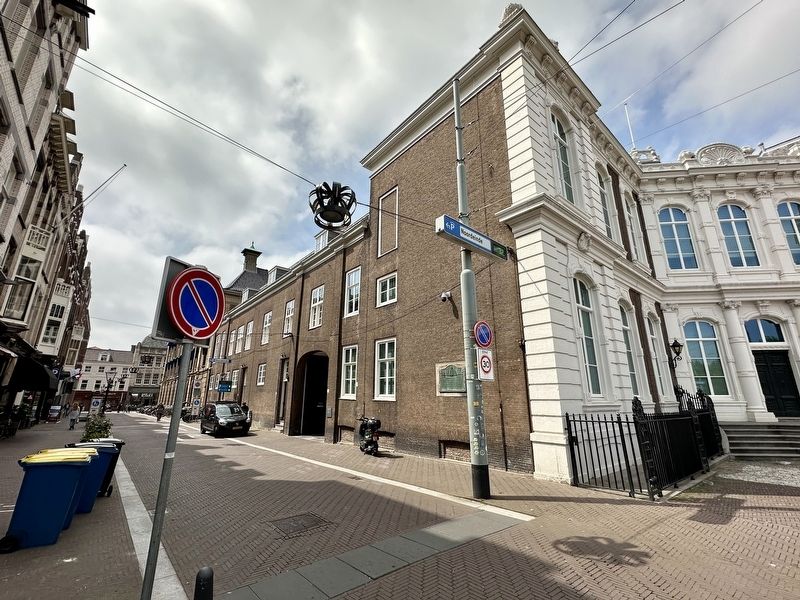
Photographed by Andrew Ruppenstein, May 8, 2023
3. Koning Willem II / King William II Marker - wider view
Credits. This page was last revised on December 24, 2023. It was originally submitted on June 6, 2023, by Andrew Ruppenstein of Lamorinda, California. This page has been viewed 175 times since then and 26 times this year. Photos: 1, 2, 3. submitted on June 6, 2023, by Andrew Ruppenstein of Lamorinda, California.
