Centrum in Den Haag, South Holland, Netherlands — Northwestern Europe
Witte Paleisje
⎯⎯⎯
The White Palace
Photographed by Andrew Ruppenstein, May 8, 2023
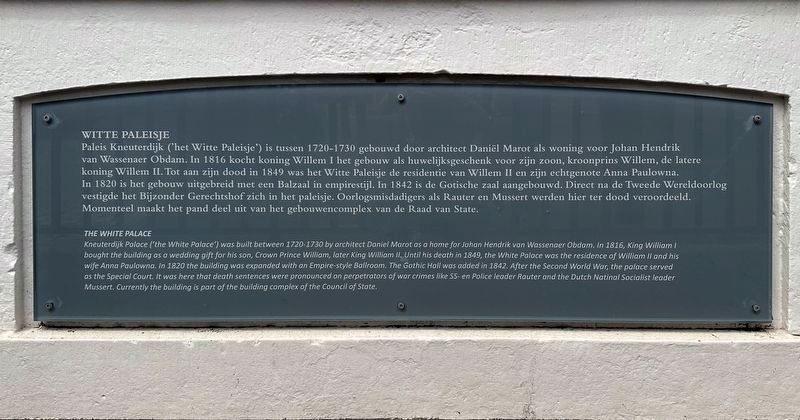
1. Witte Paleisje / The White Palace Marker

Paleis Kneuterdijk ('het Witte Paleisje') is tussen 1720-1730 gebouwd door architect Daniel Marot als woning voor Johan Hendrik van Wassenaer Obdam. In 1816 kocht koning Willem I het gebouw als huwelijksgeschenk voor zijn zoon, kroonprins Willem, de latere koning Willem II. Tot aan zijn dood in 1849 was het Witte Paleisje de residentie van Willem II en zijn echtgenote Anna Paulowna. In 1820 is het gebouw uitgebreid met een Balzaal in empirestijl. In 1842 is de Gotische zaal aangebouwd. Direct na de Tweede Wereldoorlog vestigde het Bijzonder Gerechtshof zich in het paleisje. Oorlogsmisdadigers als Rauter en Mussert werden hier ter dood veroordeeld. Momenteel maakt het pand deel uit van het gebouwencomplex van de Raad van State.
Kneuterdijk Palace ('the White Palace') was built between 1720-1730 by architect Daniel Marot as a home for Johan Hendrik van Wassenaer Obdam. In 1816, King William I bought the building as a wedding gift for his son, Crown Prince William, later King William II. Until his death in 1849, the White Palace was the residence of William II and his wife
this page online
Topics. This historical marker is listed in these topic lists: Architecture • Government & Politics • War, World II. A significant historical year for this entry is 1816.
Location. 52° 4.88′ N, 4° 18.514′ E. Marker is in Den Haag, Zuid-Holland (South Holland). It is in Centrum. It is on Kneuterdijk, on the right when traveling west. Touch for map. Marker is at or near this postal address: Kneuterdijk 20, Den Haag, Zuid-Holland 2514, Netherlands. Touch for directions.

Regionally, it is in Europe, the European Union, Atlantic Europe, the Benelux Low Countries, the Schengen Area, Western Europe, and the Western World. Historically, it finds itself in what was once the Roman Empire and specifically also
Photographed by Andrew Ruppenstein, May 8, 2023
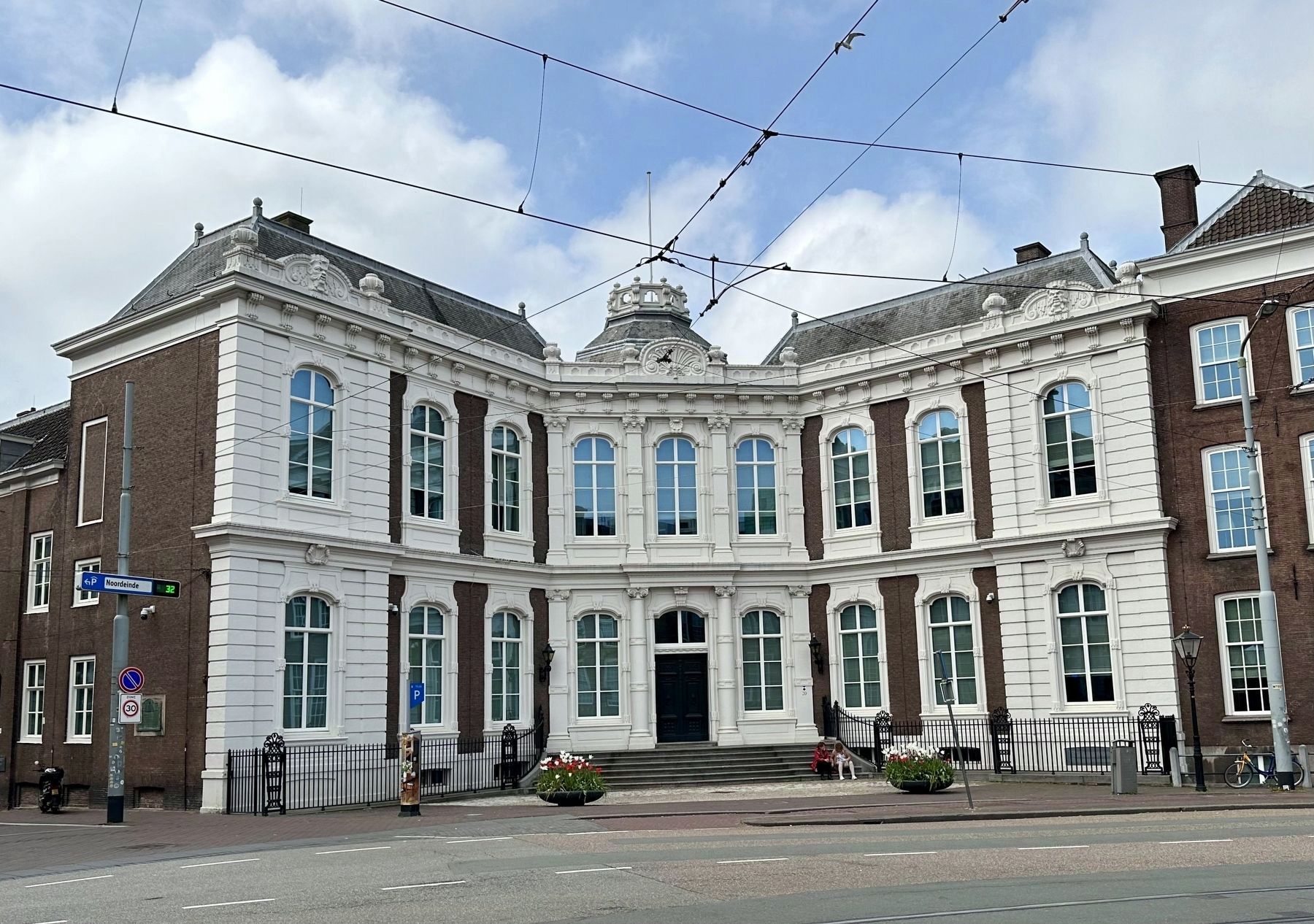
2. Witte Paleisje / The White Palace and Marker
The marker is visible here on the very right of the building, in the window well. It’s easy to miss.
Other nearby markers. At least 8 other markers are within walking distance of this marker: Paleis Kneuterdijk / Palace Kneuterdijk (a few steps from this marker); Huis van der Mijle (a few steps from this marker); Koning Willem II / King William II (within shouting distance of this marker); Huis van Oldenbarnevelt (within shouting distance of this marker); Lange Voorhout 1 (within shouting distance of this marker); Lange Voorhout 3 (about 90 meters away, measured in a direct line); Kloosterkerk / Cloister Church (about 90 meters away); Gysbert Karel van Hogendorp (about 90 meters away). Touch for a list and map of all markers in Den Haag.
Also see . . . Kneuterdijk Palace (Wikipedia).
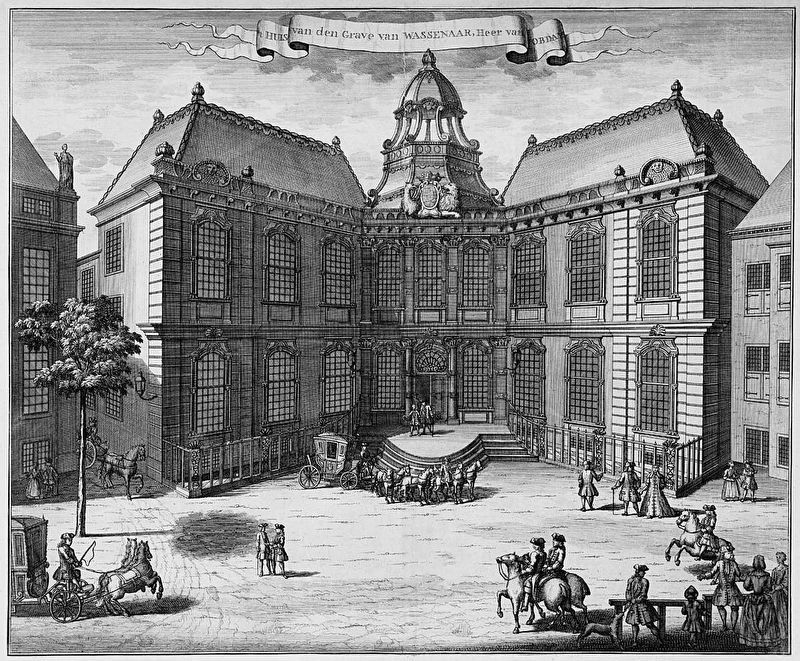
Overview: Kneuterdijk Palace (Dutch: Paleis Kneuterdijk) is a former royal palace of the Netherlands located in The Hague, nowadays the seat of the Council of State. Built in 1716 in the Louis XIV style by architect Daniel Marot, it was commissioned by Count Johan Hendrik of Wassenaer-Obdam, member of the House of Wassenaer. The palace served as a residence for King William II of the Netherlands and his wife Queen(Submitted on June 6, 2023.)Anna Paulowna in the first half of the 19th century, when he was still the crown prince. William II added several buildings designed in the English Tudor style, of which only the so-called “Gothic Hall” has survived. The hall was designed after the great dining hall of Christ Church, Oxford, of which William II was an alumnus.R. Boitet Excud. Cum Privil. (courtesy of Universiteitsbibliotheek Leiden, via Wikimedia Commons), circa 17303. Witte Paleisje / The White Palace MarkerThe house of the Count Van Wassenaer-Obdam, on the Kneuterdijk in The Hague. Nowadays it's called 'Kneuterdijk Palace' and is part of the buildings of the Council of State of the Netherlands.
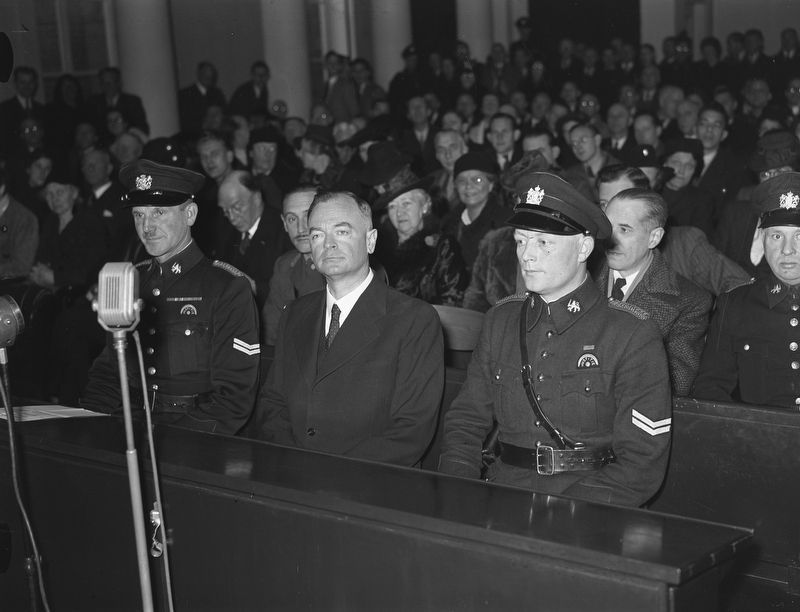
Nationaal Archief (the Dutch National Archives, via Wikimedia Commons), November 27, 1945
4. The Trial of Anton Mussert
Mussert on trial in the former ballroom of Kneuterdijk Palace in The Hague.
Anton Adriaan Mussert was a Dutch politician who co-founded the National Socialist Movement in the Netherlands (NSB) in 1931 and served as its leader until the party was banned in 1945. As such, he was the most prominent Dutch fascist before and during World War II. Mussert collaborated with the German occupation government… He was charged and convicted of treason, and was executed in 1946. - Wikipedia
Credits. This page was last revised on December 31, 2023. It was originally submitted on June 6, 2023, by Andrew Ruppenstein of Lamorinda, California. This page has been viewed 378 times since then and 45 times this year. Photos: 1, 2, 3, 4. submitted on June 6, 2023, by Andrew Ruppenstein of Lamorinda, California.
