Ban Tai in Amphoe Mueang Kanchanaburi, Kanchanaburi, Thailand — ประเทศไทย (Southeast Asia, Indochinese Peninsula)
The Tomb of 10,000 Souls
Asian Victims of the Siam-Burma Death Railway Construction
| — | Wat Thavorn Wararam | — |
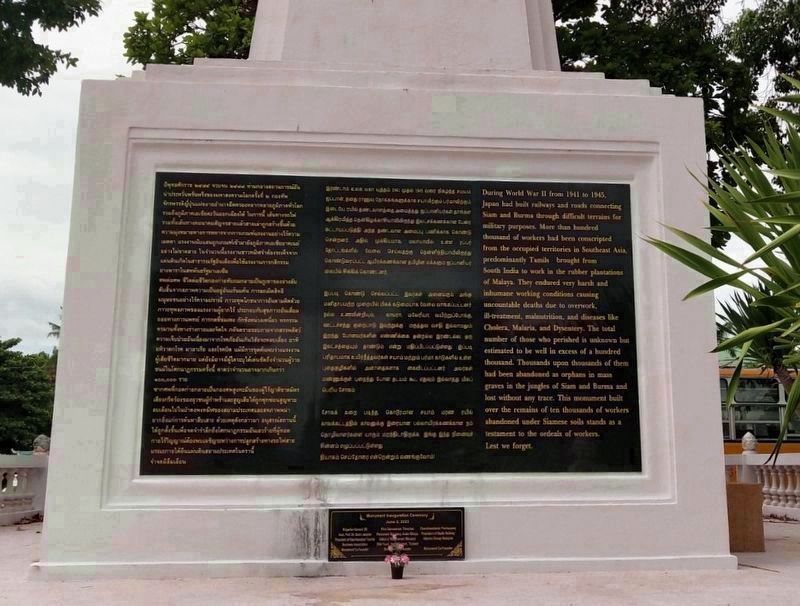
Photographed by Jj Karwacki, July 4, 2023
1. Tomb of 10,000 Souls Historical Marker
Monument Inauguration Ceremony
June 3, 2023
Brigadier-General (R) Dr. Surin Janpian, President of Kanchanaburi Tourist Access Association, Monument Co-Founder
Phra Samananam Thirachan, Permanent Secretary, Anam Nikaya, Abbot of Wat Thavorn Wararam Wat Yuan), Kanchanaburi, Thailand, Monument Co-Founder
Chandrasekaran Ponnusami, President of Death Railway Interest Group Malaysia, Monument Co-Founder
人
墓
Tomb of 10,000 Souls
During World War II from 1941 to 1945, Japan had built railways and roads connecting Siam and Burma through difficult terrains for military purposes. More than hundreds thousands of workers had been conscripted from the occupied territories in Southeast Asia, predominantly Tamils brought from South India to work in the rubber plantations of Malaya. They endured very harsh and inhumane working conditions causing uncountable deaths due to overwork, ill-treatment and diseases like Cholera, Malaria, and Dysentery. The total number of those who perished is unknown but estimated to be well in excess of a hundred thousand. Thousands upon thousands of them had been abandoned as orphans in mass graves in the jungles of Siam and Burma and lost without any trace. This monument, built over the remains of ten thousands of workers abandoned under Siamese soil, stands as a Testament to the ordeals of workers.
Lest we forget.
บผุทอศกราช ๒๕๕๕ จวบจน ๒๕๕๕ ทามกลางสถานการณ์อัน น่าประหวั่นพรั่นพรึงของมหาสงครามโลกครั้งที ๒ กองทัพ จักรพรรดิญี่ปุ่นแผ่ขยายอํานาจยืดครองหลากหลายภูมิภาคทั่วโลก รวมถึงภูมิภาคเอเชียตะวันออกเฉียงใต้ ในการนี้ เส้นทางรถไฟ รวมทั้งเส้นทางคมนาคมสัญจรสายแล้วสายเล่าถูกสร้างขึ้นด้วย ความมุ่งหมายทางการทหารจากการเกณฑ์แรงงานอย่างไร้ความ เมตตา
this page online
เเ1 ชีวิตต่อชีวิตกองก่ายทับถมกลายเป็นภูเขาของล่วงลับ ดับสิ้นจากสภาพความเป็นอยู่อันแร้นแค้น การละเมิดสิทธิ มนุษยชนอย่างไร้ความปราณี ภาวะทุพโภชนาการอันตามติดด้วย ภาวะทุพลภาพของแรงงานผู้ยากไร้ ประกอบกับสุขภาวะอันเสื่อม ลอยทางการแพทย์ การกดขี่ข่มเหง กักขังหน่วงเหนี่ยว ทรกรรม ทรมานทั้งทางร่างกายและจิตใจ ภยันตรายรอบกายจากสรรพสัตว์ ความเจ็บป่วยอันเนื่องมาจากโรคภัยอันเกินวิสัยจะหลบเลี่ยง อาทิ อหิวาตกโรค มาลาเรีย และโรคบิด แม้มีการขุดค้นพบร่างแรงงาน ผู้เสียชีวิตมากมาย
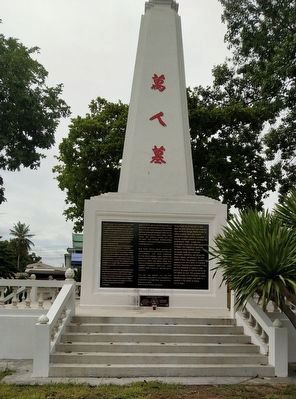
Photographed by Jj Karwacki
2. Tomb of Ten Thousand Souls Monument
ซากศพที่กอดก่ายกลายเป็นกองศพสูงทะมีนของผู้ไร้ญาติขาดมิตร เสียงกรีดร้องของยุวชนผู้กําพร้าและสูญเสียได้ถูกซุกซ่อนสูญหาย ลบเลือนไปในป่าดงพงทมิพของสยามประเทศและสหภาพหม่า ยากยิ่งแก่การค้นหาสืบเสาะ ด้ ด้วยเหตุดังกล่าวมา อนุสรณ์สถานนี้ ได้ถูกตั้งขึ้นเพื่อจดจํารําลึกถึงโศกนาฏกรรมอันเลวร้ายที่ผู้ทอด กายไร้วิญญาณ์ต้องพบเผชิญระหว่างการปลูกสร้างทางรถไฟสาย มรณะภายใต้ผืนแผ่นดินสยามประเทศในครานี้
จําจดมิลืมเลือน
இரண்டாம் உலக மகா யுத்தம் 1911 முதல் 1948 வரை நிதழ்ந்த சமயம் ஜப்பான், தனது ராணுவ நோக்கங்களுக்காக சயாமிற்கும்
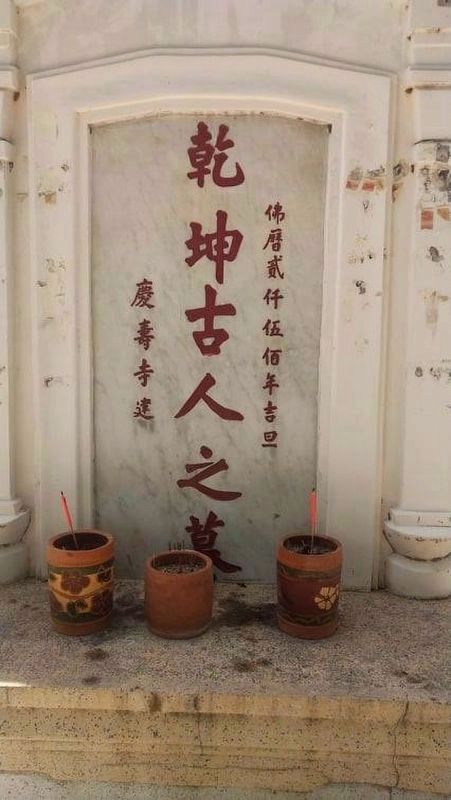
Photographed by Jj Karwacki, July 4, 2023
3. Inscription on Side of Monument
The larger characters down the center read, 乾坤古人之道 The Way of the Ancients.
On the right, 佛曆贰仟伍佰年吉旦 Jidan in the 2050th year of the Buddhist calendar.
And on the left, 慶壽寺違 Qingshou Temple.
இப்படி கொண்டு செல்லப்பட்ட இவர்கள் அனைவரும் அங்கு மனிதாபமற்ற முறையில் மிகக் கடுமையாக வேலை வாங்கப்பட்டனர் நல்ல ராவின்றியும், காலரா, மலேரியா வயிற்றுப்போக்கு, ஊட்டச்சத்து குறைபாடு இவற்றுக்கு மருத்துவ வசதி இல்லாமலும் இறந்து போனவர்களின் எண்ணிக்கை ஒன்றல்ல இரண்டல்ல; ஒரு இலட்சத்தையும் தாண்டும்
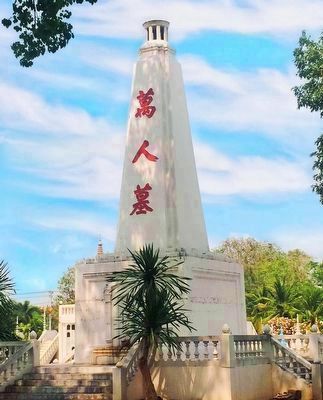
Photographed by Jj Karwacki
4. Tomb of 10,000 Souls Monument, Before the 2023 Modification
சோகக் கறை படிந்த கொடூரமான சயாம் மரண ரயில் காலக்கட்டத்தில் காலனுக்கு இரையான பல்லாயிரக்கணக்கான நம் | தொழிலாளர்களை யாரும் மறந்திடாதிருக்க இங்கு இந்த நினைவுச் இன்னம் எழுப்பப்பட்டுள்ளது
இயாகம் செய்தோரை என்றென்றும் வணங்குவோம்!
Erected 1957 by patrons of Wat Thavorn Wararam (Wat Yuan). Thai, Tamil and English text panels added in 2023 by the Death Railway Interest Group of Malaysia.
Topics and series. This memorial is listed in these topic lists: Railroads & Streetcars • War, World II. In addition, it is included in the The Thailand-Burma Railway series list. A significant historical year for this entry is 1957.
Location. 14° 1.782′ N, 99° 31.603′ E. Memorial is in Ban Tai, Kanchanaburi, in Amphoe Mueang Kanchanaburi. It is on Sangchuto Road (National Route 323) near Thawornwitee Road, on the right when traveling north. The wat (Buddhist temple) where this monument resides is adjacent to the Don Rak Kanchanaburi War Cemetery. Touch for map. Memorial is at or near this postal address: 284/64 SangChuto Rd, Ban Tai, Kanchanaburi 71000, Thailand. Touch for directions.

Regionally, it is in Asia, specifically in Southeast Asia, in IndoChina, on the Bay of Bengal, and on the Pacific Rim.
Other nearby markers. At least 8 other markers are within 3 kilometers of this marker, measured as the crow flies: Memorial to Dutch Prisoners of War (about 150 meters away, measured in a direct line); Tribute to Royal Dutch East Indies Army and the Royal Netherlands Navy Personnel Who Perished
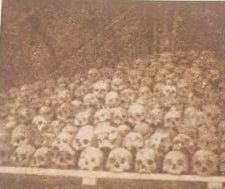
Shown on the temple's anniversary booklet (Fair Use)
5. The Dead
Display of skulls prior to interment.
More about this memorial. At time of dedication in 1957 the remains buried there had yet to be identified. It is now known that they were workers from the Thai-Burma Railway; mostly Tamil-Indians from the Malay Peninsula conscripted by the Japanese during their occupation of the Malay States.
Also see . . .
1. The Story. Article by JJ Karwacki, Colonel (Retired) U.S. Army Medical Corps and Life Member of VFW Post 9951, Bangkok. Excerpt:
In a vault beneath that structure are the remains of at least 10,000 Asian laborers (aka romusha) who were forced by the Japanese to build the Thai-Burma (Death) Railway. Altogether there may have been as many as 500,000 such laborers who worked three projects in 1942-45. It is estimated that at least 40% of them died in the process. They were left in the jungles of western Kanchanaburi.(Submitted on July 16, 2023, by J. J. Prats of Powell, Ohio.)
But those buried in this place had survived their ordeal in the jungle. They died in ‘rest camps’ where they were brought after construction of the Railway was complete in October 1943. Well after the war was over, these people languished here as they watched the Allied POWs being evacuated. They had been abandoned. Many were still here in 1947. Without adequate food or medical care, they continued to die of malaria, dysentery and malnutrition to name only a few of the maladies that plagued them.
During the late-40s and into the 50s, construction crews began to unearth graves. Most contained 3 to 7 sets of remains. The abbot of the temple took responsibility and collected those bones. Over the next decade, at least three different burial ceremonies were performed. In total, they amounted to over 10,000. By the mid-50s, no more graves were being found so the vault was sealed and this structure was erected in 1957. But even only 10 years after the war, the identity of these people had been forgotten.
Who were they? The vast majority were Tamils from Malaya; some were ethnic Chinese from Malaya or Singapore.
Why did they die here? After the war’s end they were abandoned even though they were British subjects if not fully British citizens. They had survived the ordeal of the Railway camps only to die in the months and years after coming to these ‘rest camps’.
2. Trying to honor Asians who died building Burma-Thailand rail in WWII. 2008 article by Thomas Fuller in The New York Times. Excerpt:
The construction of what is sometimes called the "Death Railway" linking Thailand with colonial Burma in the 1940s became a symbol of the cruelty inflicted by Japanese troops as they sought to conquer the lands of East Asia and beyond. Yet the largest group of victims, an estimated 70,000 Asian laborers, are barely commemorated here in Kanchanaburi and their remains lie for the most part where the Japanese dumped them: scattered up and down the railway line that is still partially in use today.(Submitted on July 16, 2023.)
Some 200,000 to 300,000 Asian laborers - no one knows the exact number - were press-ganged by the Japanese and their surrogates to work on the railway: Tamils, Chinese and Malays from colonial Malaya; Burmese from present-day Myanmar; and Javanese from what is now Indonesia.
"It is almost forgotten history," said Sasidaran Sellappah, a retired plantation manager in Malaysia whose late father was part of a team of 120 Tamil workers from a rubber estate who were forced to work on the railway. Only 47 survived.
Additional commentary.
1. Nadukal
When it was erected in 1957 to mark the burial place of these WW 2 Thai-Burma Railway survivors who died in hospitals and camps nearby between 1944 and 1947, the actual
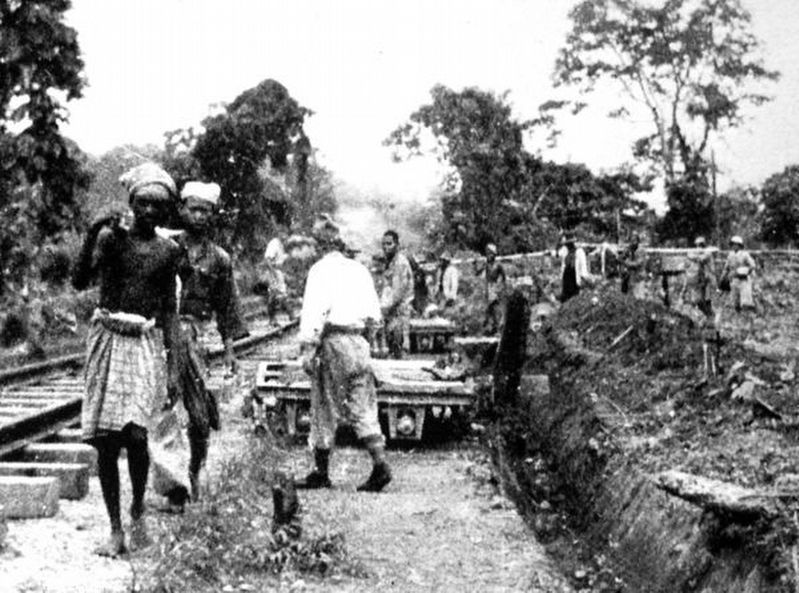
In the collection of the Thailand-Burma Railway Center (Public Domain), circa 1942
6. Malaysian Tamils at Work During the Construction of the Death Railway
In recent years, historical documents and interviews with local Thais have revealed that the majority of the 10,000 cremains interred here are mainly those of Malay-Tamil Asian Forced Laborers. In May 2024, with the permission of the abbot who oversees this cemetery, a group of Malaysians and Indians with ties to the Railway erected a Nadukal (also known as a Hero Stone) at this location. The stone depicts the workers entreating the Hindu Lord Shiva to hear their prayer and grant their wish for a place at his side in view of their suffering. It is hoped that this chedi will become a gathering place for Hindus to honor their dead. It is accompanied by a website designed to tell the story of those laborers. ( afl-mib.org/ )
— Submitted May 27, 2024, by Jj Karwacki of Tha Maka, Kanchanaburi.
2. Reunited at Last
In a ceremony delayed by over 30 years, the bones of World War II Asian Forced Laborers (aka Romusha) were joined with their brethren at the Wat Yuan obelisk burial site.
Background: In 1990, hundreds of skeletal remains of what were proven to be Malay-Tamils were unearthed in a field in Kanchanaburi. The vast majority of these were cremated and are entombed in a cemetery in Saraburi. However, a large number of these bones found their way to a for-profit museum near the famous bridge. Here they remained on public display. As part of the excavation, archeologists identified the remains as belonging to Malay-Tamils who had worked in Thailand at that time.
Present day: With the planned closure of that museum, the current owner handed over those bones to a group calling themselves Malaysians and Indians in Bangkok. Many of these individuals are ethnic Tamils, some of whom have ancestors who worked the Thai-Burma Railway. Immediately upon receipt of the bones, they were transported to a local temple and following a traditional Buddhist funeral ceremony they were cremated. As per traditional Hindu funeral traditions, the majority of the cremains were committed to the waters of Mae Klong River. The two full skeletons and the identifiable skulls were retained. Arrangements were then made with the abbot of Wat Thaworn Wararam (aka Wat Yuan) to add those cremains to the obelisk that marks the burial spot of over 10,000 Romusha discovered in the years immediately following the end of the war. So, on 2 April 2025, as part of the annual Qing Ming ceremony, those cremains were entombed in the obelisk joining their brothers and sisters. (Photos Nos. 10, 11, 12.)
— Submitted April 17, 2025, by Jj Karwacki of Tha Maka, Kanchanaburi.
Additional keywords. Romusha, Thai-Burma Railway
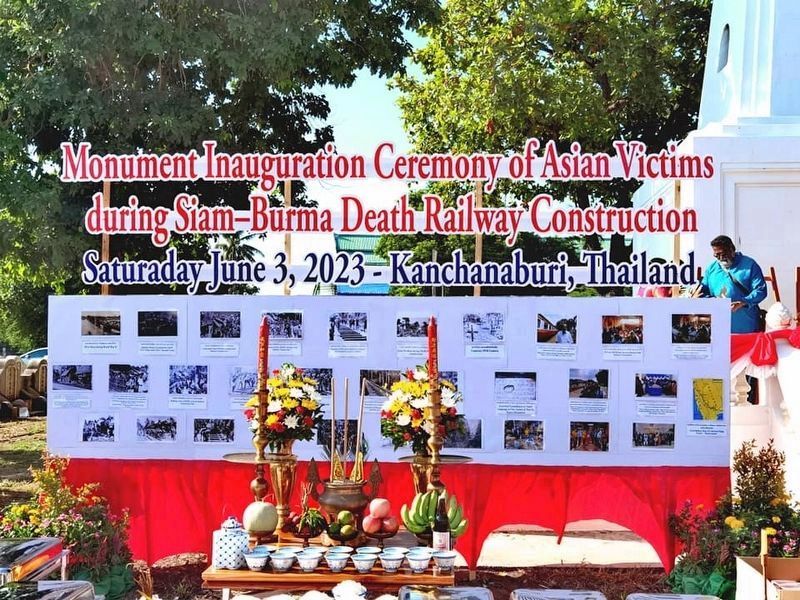
Photographed by Jj Karwacki, June 3, 2023
7. Exhibit at the Re-Inauguration of the Monument
It reads, “Monument Inauguration Ceremony of Asian Victims during Siam-Burma Death Railway Construction, Saturday, June 3, 2023 – Kanchanauri, Thailand”

Photographed by Jj Karwacki
8. The Tomb of 10,000 Souls Marker

Photographed by Jj Karwacki
9. The Tomb of 10,000 Souls Marker

Photographed by Jj Karwacki
10. Display Case of Romusha Bones in Former Museum

Photographed by Jj Karwacki
11. Buddist Funeral for Bones of Romusha
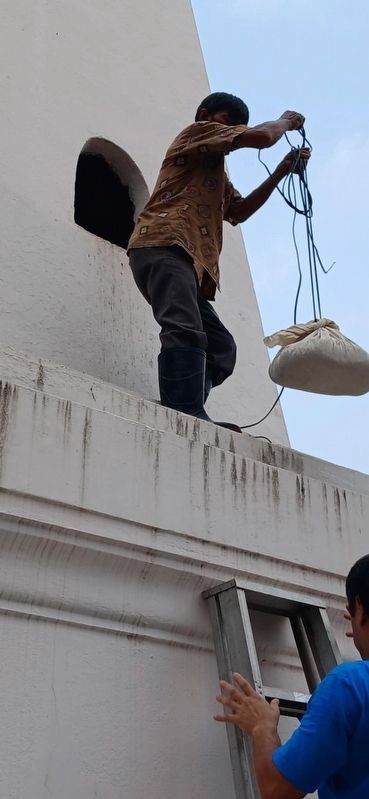
Photographed by Jj Karwacki
12. Cremains Added to Obelisk
They were added in 2025 during the annual Qing Ming ceremony.
Credits. This page was last revised on April 19, 2025. It was originally submitted on June 10, 2023, by Jj Karwacki of Tha Maka, Kanchanaburi. This page has been viewed 1,109 times since then and 73 times this year. Photos: 1, 2. submitted on July 15, 2023, by Jj Karwacki of Tha Maka, Kanchanaburi. 3. submitted on July 16, 2023, by Jj Karwacki of Tha Maka, Kanchanaburi. 4, 5. submitted on June 10, 2023, by Jj Karwacki of Tha Maka, Kanchanaburi. 6. submitted on July 16, 2023, by J. J. Prats of Powell, Ohio. 7. submitted on July 16, 2023, by Jj Karwacki of Tha Maka, Kanchanaburi. 8, 9. submitted on May 27, 2024, by Jj Karwacki of Tha Maka, Kanchanaburi. 10, 11, 12. submitted on April 17, 2025, by Jj Karwacki of Tha Maka, Kanchanaburi. • J. J. Prats was the editor who published this page.
