
Near Oriskany in Oneida County, New York — The American Northeast (Mid-Atlantic)
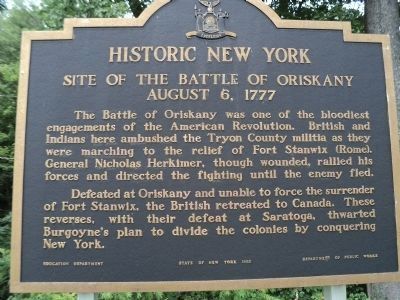
Site of The Battle of Oriskany
August 6, 1777
| — | Historic New York | — |
Photographed by Bill Coughlin, July 30, 2014
1. Site of The Battle of Oriskany Marker (Restored)
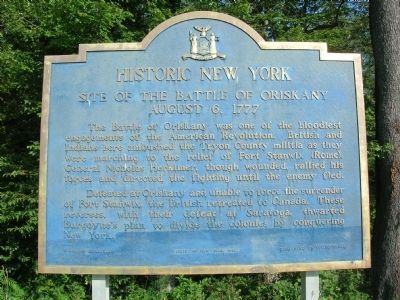
Site of The Battle of Oriskany
August 6, 1777
Defeated at Oriskany and unable to force the surrender of Fort Stanwix, the British retreated to Canada. These reverses, with their defeat at Saratoga, thwarted Burgoyne's plan to divide the colonies by conquering New York.
Education Department
State of New York 1965
Department of Public Works
Erected 1965 by Education Department, State of New York, Department of Public Works.
Topics and series. This historical marker is listed in these topic lists: Patriots & Patriotism • War, US Revolutionary. In addition, it is included in the Battlefield Trails - Revolutionary War, the Historic New York State, and the National Historic Landmarks series lists. A significant historical date for this entry is August 6, 1777.
Location. 43° 10.628′ N, 75° 22.2′ W.
this page online

Regionally, this marker is in Upstate New York and in the Mohawk Valley. It is also in the American Northeast and in the Mid-Atlantic. Globally, it is in North America, the Great North Woods, the Western Hemisphere, the Western World, and the Anglosphere. Historically, it finds itself in what was once the Haudenosaunee (Iroquois) Confederacy, New Netherland, and one of the original Thirteen Colonies.
Other nearby markers. At least 8 other markers are within walking distance of this marker: Welcome to Oriskany Battlefield (here, next to this marker); Relief for Fort Stanwix (here, next to this marker); Here the Battle of Oriskany Was Fought (within shouting
Photographed by Howard C. Ohlhous, August 17, 2008
2. Site of The Battle of Oriskany
Oriskany Battlefield State Historic Site - Near Oriskany, New York
Other markers no longer nearby. The Oriskany Battle Monument (was within shouting distance of this marker but has been confirmed missing); Campaign of 1777 (was within shouting distance of this marker but has been confirmed missing); A Final Attempt (was about 300 feet away but has been confirmed missing).
Regarding Site of The Battle of Oriskany. Considered to be a significant turning point in the War of Independence, the Battle of Oriskany, fought on August 6, 1777, has been described as one of the bloodiest battles of the war. A monument was dedicated on August 6, 1884, to serve as a memorial to those who fought so bravely and tenaciously to preserve freedom. Oriskany Battlefield was designated a New York State historic site in 1927. In recognition
Photographed by Bill Coughlin, July 30, 2014
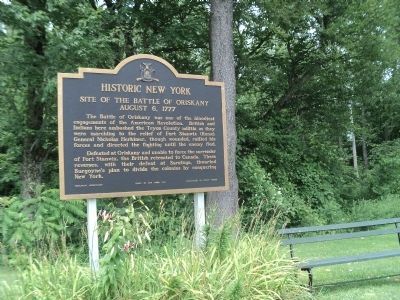
3. Site of The Battle of Oriskany Marker
In August 1777, while the British were attacking Fort Stanwix, Brigadier General Nicholas Herkimer assembled 800 militiamen, supported by 60 allied Oneida warriors, and marched from Fort Dayton to aid against the siege. Upon hearing of Herkimer's advance, British and Loyalist troops under Sir John Johnson and Col. John Butler, and Indian forces led by Mohawk Joseph Brant, set a trap in a boggy ravine west of Oriskany Creek. As the unsuspecting American troops crossed the swampy bottom and marched up the ravine, the British attacked. The patriots fought in brutal hand-to-hand combat, and in spite of heavy losses, caused the Seneca and the Mohawks, followed by the British and Loyalists to retreat. It was in this battle that General Herkimer received the wound to his leg which led to his death ten days later.
Related markers. Click here for a list of markers that are related
Photographed by Scott J. Payne, August 8, 2015
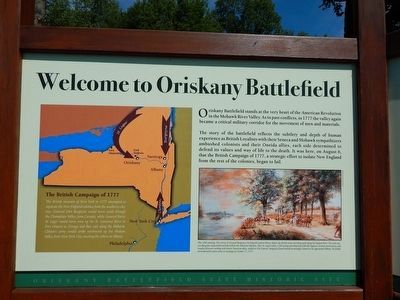
4. Site of The Battle of Oriskany Marker
Additional keywords. Nicholas Herkimer, St. Ledger, Fort Stanwix, Fort Schuyler, Sir John Johnson, Colonel Peter Gansevoort, Tories, Colonel John Butler, Joseph Brant, Mohawk, Seneca, Indians
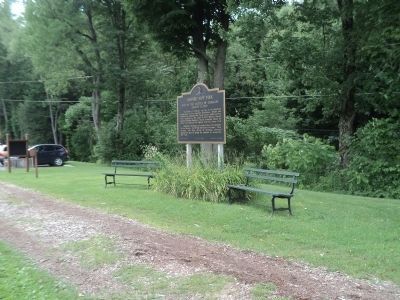
Photographed by Bill Coughlin, Oriskany
5. Site of The Battle of Oriskany Marker
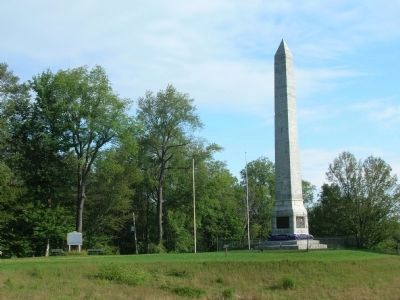
Photographed by Howard C. Ohlhous, August 17, 2008
6. The Battle of Oriskany Marker
The large blue Site of the Battle of Oriskany marker can be seen on the left. The tall stone obelisk is the Battle of Oriskany Monument.
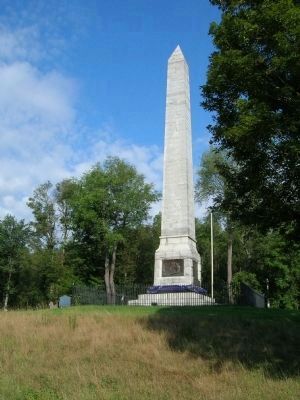
Photographed by Howard C. Ohlhous, August 17, 2008
7. The Battle of Oriskany Marker
Another view of the Battle of Oriskany Monument from one of the trails. The Site of the Battle of Oriskany marker can be seen on the left
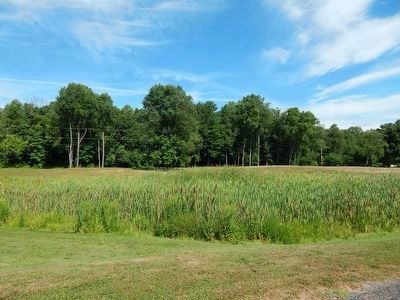
Photographed by Scott J. Payne, August 8, 2015
8. Site of The Battle of Oriskany Marker
View upon entering the battlefield. Looking west.
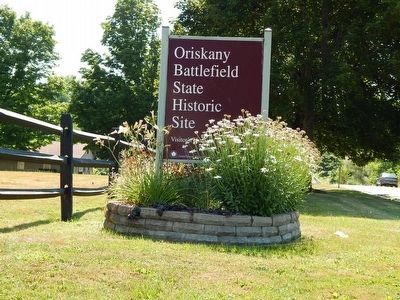
Photographed by Scott J. Payne, August 8, 2015
9. Site of The Battle of Oriskany Marker
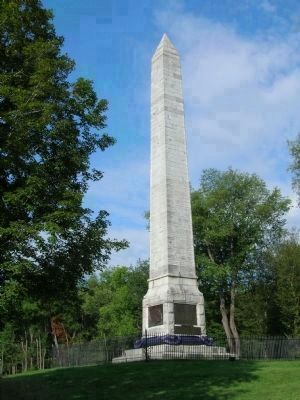
Photographed by Howard C. Ohlhous, August 17, 2008
10. The Oriskany Battle Monument
On August 6, 1877, the centennial commemorating the Battle of Oriskany was celebrated. Ex-New York Governor Horatio Seymour was the main speaker. At sunrise, salutes fired from the guns on the battlefield announced a glorious day. Every home in the village of Oriskany was decorated, and 70,000 people came to the celebration on foot, by wagon, horseback, carriage, boat and by rail. It was a day to remember!
Spurred on by the centennial festivities, funds for a monument were collected. This monument, erected from the stones of the dismantled Erie Canal weigh lock at Utica, was dedicated in 1884.
Spurred on by the centennial festivities, funds for a monument were collected. This monument, erected from the stones of the dismantled Erie Canal weigh lock at Utica, was dedicated in 1884.
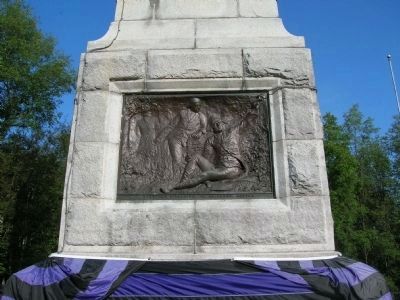
Photographed by Howard C. Ohlhous, August 17, 2008
11. The Base of the Battle of Oriskany Monument
Commissioned in 1882, the monument was erected by the residents of the Mohawk Valley under the auspices of the Oneida Historical Society, the State of New York and the federal government. The limestone for the main shaft of the obelisk was dismatled from the Erie Canal weighlock.
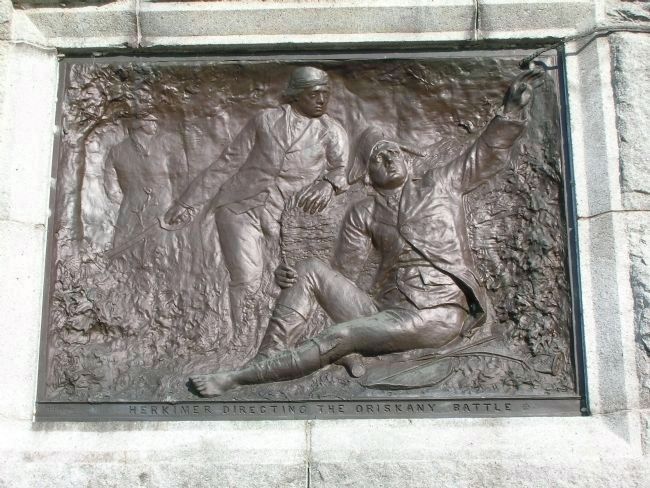
Photographed by Howard C. Ohlhous, August 17, 2008
12. Detail of The Battle of Oriskany Monument
Bas-Relief Bronze sculpture depicting a wounded Brigadier General Nicholas Herkimer, one boot off his wounded leg, resting on his saddle, his sword on the ground nearby, supported by an aid, directing his militiamen and Oneida Indain allies during the Battle of Oriskany.
Work Commissioned July 4, 1882. Dedicated Aug. 6, 1884
Sculptor Maurice J. Power, 1838-1902
Sculptor Maurice J. Power, 1838-1902
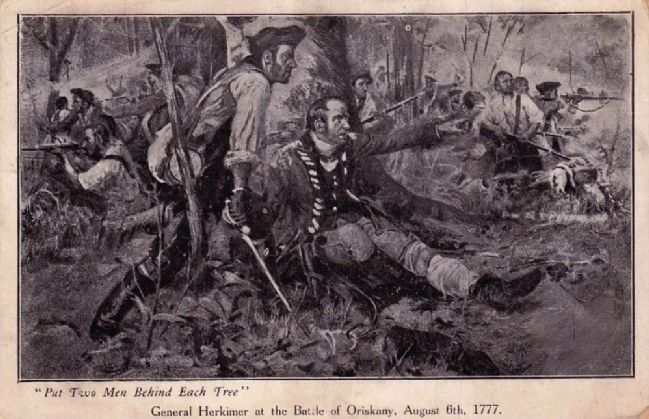
circa 1910
13. "Put Two Men Behind Each Tree
General Herkimer at the Battle of Oriskany, August 6th, 1777. Illustrated postcard view of the battle.
Credits. This page was last revised on November 5, 2024. It was originally submitted on September 26, 2009, by Howard C. Ohlhous of Duanesburg, New York. This page has been viewed 4,021 times since then and 138 times this year. Photos: 1. submitted on August 3, 2014, by Bill Coughlin of Woodland Park, New Jersey. 2. submitted on September 26, 2009, by Howard C. Ohlhous of Duanesburg, New York. 3. submitted on August 3, 2014, by Bill Coughlin of Woodland Park, New Jersey. 4. submitted on February 15, 2016, by Scott J. Payne of Deposit, New York. 5. submitted on August 3, 2014, by Bill Coughlin of Woodland Park, New Jersey. 6, 7. submitted on September 26, 2009, by Howard C. Ohlhous of Duanesburg, New York. 8. submitted on February 15, 2016, by Scott J. Payne of Deposit, New York. 9. submitted on March 13, 2016, by Scott J. Payne of Deposit, New York. 10, 11, 12. submitted on September 26, 2009, by Howard C. Ohlhous of Duanesburg, New York. 13. submitted on March 7, 2015. • Bill Pfingsten was the editor who published this page.
