District 1 in Firenze in Città Metropolitana di Firenze, Tuscany, Italy — Southern and Western Europe (Mediterranean)
Ponte Vecchio
⎯⎯⎯
Old Bridge
Photographed by James Hulse, June 16, 2023
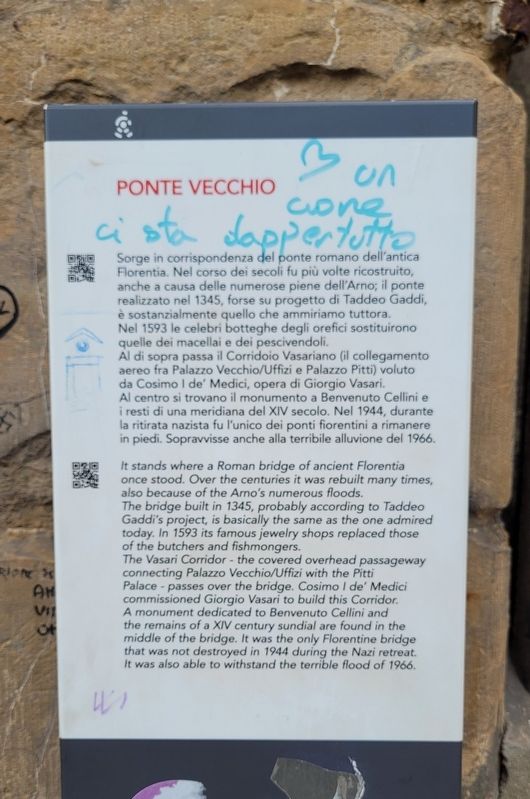
1. Ponte Vecchio / Old Bridge Marker

It stands where a Roman bridge of ancient Florentia once stood. Over the centuries it was rebuilt many times, also because of the Arno's numerous floods. The bridge built in 1345, probably according to Taddeo Gaddi's project, is basically the same as the one admired today. In 1593 its famous jewelry shops replaced those of the butchers and fishmongers. The Vasari Corridor - the covered overhead passageway connecting Palazzo Vecchio/Uffizi with the Pitti Palace - passes over the bridge. Cosimo I de' Medici commissioned Giorgio Vasari to build this Corridor. A monument dedicated to Benvenuto Cellini and the remains of a XIV century sundial are found in the middle of the bridge. It was the only Florentine bridge that was not destroyed in 1944 during the Nazi retreat. It was also able to withstand the terrible flood of 1966.
Erected by Città Metropolitana di Firenze.
Topics. This historical marker is listed in this topic list: Bridges & Viaducts. A significant historical year for this entry is 1345.
Location. 43° 46.093′ N, 11° 15.19′ E.
this page online

Regionally, it is in Europe, the European Union, the Schengen Area, a coastal Mediterranean country, and the Western World. Historically, it finds itself in what was once the Roman Empire and specifically also the Holy Roman Empire.
Other nearby markers. At least 8 other markers are within walking distance of this marker: Gerhard Wolf (a few steps from this marker); a different marker also named Gerhard Wolf (a few steps from this marker); Nicholas Roerich (within shouting distance of this marker); Piazza Santa Felicita (about 150 meters away, measured in a direct line); Torre de' Pulci (about 150 meters away); Site of the Via dei Georgofili Bombing (about 150 meters away); Chiesa di Santa Felicita / Church of Saint Felicita (about
Photographed by James Hulse, June 16, 2023
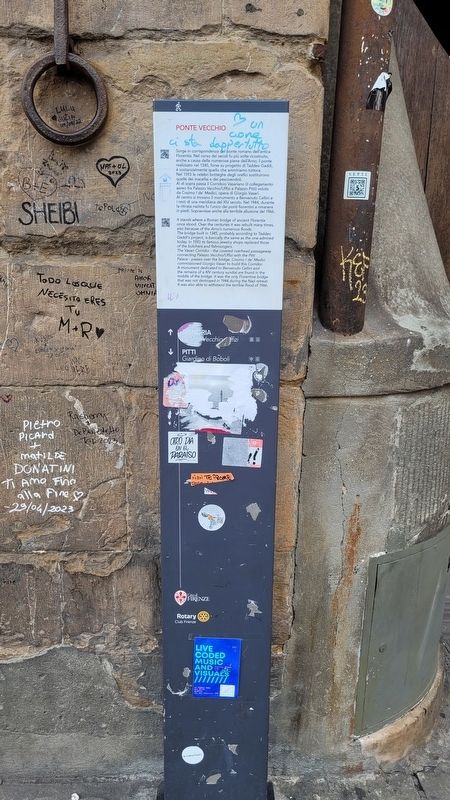
2. Ponte Vecchio / Old Bridge Marker
Also see . . . Ponte Vecchio. Visit Florence
Built very close to the Roman crossing, the Ponte Vecchio, or Old Bridge, was the only bridge across the Arno in Florence until 1218. The current bridge was rebuilt after a flood in 1345. During World War II it was the only bridge across the Arno that the fleeing Germans did not destroy. Instead they blocked access by demolishing the medieval buildings on each side. On November 4, 1966, the bridge miraculously withstood the tremendous weight of water and silt when the Arno once again burst its banks.(Submitted on July 10, 2023, by James Hulse of Medina, Texas.)
Photographed by James Hulse, June 16, 2023
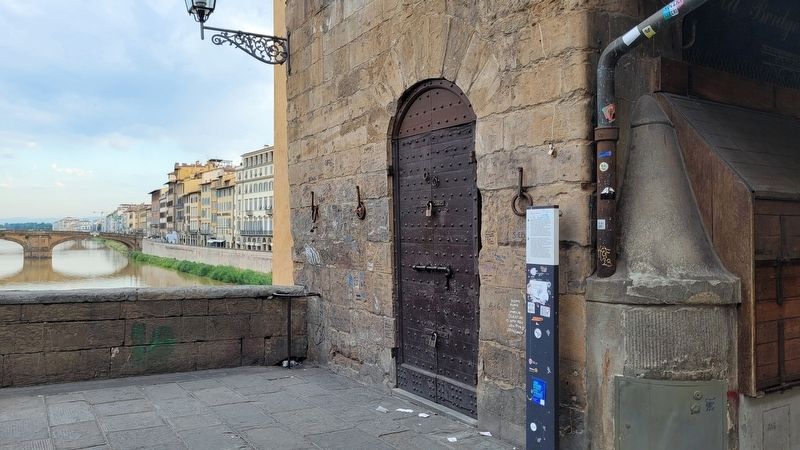
3. The Ponte Vecchio Marker along the walkway on the bridge
Photographed by James Hulse, June 16, 2023
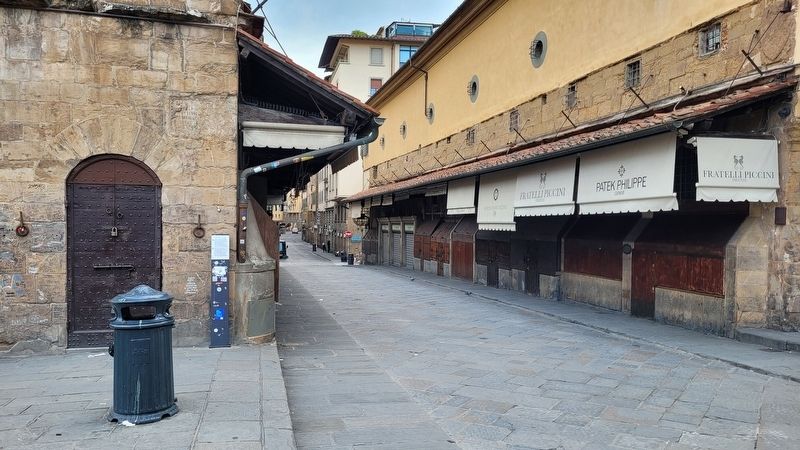
4. The view of the Ponte Vecchio Marker along the pedestrian walkway on the bridge
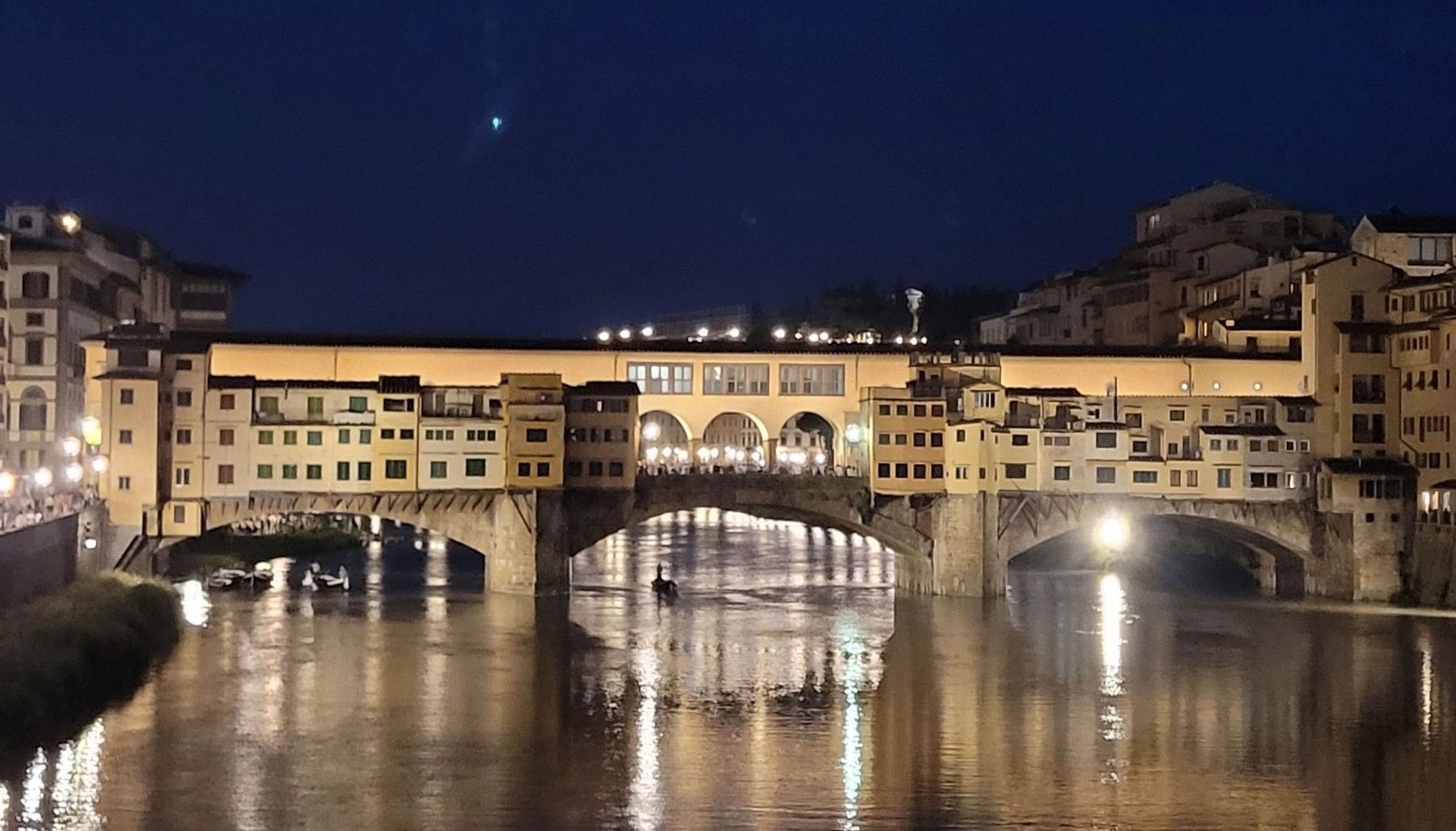
Photographed by James Hulse, June 15, 2023
5. Night view of the Ponte Vecchio (Old Bridge)
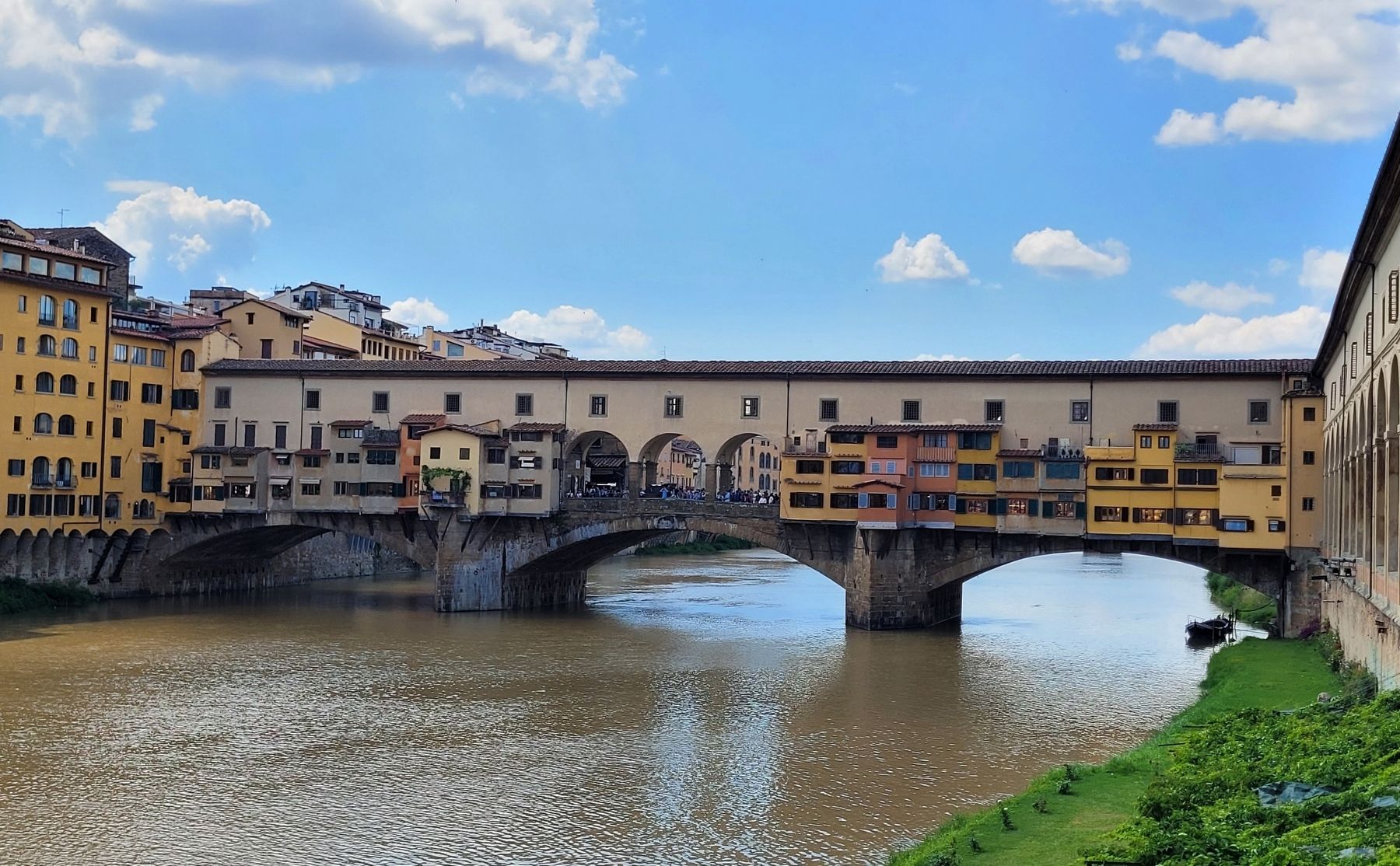
Photographed by James Hulse, June 15, 2023
6. The Ponte Vecchio (Old Bridge)
Credits. This page was last revised on July 12, 2023. It was originally submitted on July 9, 2023, by James Hulse of Medina, Texas. This page has been viewed 273 times since then and 143 times this year. Photos: 1, 2, 3, 4, 5, 6. submitted on July 10, 2023, by James Hulse of Medina, Texas.
