Cahaba in Dallas County, Alabama — The American South (East South Central)
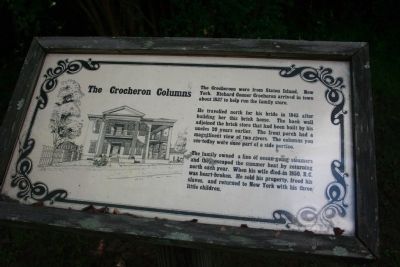
The Crocheron Columns
Photographed by Tim Carr, August 15, 2009
1. The Crocheron Columns Marker
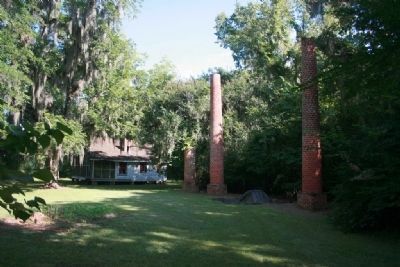
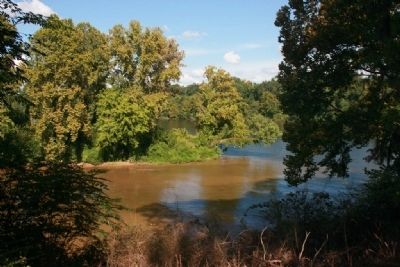
He traveled north for his bride in 1843 after building her this brick home. The back wall adjoined the brick store that had been built by his uncles 20 years earlier. The front porch had a magnificent view of two rivers. The columns you see today were once part of a side portico.
The family owned a line of ocean-going steamers and they escaped the summer heat by returning north each year. When his wife died in 1850, R. C. was heart-broken. He sold his property, freed his slaves, and returned to New York with his three little children.
Erected by Alabama Historical Commission.
Topics and series. This historical marker is listed in these topic lists: Architecture • Industry & Commerce • Settlements & Settlers • Waterways & Vessels. In addition, it is included in the Alabama Historical Commission series list. A significant historical year for this entry is 1837.
Location. Marker has been reported permanently removed. It was located near 32° 19.164′ N, 87° 5.706′ W. Marker was
this page online
We have been informed that this marker is no longer there and will not be replaced. This page is an archival view of what was.
Regionally, this marker was in the American South, specifically in the Deep South, and in the Black Belt. Globally, it was in North America, a Gulf of Mexico state, the Western Hemisphere, the Western World, and the Anglosphere. Historically, it found itself in what was once New Spain, the territory of the Mississippian Culture, one of the Confederate States of America, and the Antebellum South.

Other nearby markers. At least 8 other markers are within walking distance of this location: Yankees in Cahawba (within shouting distance of this marker); The Hole That Was Once a Row (within shouting distance of this marker); A River of Riches (within shouting distance of this marker); General Lafayette Visits Cahawba (within shouting distance
Photographed by Tim Carr, August 15, 2009
2. The Crocheron Columns
Other markers no longer nearby. Crocheron's Row (was within shouting distance of this marker but has been permanently removed); The Old Brick Store (was within shouting distance of this marker but has been permanently removed); Cahaba Drug Store (was within shouting distance of this marker but has been replaced with another marker now near it); a different marker also named Saltmarsh Hall (was about 600 feet away but has been replaced with another marker now near it).
Also see . . . Old Cahawba, "Alabama's most famous Ghost Town". (Submitted on September 30, 2009, by Timothy Carr of Birmingham, Alabama.)
Photographed by Tim Carr, August 15, 2009
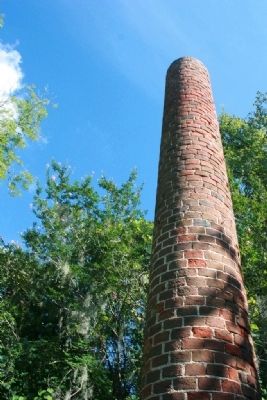
3. One of the three Crocheron Columns
Photographed by Tim Carr, August 15, 2009
4. The Confluence of the Cahaba and the Alabama Rivers.
Credits. This page was last revised on November 2, 2019. It was originally submitted on September 30, 2009, by Timothy Carr of Birmingham, Alabama. This page has been viewed 2,373 times since then and 57 times this year. Photos: 1, 2, 3, 4. submitted on September 30, 2009, by Timothy Carr of Birmingham, Alabama. • Craig Swain was the editor who published this page.
