Reedville in Northumberland County, Virginia — The American South (Mid-Atlantic)
Reedville
Photographed by J. J. Prats, August 30, 2009
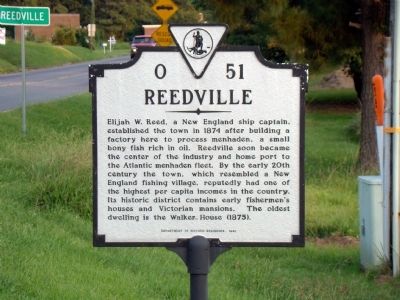
1. Reedville Marker
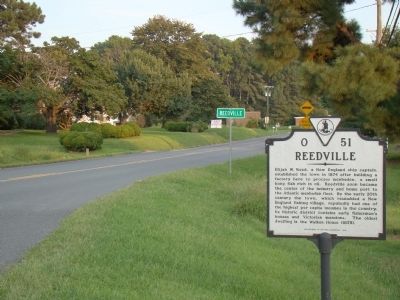
Elijah W. Reed, a New England ship captain, established the town in 1874 after building a factory here to process menhaden, a small bony fish rich in oil. Reedville soon became the center of the industry and home port to the Atlantic menhaden fleet. By the early 20th century the town, which resembled a New England fishing village, reputedly had one of the highest per capita incomes in the country. Its historic district contains early fishermen’s houses and Victorian mansions. The oldest dwelling is the Walker House (1875).
Erected 1991 by Department of Historic Resources. (Marker Number O-51.)
Topics and series. This historical marker is listed in these topic lists: Industry & Commerce • Notable Places • Waterways & Vessels. In addition, it is included in the Virginia Department of Historic Resources (DHR) series list. A significant historical year for this entry is 1874.
Location. 37° 51.126′ N, 76° 16.5′ W. Marker is in Reedville, Virginia, in Northumberland County. It is on Northumberland Highway (U.S. 360) just east of Liberty Road (County Route 726), on the right. Touch for map. Marker is in this post
this page online

Regionally, this marker is on the Northern Neck. It is also in the American South, specifically in the Upper South, in the Tidewater, in the Chesapeake Bay Region, and on the Eastern Seaboard. Globally, it is in the North Atlantic Region, North America, the Western Hemisphere, the Western World, and the Anglosphere. Historically, it finds itself in what was once the territory of the Mississippian Culture, one of the original Thirteen Colonies, one of the Confederate States of America, and the Antebellum South.
Other nearby markers. At least 8 other markers are within walking distance of this marker: The Elva C Tender Skiff (approx. half a mile away); George M. Butler Skiff (approx. half a mile away); George Pope Butler Skiff (approx. 0.6 miles away); Rowing Skiff (approx. 0.6 miles away); The Lillian-B (approx. 0.6 miles away); Fannie (approx. 0.6 miles away); Chesapeake Bay Log Canoe (approx. 0.6 miles away); "The Save The Stack Committee" (approx. 0.6 miles away). Touch for a list and map of all markers in Reedville.
Also see . . .
1. Reedville.
Photographed by J. J. Prats, August 30, 2009
2. Reedville Marker
“Captain Reed moved his business from Brooklin, Maine to the Northern Neck, and brought to the established community of watermen a method of extracting large quantities of oil from the fish by rendering them by the millions. Their oil was used as a lubricant and in lighting, as whale oil was, and the leftover bones and carcasses were valuable as fertilizer. He opened the first processing plant. By 1885, Reedville was heavily engaged in the menhaden fishing industry. Menhaden factories on Cockrell Creek produced fish oil, meal and fertilizer from menhaden. The menhaden fishing industry brought tremendous wealth to Reedville and to Northumberland County. Reedville, a town of approximately 500, was once known as the wealthiest town in the United States due to the large sums of money produced by the menhaden industry.” (Submitted on October 3, 2009.)
2. Reedville Fishermen’s Museum. Museum website homepage:
“The centerpiece of the exhibition is a 6'x8' diorama of the lower Northern Neck. It shows where Native Americans settled, how they lived and what their environment was like. It displays models of the
Photographed by Kevin W., August 11, 2010
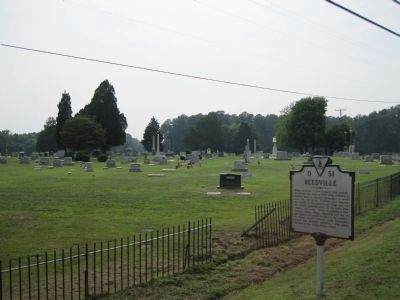
3. Reedville Marker
Photographed by J. J. Prats, August 30, 2009
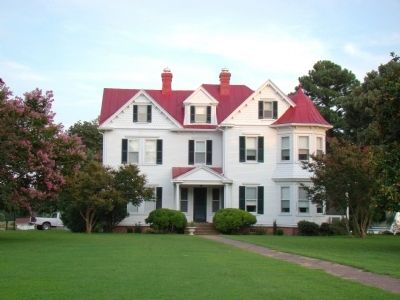
4. The Reed House, on Main Street in Reedville
Photographed by Kevin W., August 11, 2010
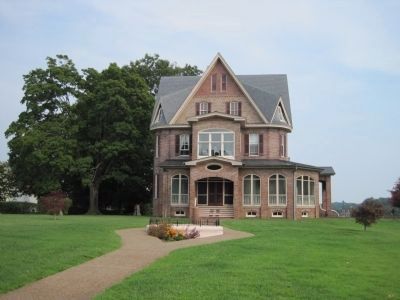
5. The Gables
Completed in 1914, it was home to Capt. Fisher, who was made rich by the turn-of-the century menhaden fishery. It's gabled roof is aligned to eight points on a compass.
Photographed by Kevin W., August 11, 2010
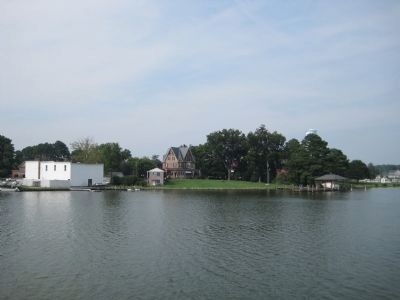
6. The Gables, from the water
Building the Gables took eight years because Capt. Fisher was a stickler for certain details, and would often tear down what was built. In this picture, you can see the different colors of brick used in construction.
Photographed by Kevin W., August 11, 2010
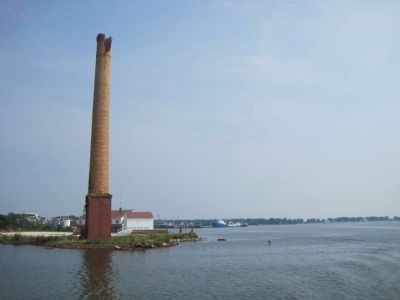
7. "The Stack"
A symbol of Reedville's rich menhaden fishing heritage is this 130 foot tall smoke stack built circa 1902 by the Morris - Fisher Company to provide steam to power its fish processing operations. The Stack has served as a navigational landmark for working watermen and boaters as well as a welcoming beacon to the historic town of Reedville and surrounding areas. The Stack is in danger of collapsing, but there is an effort underway to preserve it.
Credits. This page was last revised on March 10, 2022. It was originally submitted on October 3, 2009, by J. J. Prats of Powell, Ohio. This page has been viewed 2,625 times since then and 123 times this year. Photos: 1, 2. submitted on October 3, 2009, by J. J. Prats of Powell, Ohio. 3. submitted on August 11, 2010, by Kevin W. of Stafford, Virginia. 4. submitted on October 3, 2009, by J. J. Prats of Powell, Ohio. 5, 6, 7. submitted on August 11, 2010, by Kevin W. of Stafford, Virginia.
Editor’s want-list for this marker. Photos of Walker House and other notable homes • Can you help?
