Capitol Hill in Southeast Washington in Washington, District of Columbia — The American Northeast (Mid-Atlantic)
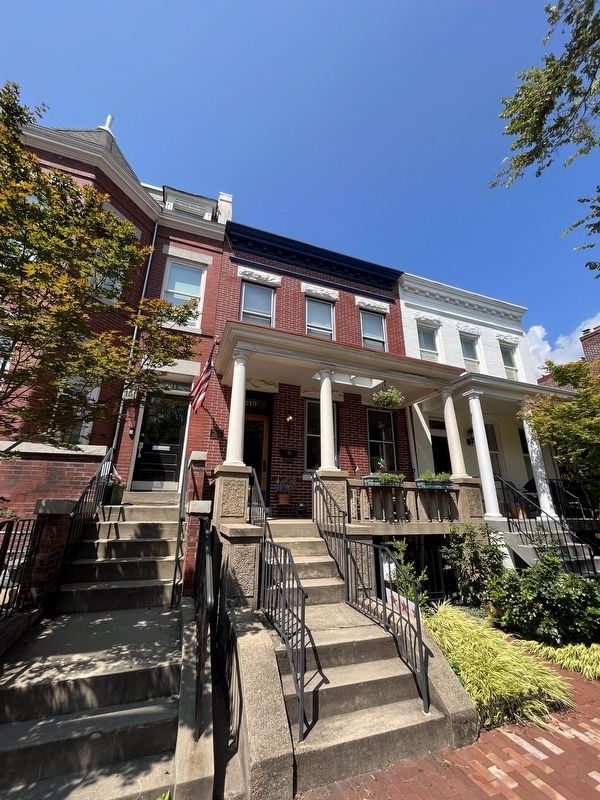
The Furies House
Furies Collective
| — | 219 11th Street Southeast | — |
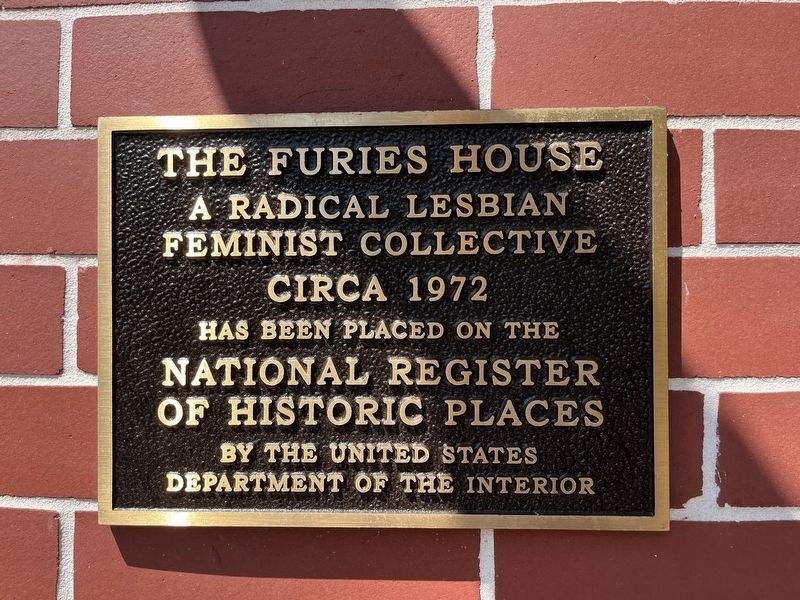
A radical lesbian
feminist collective
circa 1972
has been placed on the
National Register
of Historic Places
by the United States
Department of the Interior
Topics. This historical marker is listed in these topic lists: Communications • Fraternal or Sororal Organizations • Women. A significant historical year for this entry is 1972.
Location. 38° 53.217′ N, 76° 59.501′ W. Marker is in Southeast Washington in Washington, District of Columbia. It is in Capitol Hill. It is on 11th Street Southeast north of River Rock Court Southeast, on the right when traveling south. Touch for map. Marker is at or near this postal address: 219 11th St SE, Washington DC 20003, United States of America. Touch for directions.

Regionally, this marker is in the Washington Metropolitan Area. It is also in the American Northeast, in the Upper South, in the Mid-Atlantic, in the Tidewater, and in the Chesapeake Bay Region. Globally, it is in North America, the Western Hemisphere, the Western World, and the Anglosphere.
Other nearby markers. At least 8 other markers are within walking distance of this
this page online
Also see . . .
1. National Register of Historic Places nomination form for the Furies Collective (The Furies House).
Excerpt from the form about the historical significance of the Furies Collective (page 10):
The Furies Collective house is directly connected with the early expression and definition of the character, role, and ideology of the lesbian community as a social and political community in itself, within the second wave women's movement, and within US society in general in the early 1970s. The Furies Collective through its national print materials and local services modeled the intents and challenges of lesbians through a separatist philosophy. The center of their activities asa collective and during the publication of the lesbian/feminist issue of the United Methodist youth magazine motive and of their newspaper The Furies between 1971 and 1973 was 219 11th Street Southeast, Washington, DC.
The house at 219 11th Street Southeast, Washington, DC became the operational center of the lesbian feminist separatist collective, The Furies, between late 1971 and the autumn of 1973 which created and led the debate over lesbians' place in society. The twelve women in the collective published a lesbian feminist edition of motive magazine and more importantly a tabloid size newspaper entitled The Furies which over a period of two years raised and discussed major questions of women's identity, women's relationships with other women, with men, and with society at large. That newspaper and its sister publication, the lesbian feminist issue of motive, set the issues and agenda of lesbian and feminist discussion for many years to come.
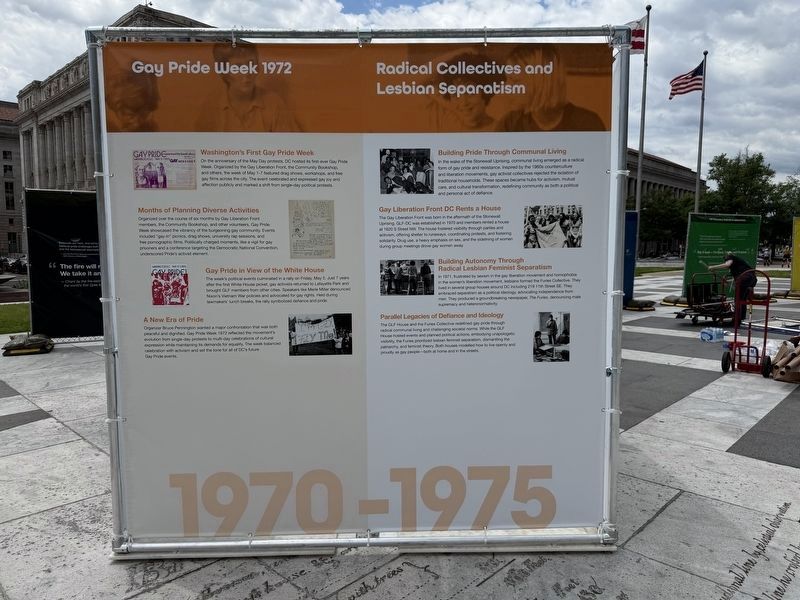
Over the course of the collective's and the newspaper's lives, the twelve women explored and sought to resolve a multitude of issues and examined their personal experiences in the linesof their newspaper. Their personal became political.Photographed by Devry Becker Jones (CC0), May 18, 20253. Panel from Pickets, Protests and Parades: The History of Gay Pride in WashingtonThis panel, titled Gay Pride Week 1972 / Radical Collectives and Lesbian Separatism from Pickets, Protests and Parades: The History of Gay Pride in Washington on display for World Pride 2025 on Freedom Plaza interprets information about The Furies Collective:Radical Collectives and Lesbian Separatism
Building Pride Through Communal Living
In the wake of the Stonewall Uprising, communal living emerged as a radical form of gay pride and resistance. Inspired by the 1960s counterculture and liberation movements, gay activist collectives rejected the isolation of traditional households. These spaces became hubs for activism, mutual care, and cultural transformation, redefining community as both a political and personal act of defiance.
Gay Liberation Front DC Rents a House
The Gay Liberation Front was born in the aftermath of the Stonewall Uprising. GLF-DC was established in 1970 and members rented a house at 1620 S Street NW. The house fostered visibility through parties and activism, offering shelter to runaways, coordinating protests, and fostering solidarity. Drug use, a heavy emphasis on sex, and the sidelining of women during group meetings drove gay women away.
Building Autonomy Through Radical Lesbian Feminist Separatism
In 1971, frustrated by sexism in the gay liberation movement and homophobia in the women's liberation movement, lesbians formed the Furies Collective. They lived in several group houses around DC including 219 11th Street SE. They embraced separatism as a political ideology, advocating independence from men. They produced a groundbreaking newspaper, The Furies denouncing male supremacy and heteronormativity.
Parallel Legacies of Defiance and Ideology
The GLF House and the Furies Collective redefined gay pride through radical communal living and challenging societal norms. While the GLF House hosted events and planned political actions, embodying unapologetic visibility, the Furies prioritized lesbian feminist separatism, dismantling the patriarchy, and feminist theory. Both houses modeled how to live openly and proudly as gay people-both at home and in the streets.
Editorial note: "The personal is the political" is a central ethic of second wave feminism, meaning that your circumstances inform your worldview. (Submitted on August 14, 2023, by Devry Becker Jones of Washington, District of Columbia.)
2. Wikipedia article about Lesbian Feminism. Please note that Lesbian Feminism is a specific school of feminism that emerged from the 1970s second wave of feminism and the Post-Stonewall gay liberation movement. Not all lesbians who are feminists identify as lesbian feminists. (Submitted on August 14, 2023, by Devry Becker Jones of Washington, District of Columbia.)
Additional keywords. LGBT, LGBTQ, radical feminism, Lesbian feminism, separatist feminism, 🏳️🌈
Photographed by Devry Becker Jones (CC0), May 18, 2025
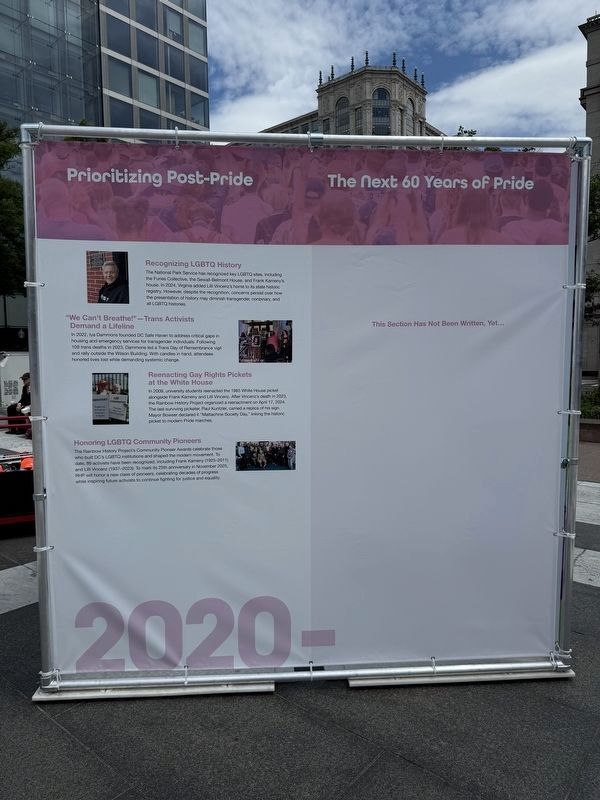
4. Panel from Pickets, Protests and Parades: The History of Gay Pride in Washington
This panel from the display, named Prioritizing Post-Pride / The Next 60 Years of Pride interprets the preservation of the Furies House:
Recognizing LGBTQ History
The National Park Service has recognized key LGBTQ sites, including the Furies Collective, the Sewall-Belmont House, and Frank Kameny's house. In 2024, Virginia added Lilli Vincenz's home to its state historic registry. However, despite the recognition, concerns persist over how the presentation of history may diminish transgender, nonbinary, and all LGBTQ histories.
Credits. This page was last revised on May 18, 2025. It was originally submitted on August 14, 2023, by Devry Becker Jones of Washington, District of Columbia. This page has been viewed 432 times since then and 60 times this year. Photos: 1, 2. submitted on August 14, 2023, by Devry Becker Jones of Washington, District of Columbia. 3, 4. submitted on May 18, 2025, by Devry Becker Jones of Washington, District of Columbia.
