
Humboldt Park in Chicago in Cook County, Illinois — The American Midwest (Great Lakes)
Humboldt Park
A green place for people and wildlife
Photographed by Sean Flynn, September 27, 2023
1. Humboldt Park Marker
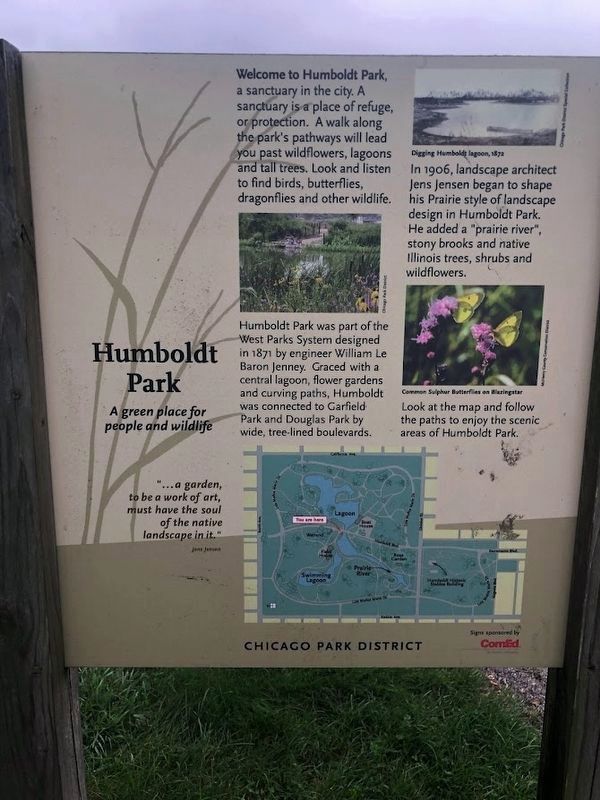
Welcome to Humboldt Park, a sanctuary in the city. A sanctuary is a place of refuge, or protection. A walk along the park's pathways will lead you past wildflowers, lagoons and tall trees. Look and listen to find birds, butterflies, dragonflies and other wildlife.
Humboldt Park was part of the West Parks System designed in 1871 by engineer William Le Baron Jenney. Graced with a central lagoon, flower gardens and curving paths, Humboldt was connected to Garfield Park and Douglas Park by wide, tree-lined boulevards.
In 1906, landscape architect Jens Jensen began to shape his Prairie style of landscape design in Humboldt Park. He added a "prairie river", stony brooks and native Illinois trees, shrubs and wildflowers.
Look at the map and follow the paths to enjoy the scenic areas of Humboldt Park.
Erected by Chicago Park District.
Topics and series. This historical marker is listed in these topic lists: Horticulture & Forestry • Parks & Recreational Areas. In addition, it is included in the Jens Jensen,
this page online
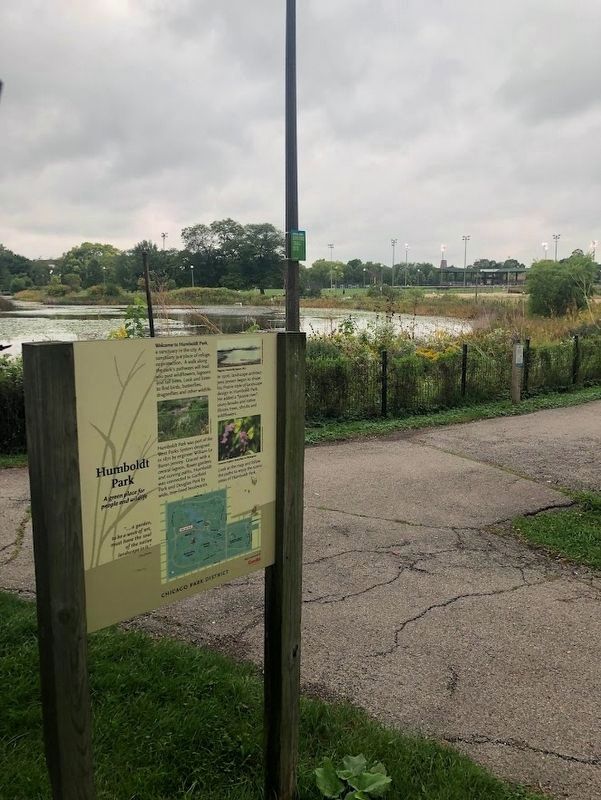
Location. 41° 54.402′ N, 87° 42.104′ W. Marker is in Chicago, Illinois, in Cook County. It is in Humboldt Park. It can be reached from North Humboldt Boulevard 0.3 miles north of Division Street. The marker is next to the walkway around the lagoon to the west of Humboldt Boulevard, and accessible from the roadway that leads to the Humboldt Park Fieldhouse a few hundred feet west. The statue to Leif Erikson is up the hill, between the marker and the boulevard. Touch for map. Marker is at or near this postal address: 1440 North Humboldt Boulevard, Chicago IL 60622, United States of America. Touch for directions.

Regionally, this marker is in the American Midwest. Globally, it is in North America, on the Great Lakes, in the Western Hemisphere, in the Western World, and in the Anglosphere. Historically, it finds itself in what was once the Viceroyalty of New France, the territory of the Mississippian Culture, and the Northwest Territory.
Other nearby markers. At least 8 other markers are within walking distance of this marker: Leif Erikson
Photographed by Sean Flynn, September 27, 2023
2. Humboldt Park Marker
The lagoon and Little Cubs Field, a youth baseball stadium, are in the background.
More about this marker. The front of the marker includes a map of Humboldt Park. The back has a list of park regulations.
Photographed by Sean Flynn, September 27, 2023
3. Leif Erikson statue
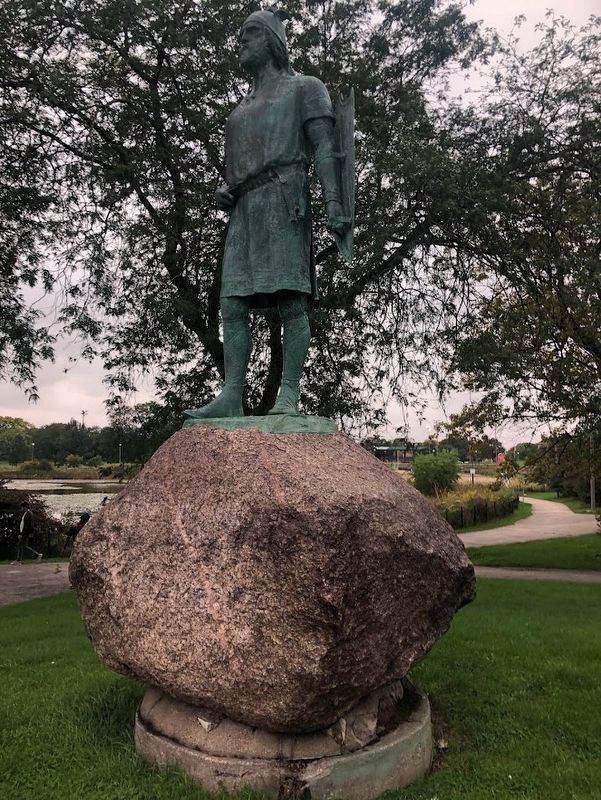
The Humboldt Park marker is obscured in this photo by this Leif Erikson statue. The monument to the Norse explorer, commissioned by Chicagoans of Norwegian descent and sculpted by Norway native Sigvald Asbjørnsen, was unveiled on October 12, 1901, before tens of thousands people. In 1950, the statue was moved 250 feet to sit closer to Humboldt Boulevard and make it more accessible to the public. An 83-year-old Sigvald Asbjørnsen attended the ceremony for its rededication.
Photographed by Sean Flynn, September 27, 2023
4. Humboldt Park Fieldhouse
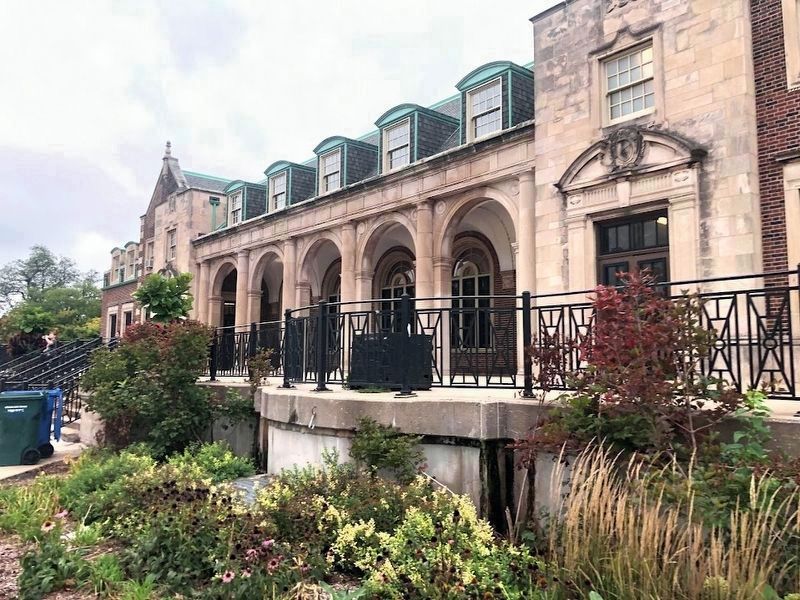
The 1928 fieldhouse, located to the west of the historical marker, was designed by architects Michaelsen and Rognstad, whose other notable buildings in Chicago include the Garfield Park Gold Dome Building and the fieldhouses at Douglas and LaFollette parks.
Credits. This page was last revised on August 15, 2024. It was originally submitted on September 28, 2023, by Sean P. Flynn of Oak Park, Illinois. This page has been viewed 302 times since then and 29 times this year. Photos: 1, 2, 3, 4. submitted on September 28, 2023, by Sean P. Flynn of Oak Park, Illinois. • Andrew Ruppenstein was the editor who published this page.
