
Koreatown in Los Angeles in Los Angeles County, California — The American West (Pacific Coastal)
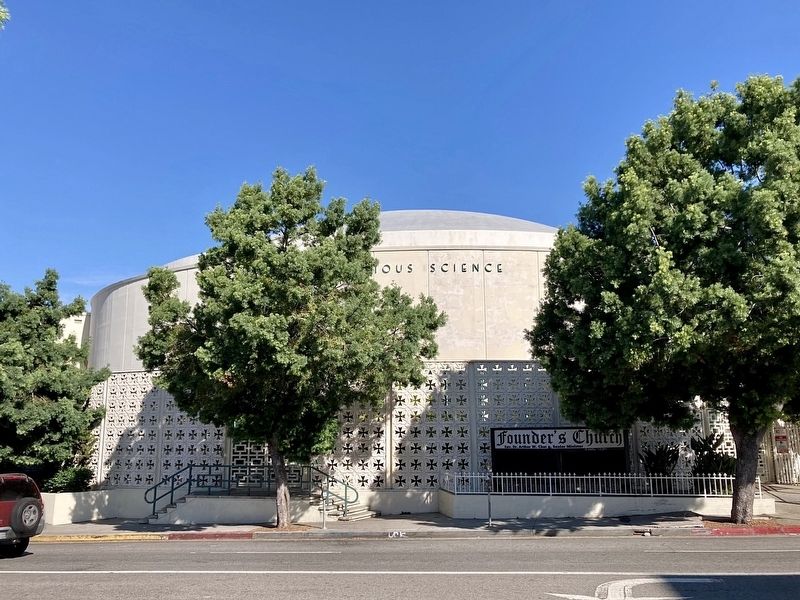
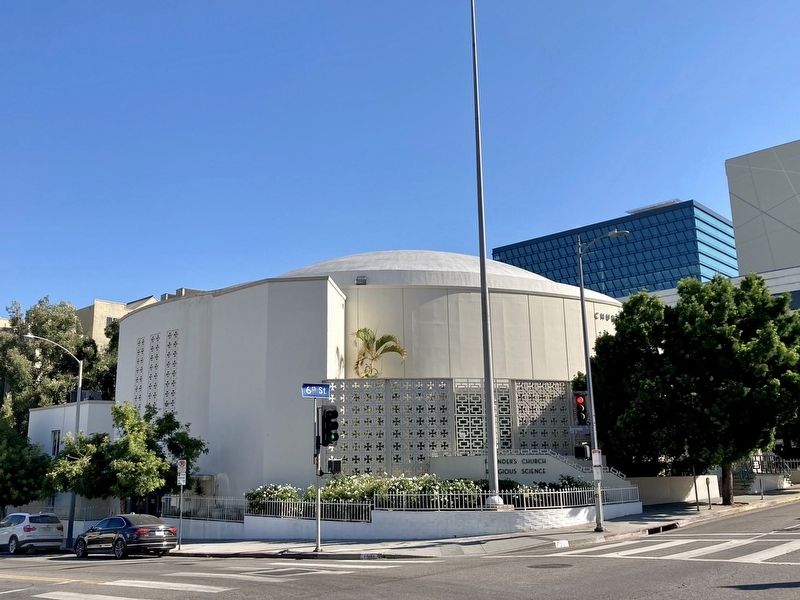
Founder’s Church
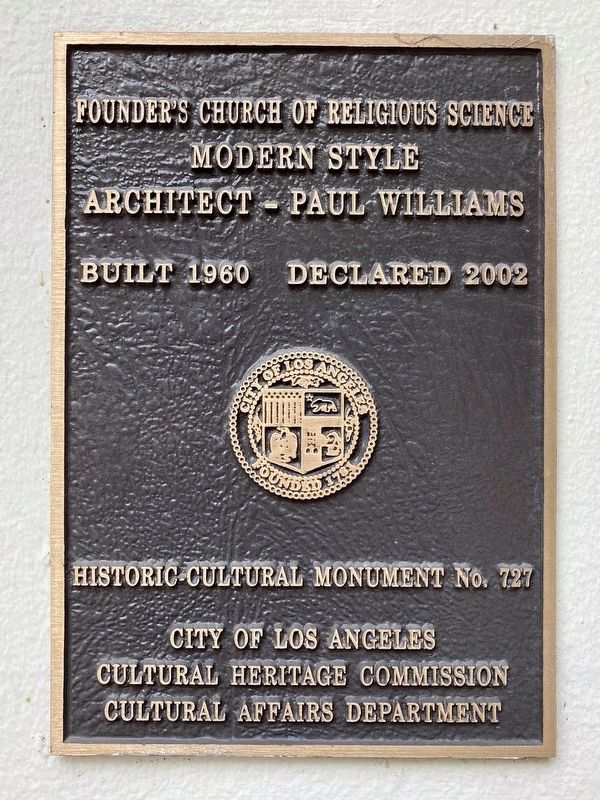
Photographed by Craig Baker, October 8, 2023
1. Founder’s Church Marker
Erected 2002 by City of Los Angeles. (Marker Number 727.)
Topics and series. This historical marker is listed in these topic lists: Architecture • Religion & Religious Structures. In addition, it is included in the Los Angeles Historic-Cultural Monument series list. A significant historical year for this entry is 1960.
Location. 34° 3.837′ N, 118° 17.628′ W. Marker is in Los Angeles, California, in Los Angeles County. It is in Koreatown. It is at the intersection of 6th Street and Berendo Street, on the right when traveling west on 6th Street. Only open to the public on Sundays. Touch for map. Marker is at or near this postal address: 3281 W 6th St, Los Angeles CA 90020, United States of America. Touch for directions.

Regionally, this marker is in California’s Transverse Ranges. It is also on the American Pacific Coast. Globally, it is in North America, on the Ring of Fire,
this page online
Other nearby markers. At least 8 other markers are within walking distance of this marker: Bullocks Wilshire (approx. 0.3 miles away); Hotel Normandie (approx. 0.4 miles away); First Congregational Church (approx. half a mile away); Haddon Hall (approx. half a mile away); Felipe de Neve Branch Library (approx. 0.6 miles away); Godzilla, King of the Monsters! (approx. 0.7 miles away); Wilshire Boulevard Temple (approx. 0.7 miles away); Monsignor O’Brien House (approx. 0.7 miles away). Touch for a list and map of all markers in Los Angeles.
Regarding Founder’s Church. Architect Paul R. Williams (1894-1980) was one of the foremost architects in Los Angeles in the mid-twentieth century. He practiced largely in Southern California and designed the homes of numerous stars including Frank Sinatra and Lucille Ball. He also designed many public and private buildings. Williams became the first African-American member of the American Institute of Architects
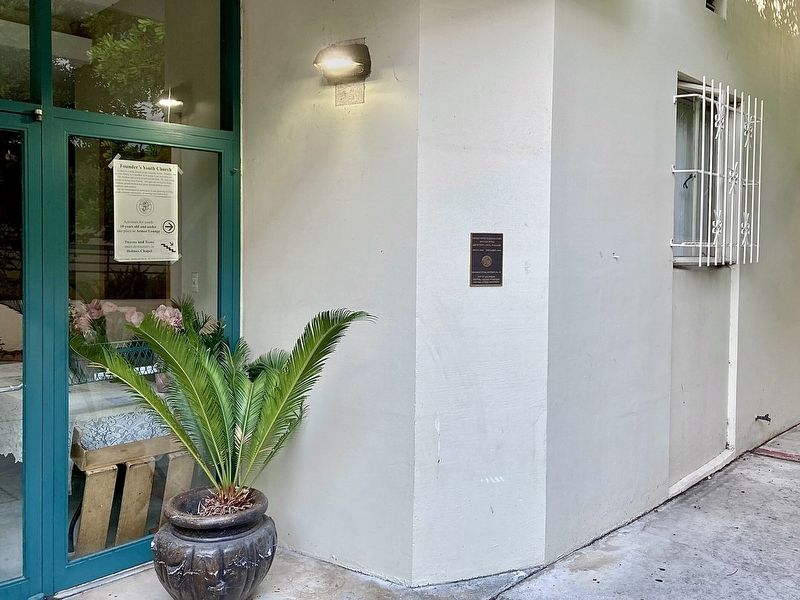
Photographed by Craig Baker, October 8, 2023
2. Founder’s Church Marker
Significance Statement:
The property meets the criteria for HCM designation because it embodies the "distinguishing characteristics of an architectural-type specimen, inherently valuable for a study of a period style or method of construction," as an example of Mid-Century Modern institutional architecture. It is also associated with the "notable work of a master builder, designer, or architect," as a work by master architect Paul R. Williams. It was one of the few churches he designed and is an excellent example of his Modern work. The property is determined eligible for listing in the National Register through the Section 106 review process and is listed in the California Register.
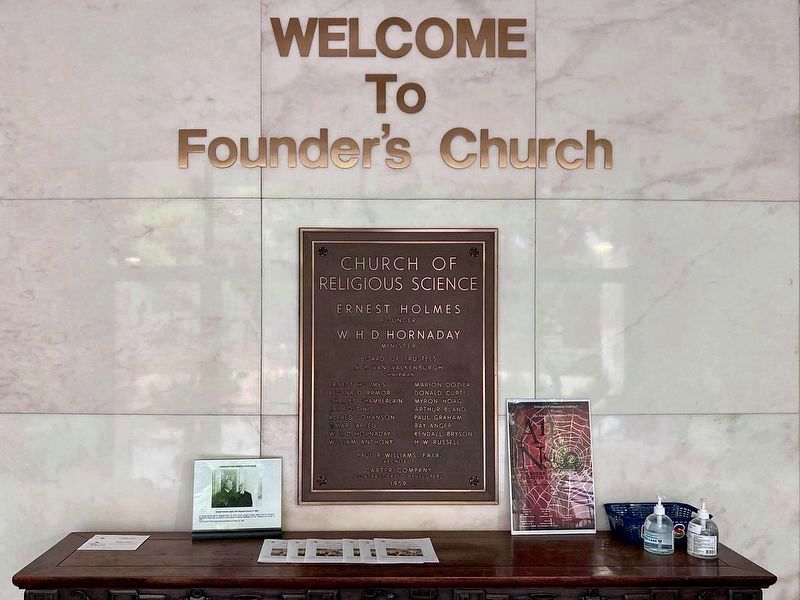
Photographed by Craig Baker, October 8, 2023
3. Dedication Plaque - 1959
Conceals a time capsule, 1959 - 2059
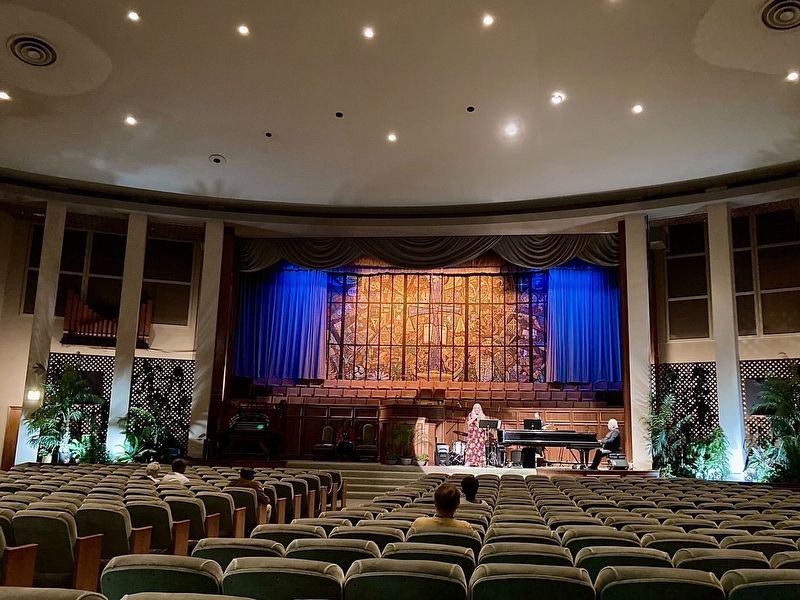
Photographed by Craig Baker, October 8, 2023
4. Church Interior
Photographed by Craig Baker, October 8, 2023
5. Founder’s Church
Photographed by Craig Baker, October 8, 2023
6. Founder’s Church
Credits. This page was last revised on October 12, 2023. It was originally submitted on October 12, 2023, by Craig Baker of Sylmar, California. This page has been viewed 471 times since then and 41 times this year. Photos: 1, 2, 3, 4, 5, 6. submitted on October 12, 2023, by Craig Baker of Sylmar, California.
