
Camden in Kershaw County, South Carolina — The American South (South Atlantic)
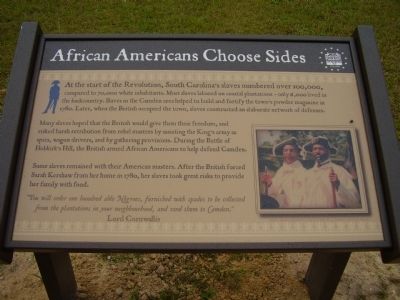
African Americans Choose Sides
Photographed by Stanley and Terrie Howard, October 11, 2009
1. African Americans Choose Sides Marker
At the start of the Revolution, South Carolina's slaves numbered over 100,000, compared to 70,000 white inhabitants. Most slaves labored on coastal plantations-only 6,000 lived in the backcountry. Slaves in the Camden area helped to build and fortify the town's powder magazine in 1780. Later, when the British occupied the town, slaves constructed an elaborate network of defenses.
Many slaves hoped that the British would give them their freedom, and risked harsh retribution from rebel masters by assisting the King's army as spies, wagon drivers, and by gathering provisions. During the Battle of Hobkirk's Hill, the British armed African Americans to help defend Camden.
Some slaves remained with their American masters. After the British forced Sarah Kershaw from her home in 1780, her slaves took great risks to provide her family with food.
"You will order one hundred able Negroes, furnished with spades to be collected from the plantations in your neighbourhood, and send them to Camden."
Lord Cornwallis
Topics. This historical marker is listed in these topic lists: African Americans • Settlements & Settlers
this page online
Location. 34° 13.973′ N, 80° 36.207′ W. Marker is in Camden, South Carolina, in Kershaw County. It is on State Road (State Highway 28-703). Marker is located in the Historic Camden Revolutionary War Park. Touch for map. Marker is in this post office area: Camden SC 29020, United States of America. Touch for directions.

Regionally, this marker is in the Midlands and in the Olde English District. It is also in the American South and specifically in the Deep South. Globally, it is in North America, the Western Hemisphere, the Western World, and the Anglosphere. Historically, it finds itself in what was once the territory of the Mississippian Culture, one of the original Thirteen Colonies, one of the Confederate States of America, and the Antebellum South.
Other nearby markers. At least 8 other markers are within walking distance of this marker: Bradley House (within shouting distance of this marker); Conestoga Wagons (within shouting distance of this marker); Corduroy Road (within shouting distance of this marker); Cunningham House (within shouting
Photographed by Anna Inbody, October 2, 2011
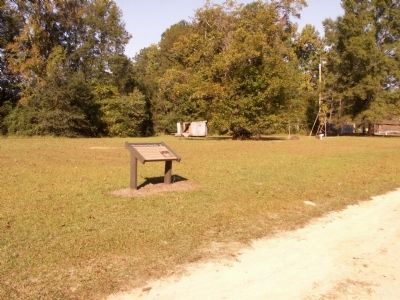
2. Overview
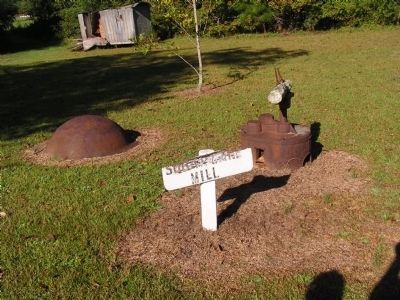
On the right hand side in the background can be seen the remnants of a sugar cane mill.
Photographed by Bill Coughlin, November 4, 2017
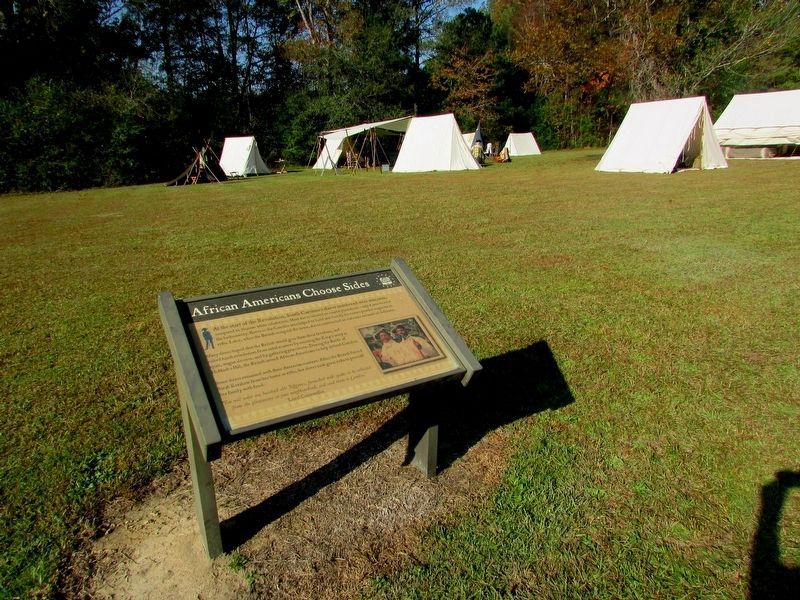
3. African Americans Choose Sides Marker
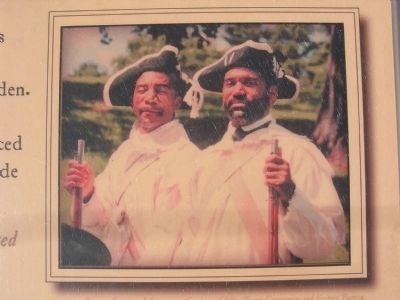
4. Picture on the marker
African American Infantrymen, Courtesy of Valley Forge Convention and Visitors Bureau.
Photographed by Anna Inbody, October 2, 2011
5. Sugar Cane Mill
Credits. This page was last revised on January 19, 2026. It was originally submitted on October 17, 2009, by Stanley and Terrie Howard of Greer, South Carolina. This page has been viewed 1,496 times since then and 45 times this year. Last updated on October 20, 2009, by Richard E. Miller of Oxon Hill, Maryland. Photos: 1. submitted on October 17, 2009, by Stanley and Terrie Howard of Greer, South Carolina. 2. submitted on October 28, 2011, by Anna Inbody of Columbia, South Carolina. 3. submitted on November 7, 2017, by Bill Coughlin of Woodland Park, New Jersey. 4, 5. submitted on October 28, 2011, by Anna Inbody of Columbia, South Carolina. • Craig Swain was the editor who published this page.
