Decorah in Winneshiek County, Iowa — The American Midwest (Upper Plains)
Winnebago Street
Decorah: A Walk into the Past
| — | Water Street Trail | — |
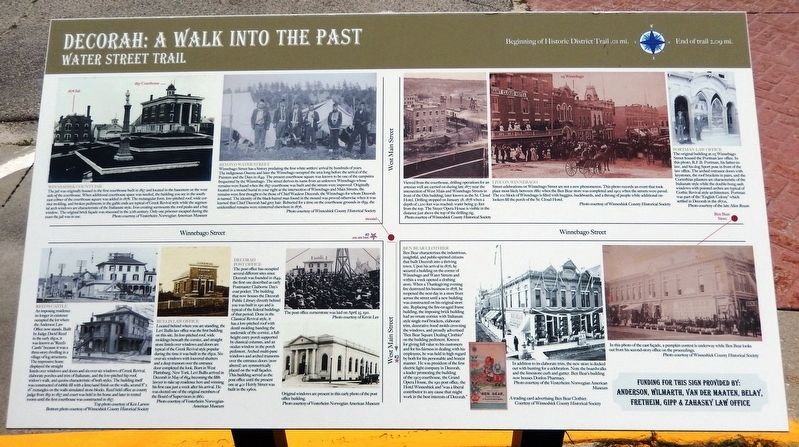
Photographed by Cosmos Mariner, September 9, 2023
1. Winnebago Street Marker
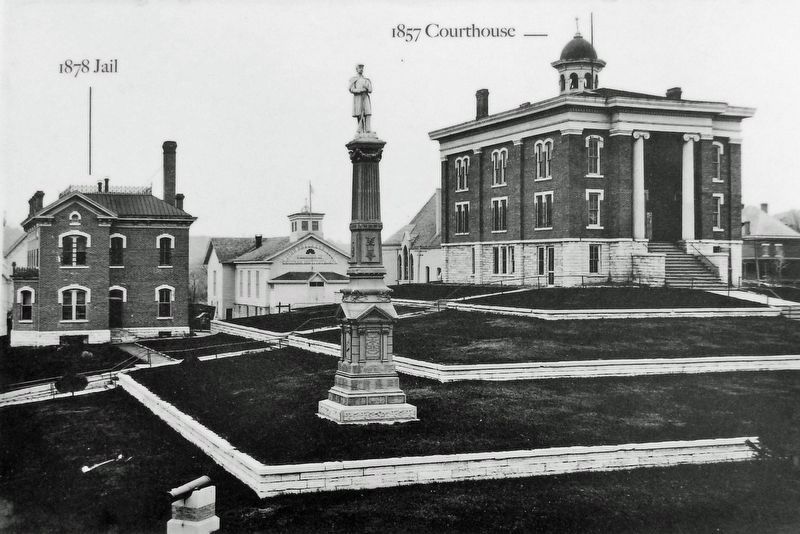
Winneshiek County Jail
The jail was originally housed in the first courthouse built in 1857 and located in the basement on the west side of the courthouse. When additional courthouse space was needed, the building you see in the southeast corner of the courthouse square was added in 1878. The rectangular form, low-pitched roof, wide cornice molding, and broken pediments in the gable ends are typical of Greek Revival style while the segmental arch windows are characteristic of the Italianate style. Iron cresting surmounts the roof peaks and a bay window. The original brick facade was stuccoed in the 20th century. Only one prisoner escaped during the years the jail was in use.
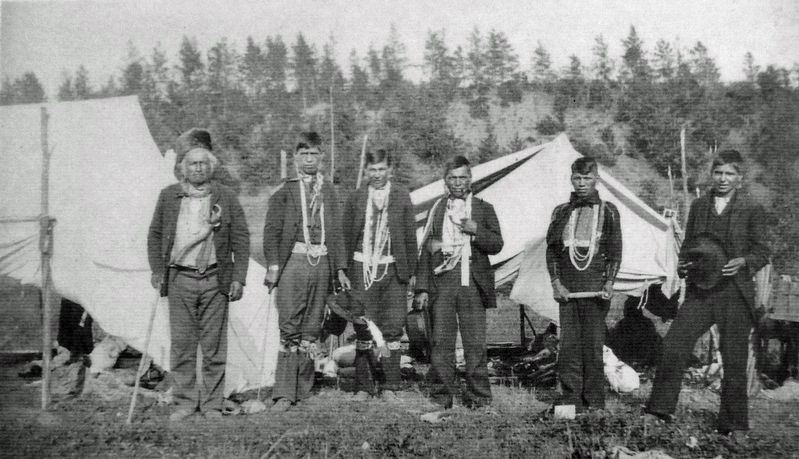
Beyond Water Street
Winnebago Street has a history predating the first white settlers' arrival by hundreds of years. The indigenous Oneota and later the Winnebago occupied the area long before the arrival of the Painters and the Days in 1849. The present courthouse square was known to be one of the campsites frequented by the Winnebago. The street derives its name from an unknown Winnebago whose remains were found when the 1857 courthouse was built and
this page online
Reed’s Castle
An imposing residence no longer in existence occupied the lot where the Anderson Law Office now stands. Built by Judge David Reed in the early 1850s, it was known as "Reed's Castle" because it was a three-story dwelling in a village of log structures. The impressive home displayed the straight lintels over windows and doors and six-over-six windows of Greek Revival, elaborate porches and trim of Italianate, and the low-pitched hip roof, widow's walk, and quoins characteristic of both styles. The building itself was constructed of rubble fill with a lime/sand finish on the walls, scored 8" x 16" rectangles on the walls simulated stone blocks. Reed
Courtesy Vesterheim Norwegian American Museum
2. Marker detail: Winneshiek County Jail
Bullis Law Office
Located behind where you are standing, the Levi Bullis law office was the first building on this site. Its low-pitched roof, wide moldings beneath the cornice, and straight stone lintels over windows and doors are typical of the Greek Revival style popular during the time it was built in the 1850s. Six-over-six windows with louvered shutters and a deep transom over the entrance door completed the look. Born in West Plattsburgh, New York, Levi Bullis arrived in Decorah in May of 1854 becoming the fifth lawyer to take up residence here and winning his first case just a week after his arrival. He was elected one of the original members of the Board of Supervisors in 1860.
Decorah Post Office
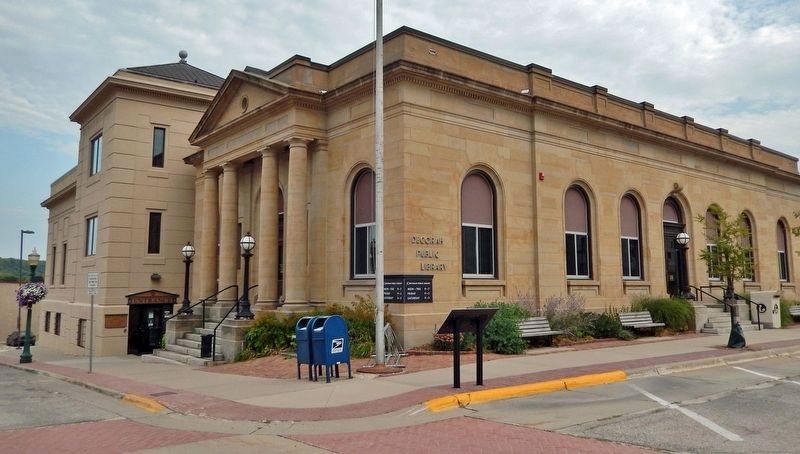
The post office has occupied several different sites since Decorah was founded in 1849, the first one described as early Postmaster Claiborne Day's coat pocket. The building that now houses the Decorah Public Library directly behind you was built in 1911 and is typical of the federal
Winneshiek County Historical Society
3. Marker detail: Beyond Water Street
Live on Winnebago
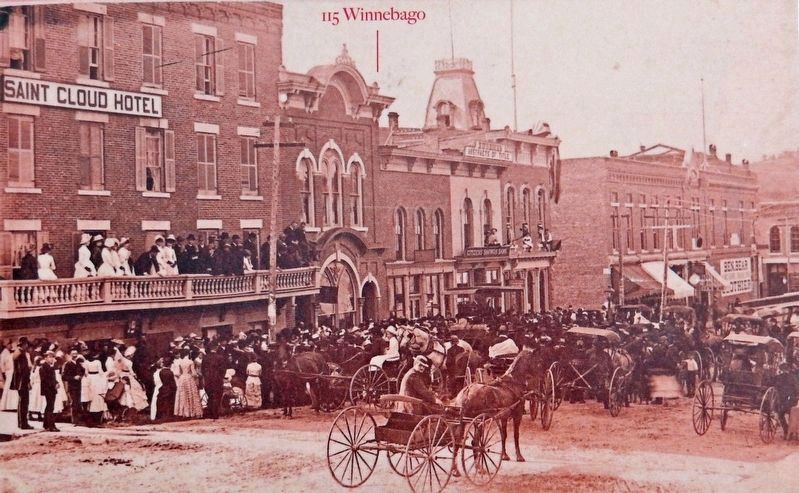
Street celebrations on Winnebago Street are not a new phenomenon. This photo records an event that took place most likely between 1880 when the Ben Bear store was completed and 1902 when the streets were paved. The 100 block of Winnebago is filled with buggies, buckboards, and a throng of people while additional onlookers fill the porch of the St. Cloud Hotel.
Portman Law Office
The original building at 115 Winnebago Street housed the Portman law office. In this photo, R.F.B. Portman, his father-in-law, and his dog Sport pose in front of the law office. The arched entrance doors with keystones, the roof brackets in pairs, and the Corinthian
Winneshiek County Historical Society
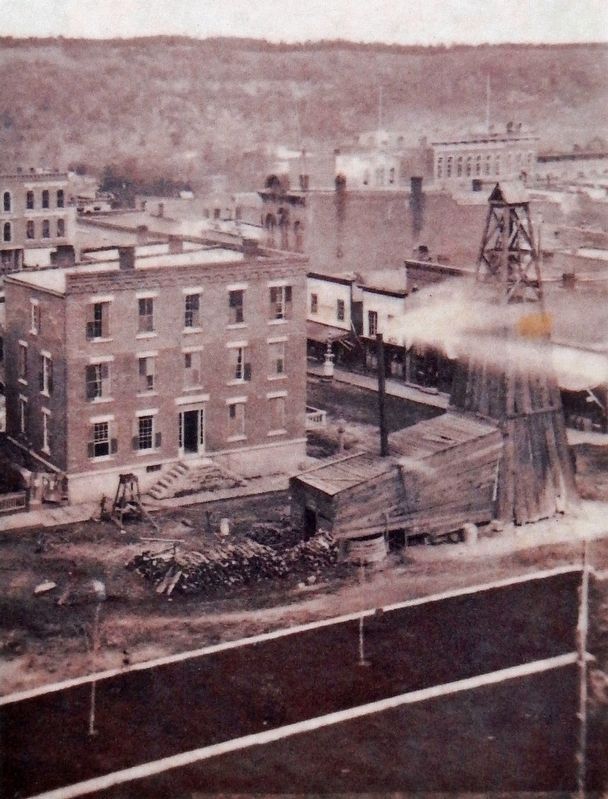
4. Marker detail: Drilling Artesian Well, 1877
Viewed from the courthouse, drilling operations for an artesian well are carried on during late 1877 near the intersection of West Main and Winnebago Streets in front of the Otis building, later known as the St. Cloud Hotel. Drilling stopped on January 28, 1878 when a depth of 1,200 feet was reached, water being 30 feet from the top. The Steyer Opera House is visible in the distance just above the top of the drilling rig.
Ben Bear Clothier
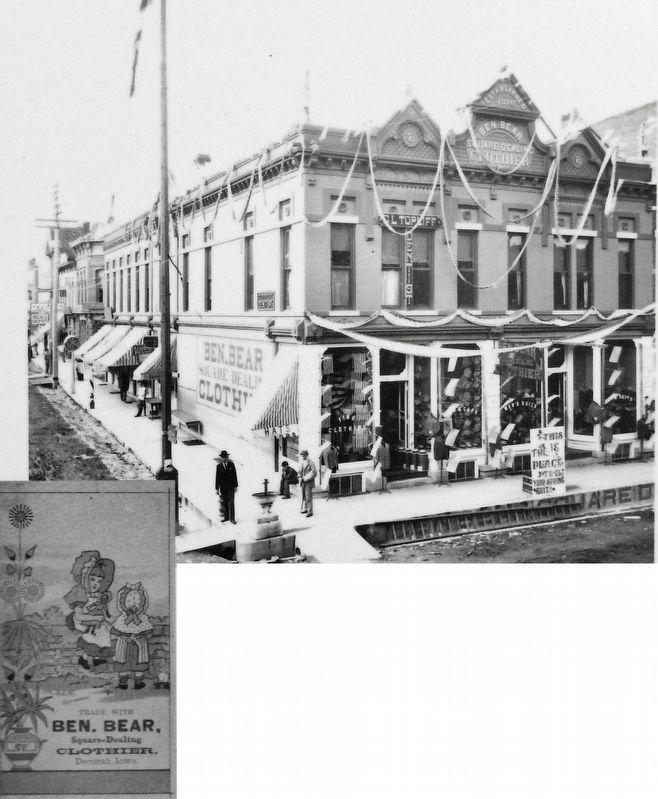
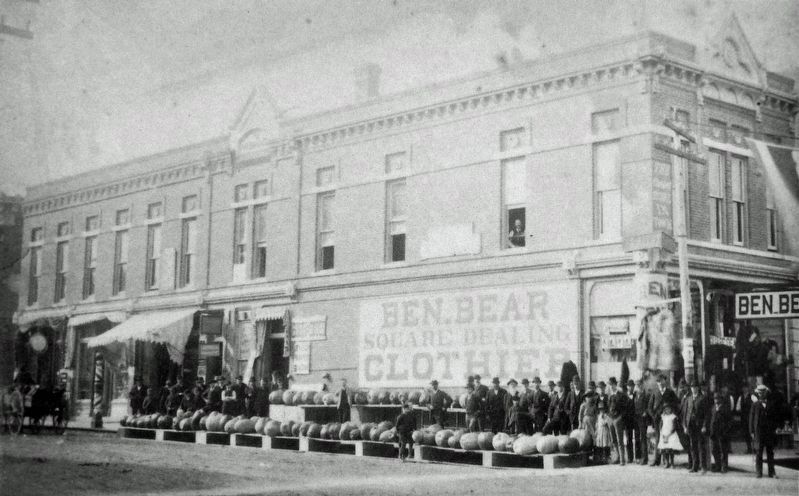
Ben Bear characterizes the industrious, insightful, and public-spirited citizens that built Decorah into a thriving town. Upon his arrival in 1876, he secured a building on the corner of Winnebago and Water Streets and within a week opened a clothing store. When a Thanksgiving evening fire destroyed his business in 1878, he reopened the next day in a store front across the street until a new building was constructed on his original store site. Replacing the fire-ravaged frame building, the imposing brick building had an ornate cornice with Italianate style single roof brackets, elaborate trim, decorative hood molds crowning the windows, and proudly advertised "Ben Bear Square Dealing Clothier" on the building pediment. Known for giving full value to his customers and for his fairness in dealing with his employees, he was held in high regard by both for his personable and honest manner.
Winneshiek County Historical Society
5. Marker detail: Live on Winnebago
[other photo captions]
• Reed’s Castle
• Bullis Law Office
• The post office cornerstone was laid on April 25, 1911.
• Original windows are present in this early photo of the post office building.
• Portman Law Office
Topics. This historical marker is listed in these topic lists: Architecture • Indigenous Peoples and Communities • Industry & Commerce • Settlements & Settlers.
Location. 43° 18.19′ N, 91° 47.224′ W. Marker is in Decorah, Iowa, in Winneshiek County. It is on Winnebago Street just south of West Main Street, on the left when traveling south. The marker is located along the sidewalk at the southeast corner of the intersection, beside the Decorah Public Library. Touch for map. Marker is at or near this postal address: 202 Winnebago Street, Decorah IA 52101, United States of America. Touch for directions.

Regionally,
Courtesy Vesterheim Norwegian American Museum
6. Marker detail: Ben Bear Square Dealing Clothier
In addition to its elaborate trim, the new store is decked out with bunting for a celebration. Note the boardwalks and the limestone curb and gutter. Ben Bear's building now houses Donlon Pharmacy.
A trading card advertising Ben Bear Clothier. Courtesy of Winneshiek County Historical Society
Other nearby markers. At least 8 other markers are within walking distance of this marker: Decorah: A Walk into the Past (a few steps from this marker); "The Biggest Day in the History of the County" (within shouting distance of this marker); Replica of the Statue of Liberty (about 300 feet away, measured in a direct line); a different marker also named Decorah: A Walk into the Past (about 300 feet away); Decorah, Northeast Iowa, & the Neutral Ground (about 300 feet away); To Build, or Not To Build (about 400 feet away); a different marker also named Decorah: A Walk into the Past (about 400 feet away); a different marker also named Decorah: A Walk into the Past (about 500 feet away). Touch for a list and map of all markers in Decorah.
Winneshiek County Historical Society
7. Marker detail: Ben Bear Square Dealing Clothier
In this photo of the east façade, a pumpkin contest is underway while Ben Bear looks out from his second-story office on the proceedings.
Photographed by Cosmos Mariner, September 9, 2023
8. Decorah Public Library
Looking southeast. The marker is located along the sidewalk, near the corner, just to the right of the mailboxes.
Photographed by Cosmos Mariner, September 9, 2023
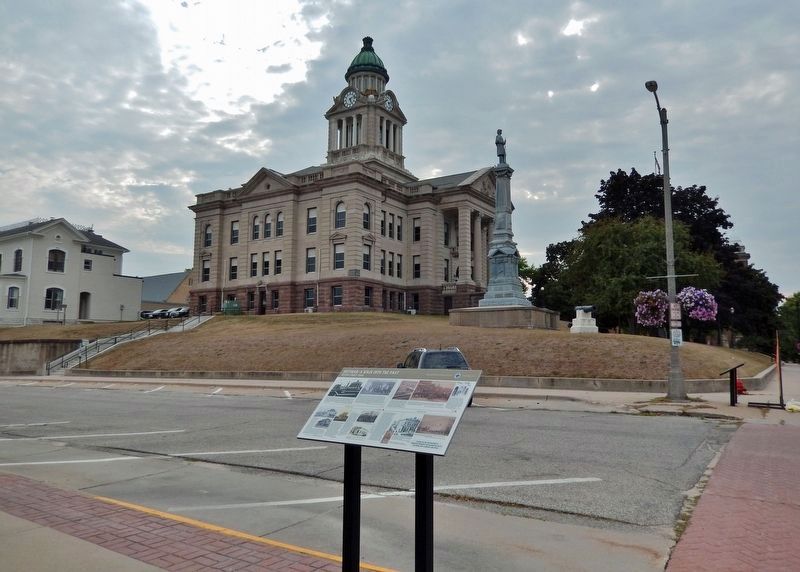
9. Winnebago Street Marker
Looking southwest across Winnebago Street. Winneshiek County Courthouse (right) and 1876 Winneshiek County Jail (left) in background.
Credits. This page was last revised on November 13, 2023. It was originally submitted on November 11, 2023, by Cosmos Mariner of Cape Canaveral, Florida. This page has been viewed 673 times since then and 75 times this year. Photos: 1, 2, 3, 4, 5, 6, 7, 8, 9. submitted on November 13, 2023, by Cosmos Mariner of Cape Canaveral, Florida.
