Blooming Grove in Morrow County, Ohio — The American Midwest (Great Lakes)
Harding Birthplace
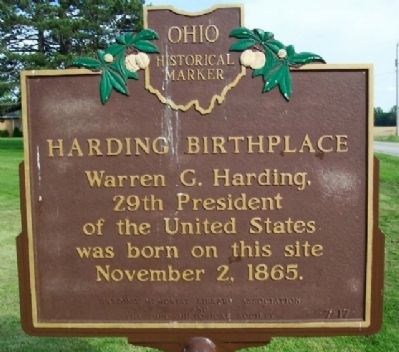
Photographed by William Fischer, Jr., June 6, 2009
1. Harding Birthplace Marker
Erected 1963 by Harding Memorial Library Association and The Ohio Historical Society. (Marker Number 7-17.)
Topics and series. This historical marker is listed in this topic list: Government & Politics. In addition, it is included in the Former U.S. Presidents: #29 Warren G. Harding, and the Ohio Historical Society / The Ohio History Connection series lists. A significant historical date for this entry is November 2, 1865.
Location. 40° 42.34′ N, 82° 42.744′ W. Marker is in Blooming Grove, Ohio, in Morrow County. It is on Ohio Route 97 0.2 miles east of Williamsport-Bloomingrove Road (County Route 20), on the left when traveling east. Touch for map. Marker is at or near this postal address: 6297 Ohio Route 97, Galion OH 44833, United States of America. Touch for directions.

Regionally, this marker is in the American Midwest and in the Corn Belt. Globally, it is in North America, the Western Hemisphere, the Western World, and the Anglosphere. Historically, it finds itself in what was once the Haudenosaunee (Iroquois) Confederacy,
this page online
Other nearby markers. At least 8 other markers are within 7 miles of this marker, measured as the crow flies: Big Four Depot (approx. 4.2 miles away); Galion Veterans Memorial / Flag Plaza (approx. 4.3 miles away); Lincoln Highway Marker (approx. 4½ miles away); Crestline Community Service Center (approx. 5.6 miles away); Crestline War Memorial (approx. 5.6 miles away); Crestline PRR Roundhouse (approx. 5.9 miles away); J. F. McMahon - A. F. Bement (approx. 6.1 miles away); Pleasant Grove Church of Christ (approx. 6.4 miles away).
Another marker is no longer nearby. U.S.S. Constitution Cannon (was approx. 5.4 miles away but has been confirmed missing).
Regarding Harding Birthplace. “The first two decades of the twentieth century had been marked by American involvement in a world war and a host of progressive reforms in the country's economic and social institutions. By 1920, voters wanted a rest from all this change and ferment and were ready for a brand of White House leadership that did not threaten the status quo. In Warren G. Harding, that year's
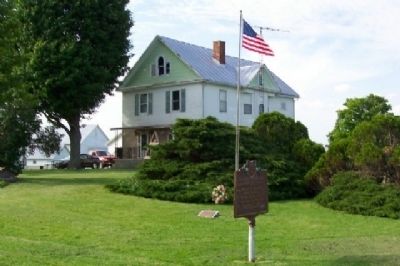
Photographed by William Fischer, Jr., June 6, 2009
2. Harding Birthplace Marker
Harding's administration was marked by scandals. A trusting individual, he appointed cronies to his administration who proved all too ready to use their offices for private gain. Harding, however, escaped having to face the corrupt behavior of his appointees. Just as stories of their wrongdoing were coming to light, he collapsed and died.”
— National Portrait Gallery
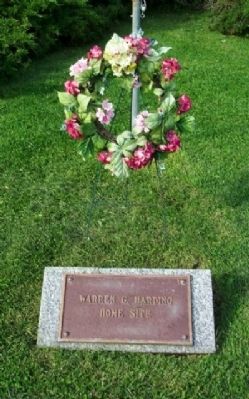
Photographed by William Fischer, Jr., June 6, 2009
3. Harding Home Site Marker
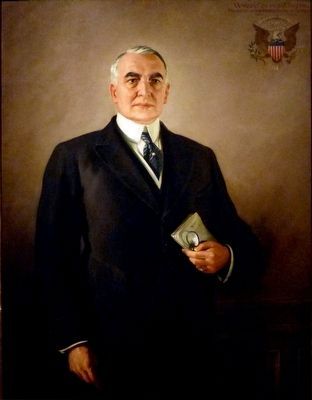
Photographed by Allen C. Browne, August 9, 2015
4. Warren G. Harding
This 1923 portrait of Warren G. Harding by Margaret Lindsay Williams hangs in the National Portrait Gallery in Washington, DC.
Credits. This page was last revised on December 2, 2023. It was originally submitted on June 29, 2009, by William Fischer, Jr. of Reynoldsburg, Ohio. This page has been viewed 9,016 times since then and 367 times this year. Last updated on December 1, 2023, by Craig Doda of Napoleon, Ohio. Photos: 1, 2, 3. submitted on June 29, 2009, by William Fischer, Jr. of Reynoldsburg, Ohio. 4. submitted on August 14, 2015, by Allen C. Browne of Silver Spring, Maryland. • Bill Pfingsten was the editor who published this page.
