
Cortes in Madrid, Spain — Southwestern Europe (Iberian Peninsula)
Leandro Fernández de Moratín
Photographed by Andrew Ruppenstein, April 18, 2022
1. Leandro Fernandez de Moratín Marker

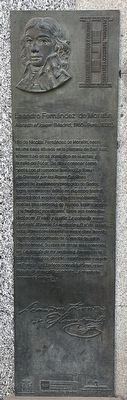
Moratin el Joven (Madrid, 1760 - París, 1828)
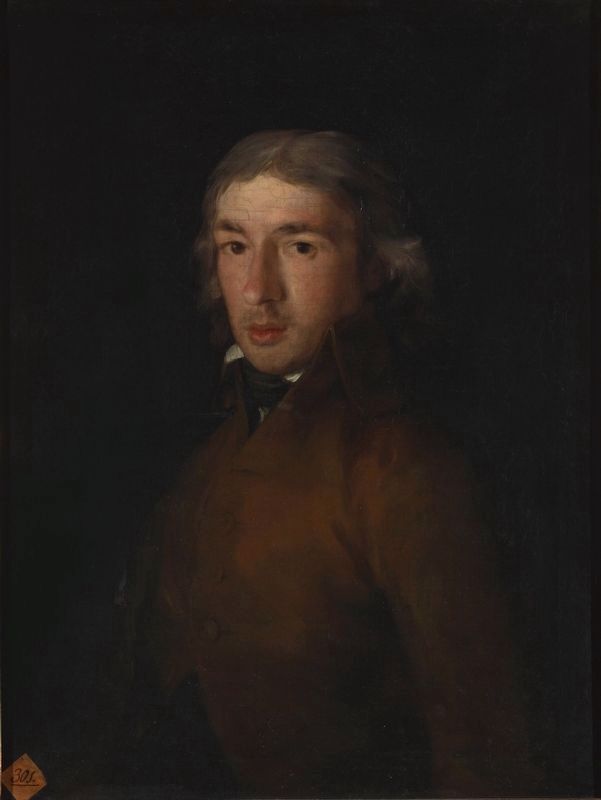
Hijo de Nicolás Fernández de Moratin, nació en una casa situada en la plazuela de San Juan, Si bien tuvo otros domicllos en Huertas y la calle del Fúcar. Se dio a conocer como poeta con el romance heroico La Toma de Granada por los Reyes Católicos. Amigo de Jovellanos y protegido de Godoy. Logró sus mejores éxitos en el campo teatral. Introdujo los moldes del teatro neoclásica con las tres unidades de tempo, lugar y acción y la finalidad morallizante. Entre sus comedias destacan El viejo y la niña, La comedia nueva o el café, El barón, La mojigata, y El sí de las niñas, esta última considerada su mejor obra, inscrita dentro de la corriente de comedia de salón dieciochesca. Su obra en prosa más conocida es La derrota de los pedantes. Amante de la cultura francesa, decidio dejar España y residir en Francia. En Burdeos conoció a Goya, quien hizo de é un magnífico retrato. La muerte le sorprendió en Paris.
Leandro Fernández de Moratin
Moratin the Younger (Madrid, 1760 - Paris, 1828)
Son
this page online
Photographed by Andrew Ruppenstein, April 18, 2022
2. Leandro Fernández de Moratín Marker - wide view
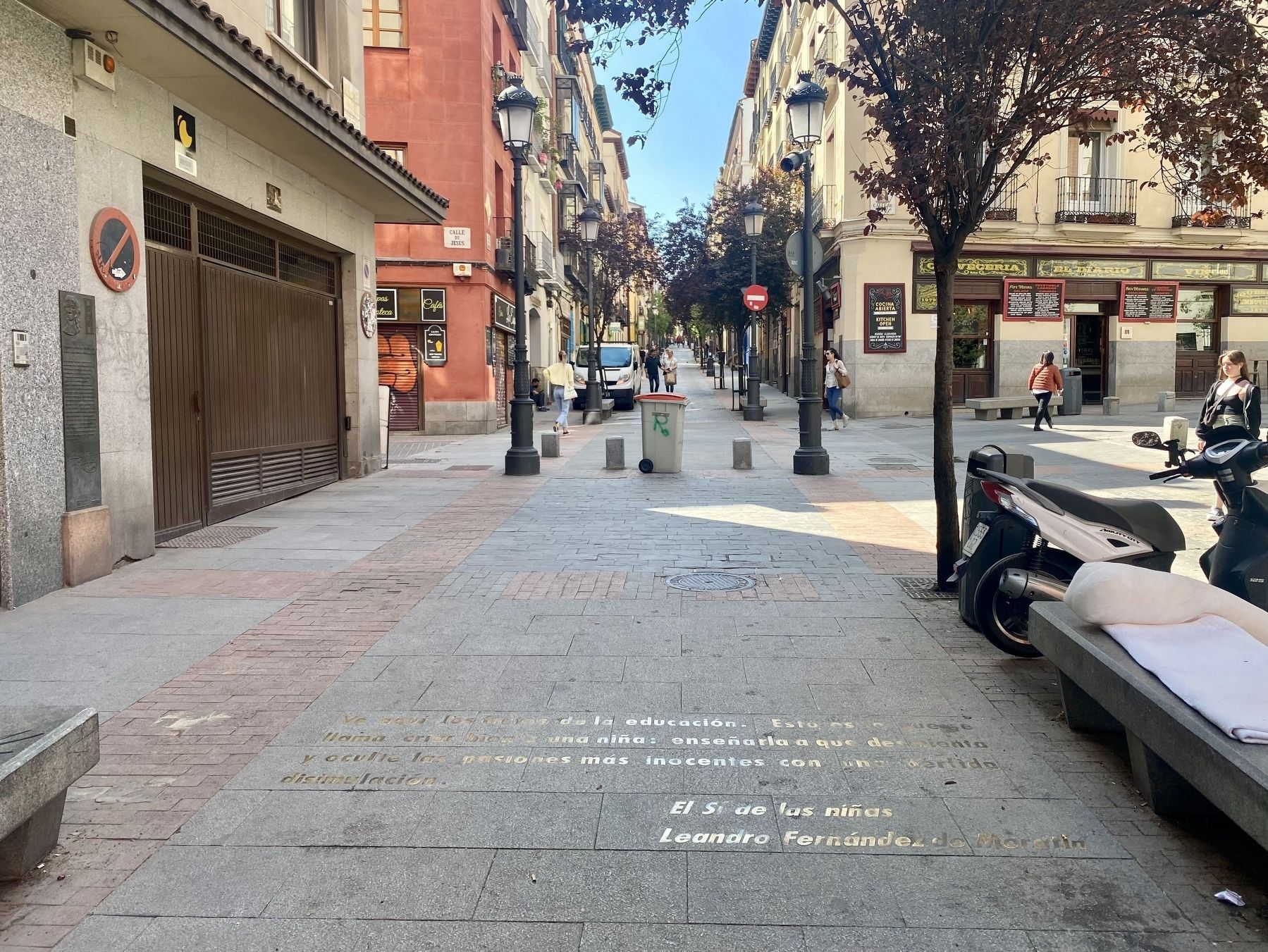
Looking west on Calle de las Huertas. The marker is visible here on the left. Also visible here embedded in the pavement is an excerpt from his play El Sí de las Niñas (“The Maidens’ Consent”). Spoken by Don Diego to Doña Francesca, it reads as follows: “Ve aquí los frutos de la educación. Esto es lo que se llama criar bien a una niña: enseñarla a que desmienta y oculte las pasiones más inocentes con una pérfida disimulación.”, which can be translated as, “See here the fruits of education. This is what is called raising a girl well: teaching her to deny and hide the most innocent passions with perfidious dissimulation.”
Topics. This historical marker is listed in this topic list: Arts, Letters, Music. A significant historical date for this entry is March 10, 1760.
Location. 40° 24.777′ N, 3° 41.731′ W. Marker is in Madrid. It is in Cortes. It is at the intersection of Calle de las Huertas and Calle de Jesús, on the left when traveling west on Calle de las Huertas. Touch for map. Marker is at or near this postal address: Calle de las Huertas 72, Madrid 28014, Spain. Touch for directions.

Regionally, it is in the North Atlantic Region, in Europe, in the European Union, in Atlantic Europe, on the Iberian Peninsula, in the Schengen Area, in a coastal Mediterranean country, and in the Western World. Historically, it finds itself in what was once the Roman Empire.
Other nearby markers. At least 8 other markers are within walking distance of this marker: José María Manresa Navarro (a few steps from this marker); Nicolás Fernández de Moratín (a few steps from this marker); Mariano José de Larra (Madrid, 1809-1837) (within shouting distance of this marker); León Felipe (within shouting distance of this marker); José de Espronceda (about 90 meters away,
Photographed by Francisco Goya (via Wikimedia Commons), 1799
3. Leandro Fernández de Moratín
Also see . . . Leandro Fernández de Moratín (Britannica).
Excerpt: The son of the poet and playwright Nicolás Fernández de Moratín, he was an apologist of the French Encyclopaedists, a translator of Molière and William Shakespeare, and a satirist of contemporary society. The two predominant themes of his plays are dramatic criticism, as seen in La comedia nueva (1792; “The New Comedy”), in which he satirizes the absurd characters and plots of the popular plays of the time, and attacks on excessive parental authority and marriages of convenience, as seen in El sí de las niñas (1806; The Maiden’s Consent). Because of political and ecclesiastical opposition to his French sympathies, he spent most of his life after 1814 in France, where he died; he was buried between his models Molière and Jean de La Fontaine, but his remains were later transferred to Madrid.(Submitted on December 13, 2023.)
Credits. This page was last revised on December 13, 2023. It was originally submitted on December 12, 2023, by Andrew Ruppenstein of Lamorinda, California. This page has been viewed 1,468 times since then and 52 times this year. Photos: 1. submitted on December 12, 2023, by Andrew Ruppenstein of Lamorinda, California. 2, 3. submitted on December 13, 2023, by Andrew Ruppenstein of Lamorinda, California.
