Near Buford in Lancaster County, South Carolina — The American South (South Atlantic)
Buford Battleground
Photographed by Michael Sean Nix, October 28, 2009
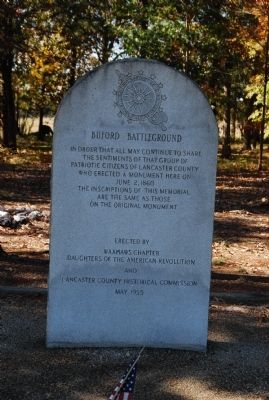
1. Buford Battleground Marker
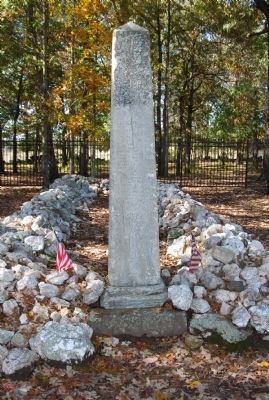
In order that all may continue to share the sentiments of that group of patriotic citizens of Lancaster County who erected a monument here on June 2, 1860 the inscriptions of this memorial are the same as those on the original monument.
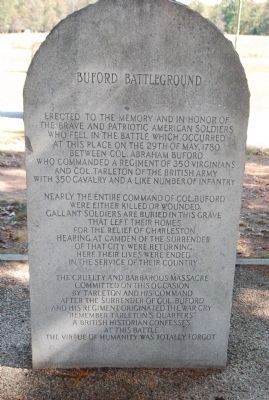
Erected to the memory and in honor of the brave and patriotic American soldiers who fell in the battle which occurred at this place on the 29th of May, 1780 between Col. Abraham Buford who commanded a regiment of 350 Virginians and Col. Tarelton of the British Army with 350 cavalry and a like number of infantry.
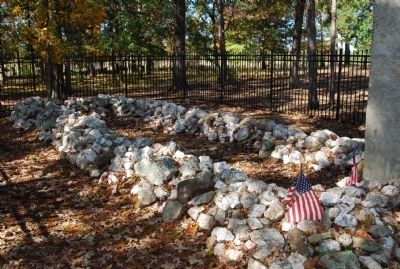
Nearly the entire command of Col. Buford were either killed or wounded. Gallant soldiers are buried in this grave that left their homes for the relief of Charleston, hearing at Camden of the surrender of that city were returning. Here their lives were ended in the service of their country.
The cruelty and barbarous massacre committed on this occasion by Tarleton and his command after the surrender of Col. Buford and his regiment originated the war cry "Remember Tarleton's Quarters" a British historian confesses at this battle the virtue of humanity was totally forgot.
Erected 1955 by Waxhaw Chapter-Daughters of the American Revolution and the Lancaster County Historical Commission.
Topics and series. This historical marker is listed in this topic list: War, US Revolutionary. In addition, it is included in the Daughters of the American Revolution (DAR) series list. A significant historical month for this entry is June 1774.
Location. 34° 44.514′ N, 80° 37.566′ W. Marker is near Buford, South Carolina, in Lancaster County. It is on Rocky River Road 0.1 miles south of Pageland Highway, on the right when traveling south. Touch for map. Marker is in this post office area: Lancaster SC 29720, United States of America. Touch for directions.

Regionally,
this page online
Other nearby markers. At least 8 other markers are within walking distance of this marker: Buford's Defeat (here, next to this marker); Disaster in South Carolina (here, next to this marker); Battle of the Waxhaws: Massacre or Myth? (here, next to this marker); Buford's Massacre (a few steps from this marker); Honoring The Fallen (a few steps from this marker); Memorials and Archaeology (within shouting distance of this marker); Buford Monument (within shouting distance of this marker); Buford's Bloody Battleground (approx. 0.2 miles away). Touch for a list and map of all markers in Buford.
Photographed by Michael Sean Nix, October 28, 2009
2. Buford Battleground Marker
Rear side
Photographed by Ken Obriot, August 22, 2022
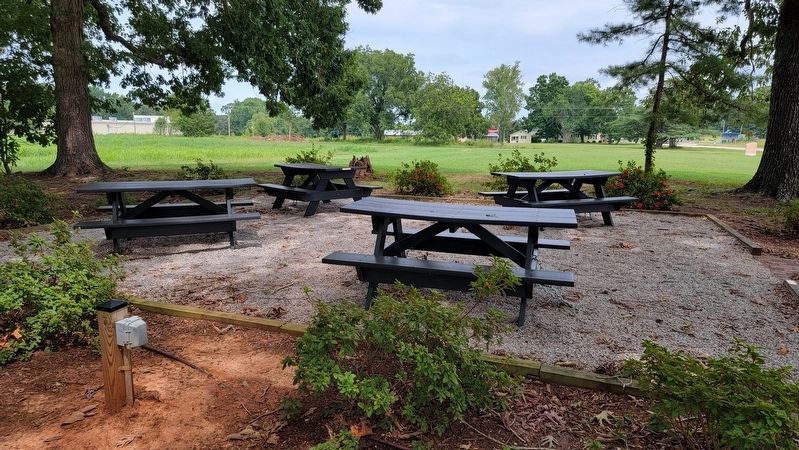
3. Buford Battleground Picnic Area
Picnic area was created as an Eagle Scout project.
Photographed by Ken Obriot, August 22, 2022
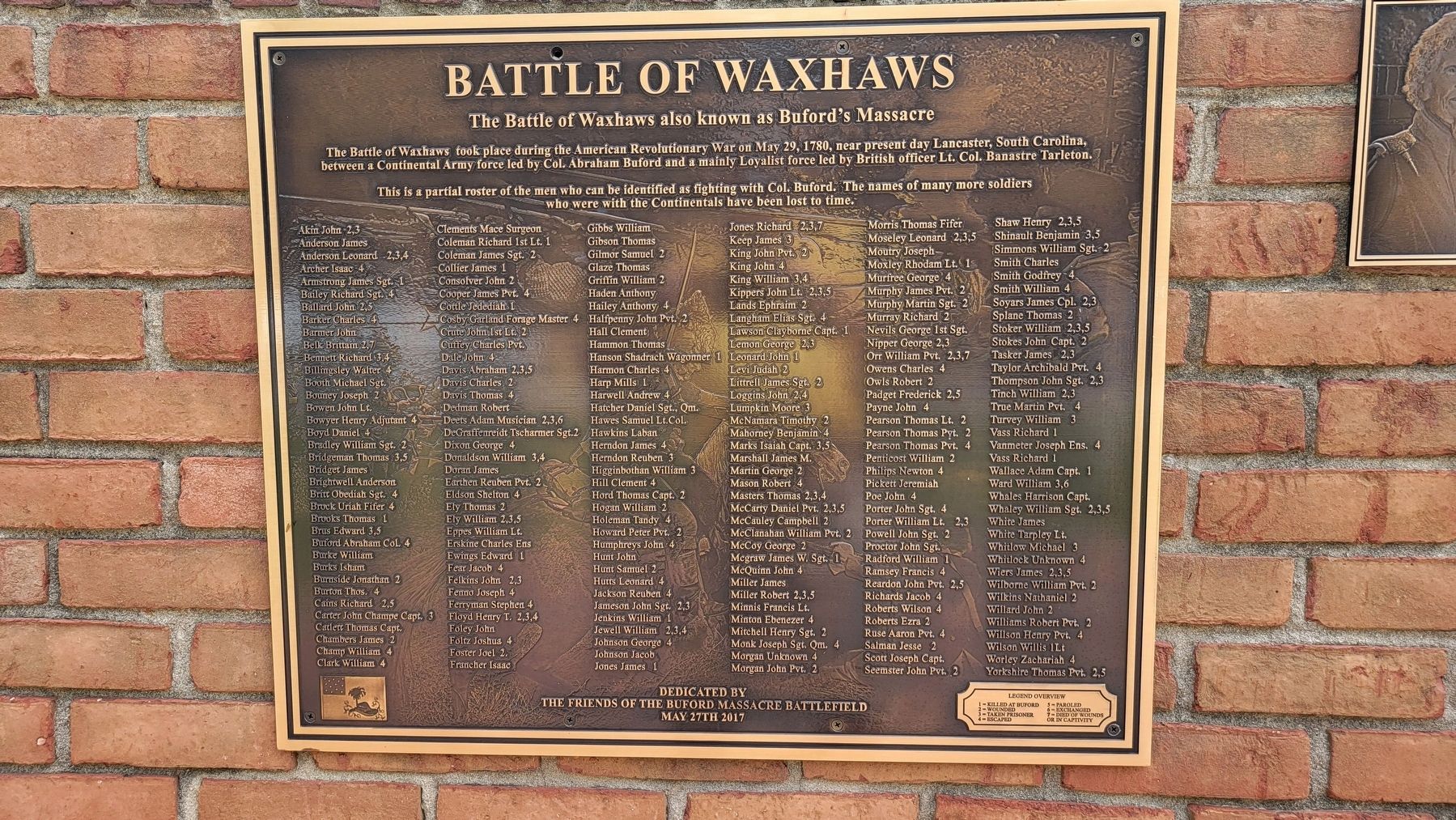
4. Buford Battleground Marker
This Bronze marker contains the names of 216 continental soldiers known to have fought at the Battle of the Waxhaw or Buford's Massacre in 1780. There is a number key at the right hand bottom corner of the marker which tells what happened to the individual soldier, if it is known. For example a 1 after the soldiers name means he was killed at the battle. A 2 means he was wounded and so on. The list of names was retrieved from muster rolls, pension or widows compensation applications
Photographed by Ken Obriot, August 22, 2022
5. Buford Battleground Grounds
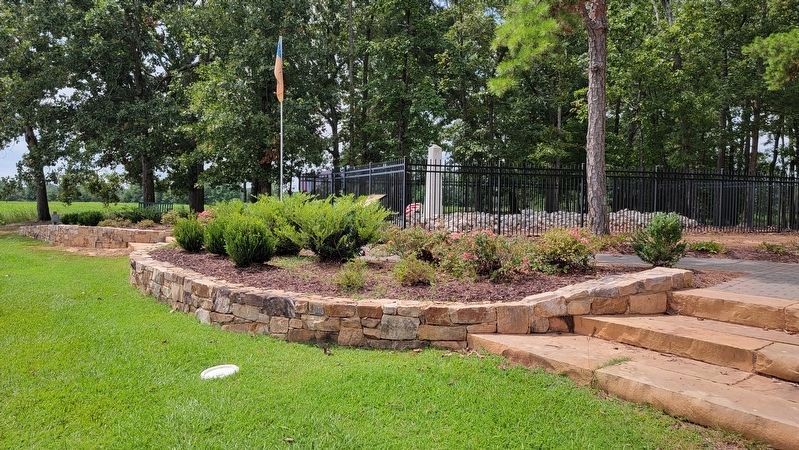
This brick wall, steps and brick paver walkway were completed in 2018 by the Friends of the Buford Massacre Battlefield. This makes the area around the markers accessible for all to view and enhances the overall beauty of the park.
Photographed by Ken Obriot, August 22, 2022
6. Buford Battleground Grounds
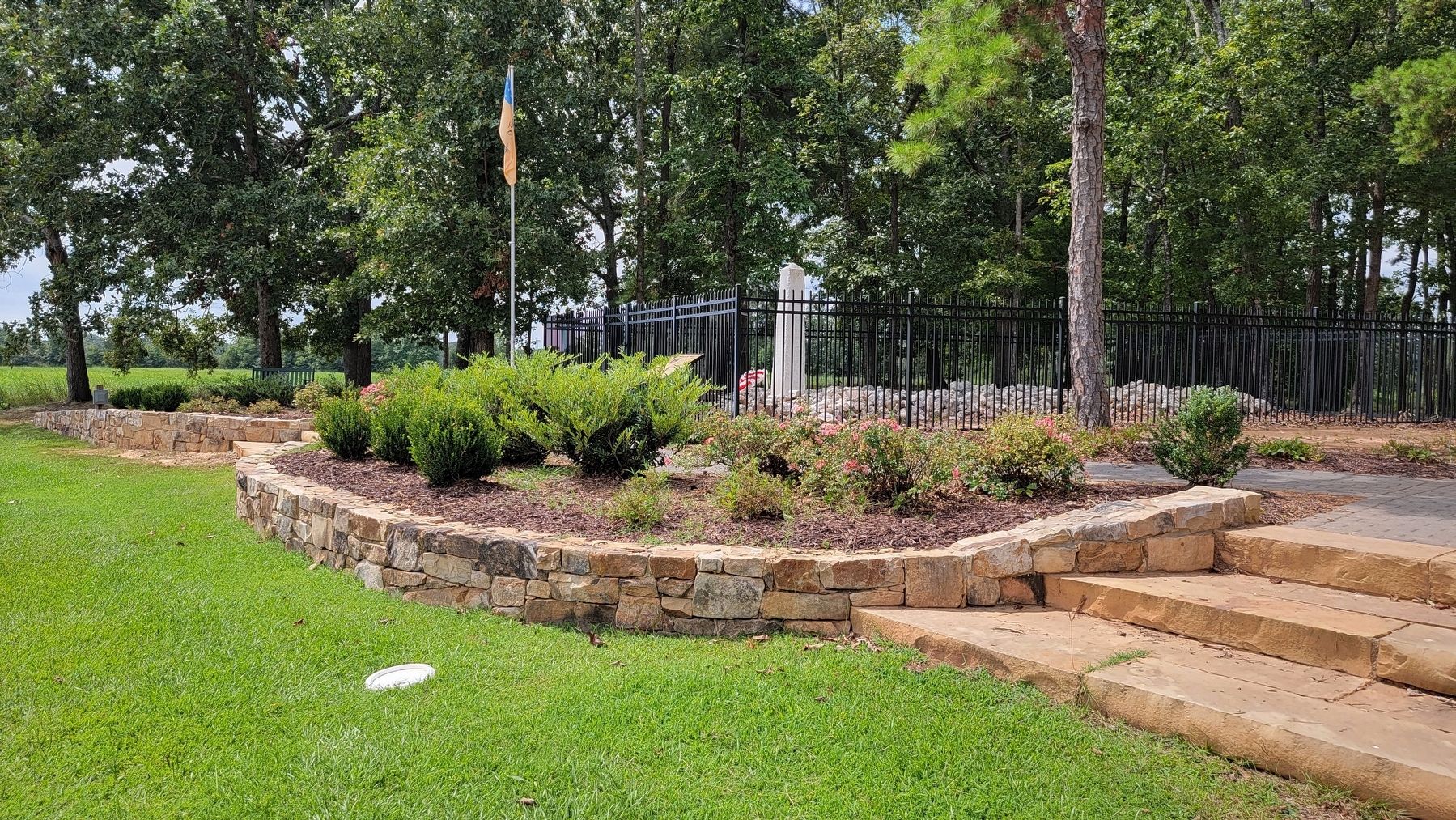
A brick wall and paver walkway were added in 2018 to enhance the beuty of the park and allow easy access to the memorial site..
Photographed by Michael Sean Nix, October 28, 2009
7. Buford Battleground Monument
Photographed by Michael Sean Nix, October 28, 2009
8. Buford Battleground Monument
Credits. This page was last revised on August 30, 2022. It was originally submitted on October 31, 2009, by Michael Sean Nix of Spartanburg, South Carolina. This page has been viewed 3,279 times since then and 137 times this year. Photos: 1, 2. submitted on October 31, 2009, by Michael Sean Nix of Spartanburg, South Carolina. 3, 4, 5, 6. submitted on August 29, 2022, by Ken Obriot of Fort Mill, South Carolina. 7, 8. submitted on October 31, 2009, by Michael Sean Nix of Spartanburg, South Carolina. • Bill Pfingsten was the editor who published this page.
