
Dixie in Mississauga in Peel Region, Ontario — Central Canada (North America)
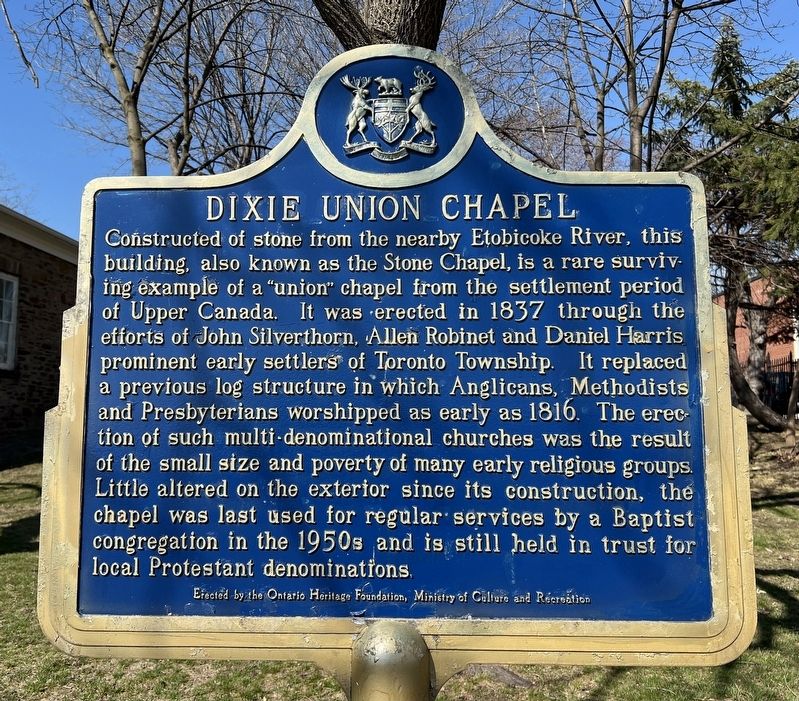
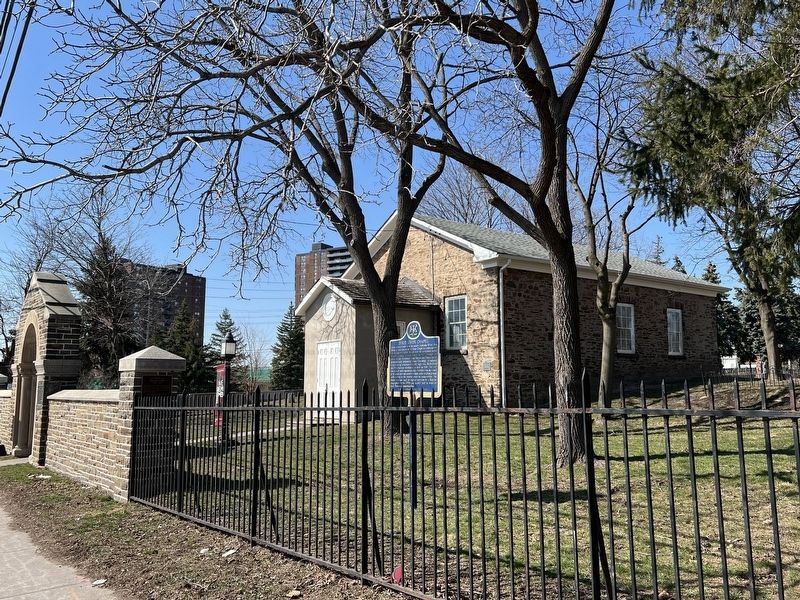
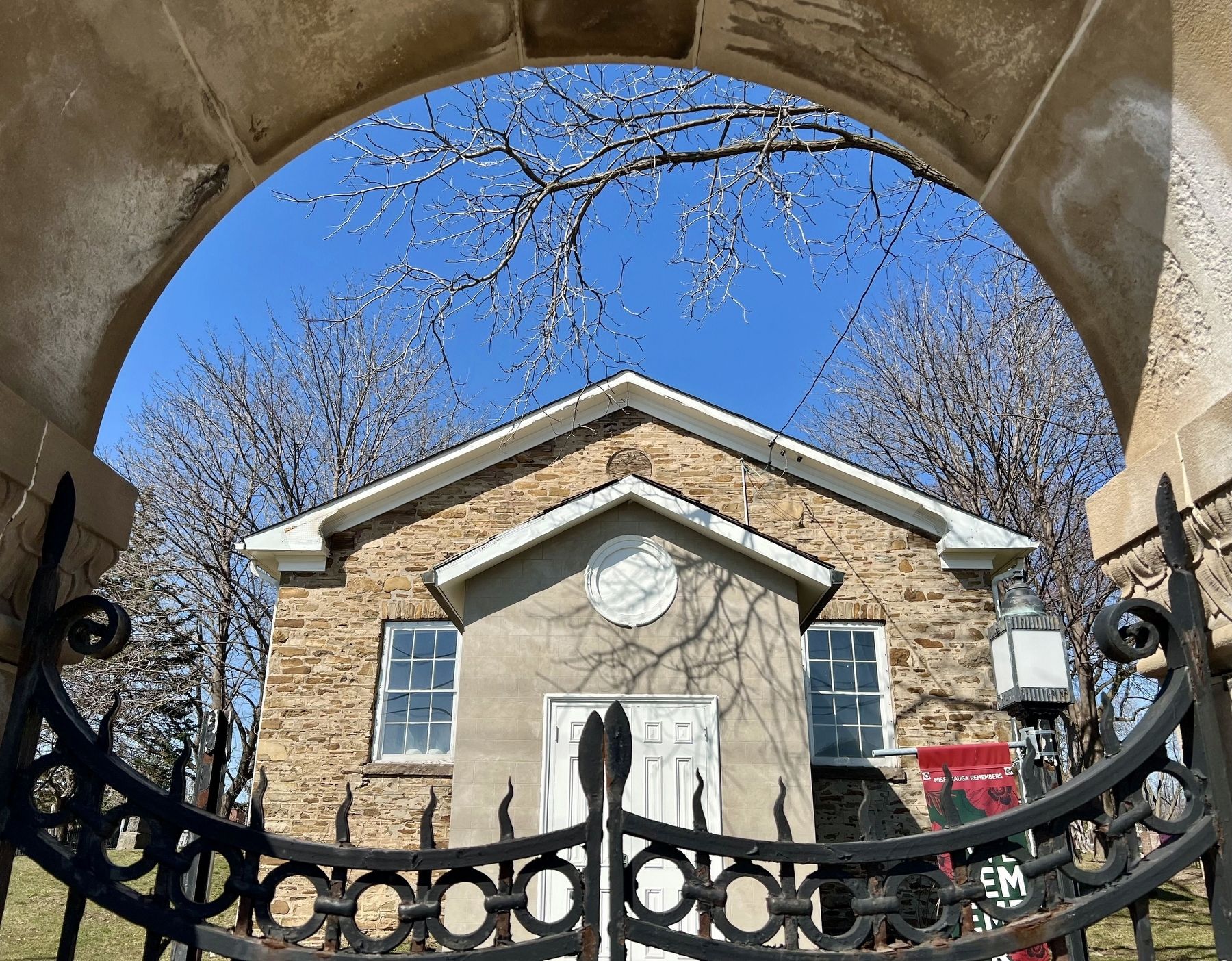
Dixie Union Chapel
Photographed by Tim Boyd, March 13, 2024
1. Dixie Union Chapel Marker
Erected by Ontario Heritage Foundation, Ministry of Culture and Recreation.
Topics and series. This historical marker is listed in these topic lists: Cemeteries & Burial Sites • Religion & Religious Structures • Settlements & Settlers. In addition, it is included in the Canada, Ontario Heritage Trust series list. A significant historical year for this entry is 1816.
Location. 43° 35.686′ N, 79° 36.003′
this page online

Regionally, this marker is in Greater Toronto, specifically on the Golden Horseshoe, and in the Toronto Metropolitan Area. It is also in Central Canada. Globally, it is in North America, the Western Hemisphere, the Western World, and the Anglosphere. Historically, it finds itself in what was once a British colony, the Viceroyalty of New France, the Haudenosaunee (Iroquois) Confederacy, and Rupert’s Land.
Other nearby markers. At least 8 other markers are within 5 kilometers of this marker, measured as the crow flies: Remembering Our 1812 Heroes (within shouting distance of this marker); The Hon. Thomas Laird Kennedy 1878-1959 (approx. 1.5 kilometers away); Canada’s First Aerodrome (approx. 3.9 kilometers away); Port Credit Cenotaph (approx. 4.7 kilometers away); Mississauga Remembers (approx. 4.7 kilometers away); St. Lawrence Starch (approx. 4.8 kilometers away); a different marker also named St. Lawrence Starch (approx. 4.8 kilometers away); a different marker also named St. Lawrence Starch (approx. 4.8 kilometers away). Touch for a list and map of all markers in Mississauga.
Also see . . . The history if Mississauga’s Dixie Union Chapel.
A lack of formal religious services in historic Mississauga prompted early settlers of the Cooksville and Dixie areas of Mississauga to meet at Philip Cody’s tavern in 1808 where they agreed to build a chapel. Cody and Moses Teeter donated land across the road from the tavern for a cemetery and church. The first attempt at construction was thwarted when a falling(Submitted on March 13, 2024, by Tim Boyd of Hamilton, Ontario.)tree broke foreman Absalom Wilcox’s leg. Construction was delayed again during the War of 1812. The first log chapel on this site was completed in 1816.Photographed by Tim Boyd, March 13, 20242. Dixie Union Chapel Marker
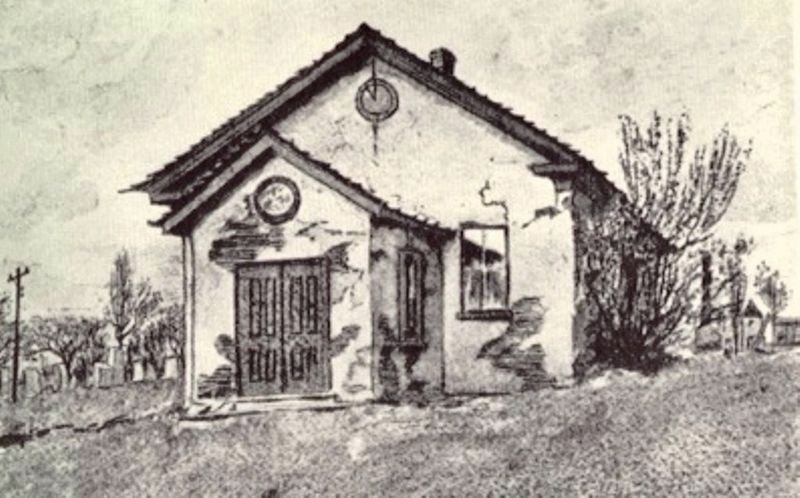
circa 1910
3. Dixie Union Chapel, ca 1910
Photographed by Tim Boyd, March 13, 2024
4. Dixie Union Chapel
Credits. This page was last revised on March 13, 2024. It was originally submitted on March 13, 2024, by Tim Boyd of Hamilton, Ontario. This page has been viewed 183 times since then and 28 times this year. Photos: 1, 2, 3, 4. submitted on March 13, 2024, by Tim Boyd of Hamilton, Ontario. • Andrew Ruppenstein was the editor who published this page.
