Port Credit in Mississauga in Peel Region, Ontario — Central Canada (North America)
Credit River - Rivière Crédit
Photographed by Tim Boyd, March 13, 2024
1. Credit River - Rivière Crédit Marker

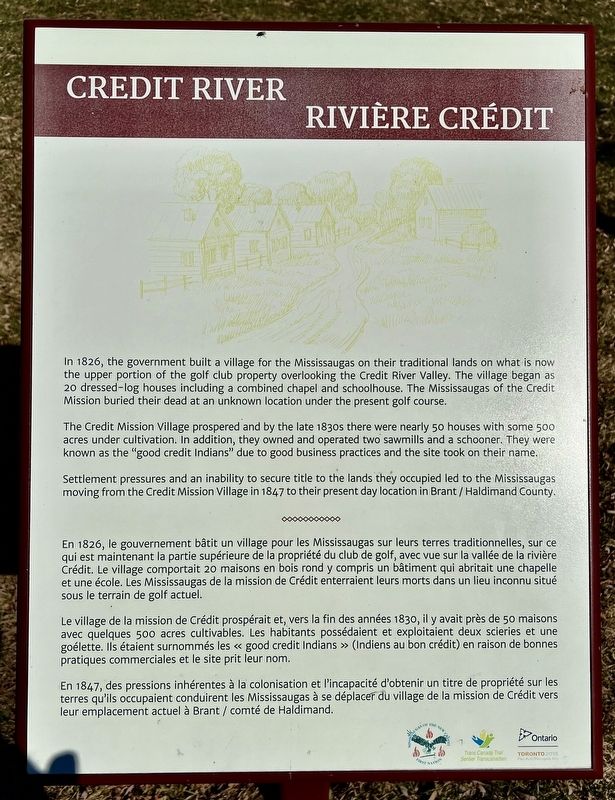
The Credit Mission Village prospered and by the late 1830s there were nearly 50 houses with some 500 acres under cultivation. In addition, they owned and operated two sawmills and a schooner. They were known as the "good credit Indians" due to good business practices and the site took on their name.
Settlement pressures and an inability to secure title to the lands they occupied led to the Mississaugas moving from the Credit Mission Village in 1847 to their present day location in Brant / Haldimand County.
this page online
Le village de la mission de Crédit prospérait et, vers la fin des années 1830, il y avait près de 50 maisons avec quelques 500 acres cultivables. Les habitants possédaient et exploitaient deux scieries et une goélette. Ils étaient surnommés les « good credit Indians » (Indiens au bon crédit) en raison de bonnes pratiques commerciales et le site prit leur nom.
En 1847, des pressions inhérentes à la colonisation et l'incapacité d'obtenir un titre de propriété sur les terres qu'ils occupaient conduirent les Mississaugas à se déplacer du village de la mission de Crédit vers leur emplacement actuel à Brant / comté de Haldimand.
Topics. This historical marker is listed in these topic lists: Indigenous Peoples and Communities • Settlements & Settlers. A significant historical year for this entry is 1826.
Location. 43° 32.832′ N, 79° 34.909′ W. Marker is in Mississauga, Ontario, in Peel Region. It is in Port Credit. It
Photographed by Tim Boyd, March 13, 2024
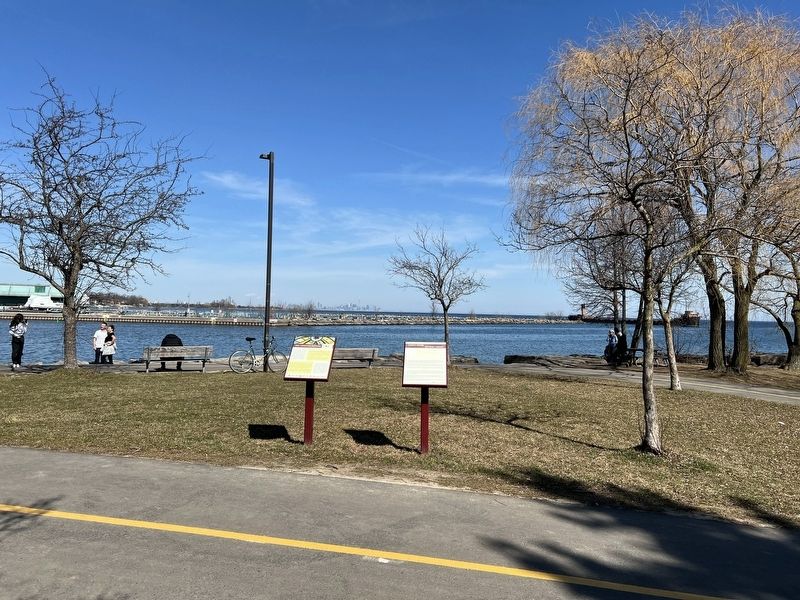
2. Credit River - Rivière Crédit Marker (on the right)

Regionally, this marker is in Greater Toronto, specifically on the Golden Horseshoe, and in the Toronto Metropolitan Area. It is also in Central Canada. Globally, it is in North America, on the Great Lakes, in the Western Hemisphere, in the Western World, and in the Anglosphere. Historically, it finds itself in what was once a British colony, the Viceroyalty of New France, the Haudenosaunee (Iroquois) Confederacy, and Rupert’s Land.
Other nearby markers. At least 8 other markers are within walking distance of this marker: The Ridgetown (about 180 meters away, measured in a direct line); The Lighthouse (about 180 meters away); The Changing Port (about 210 meters away); A Sailor’s Memorial (about 210 meters away); Remembering the Stonehookers (about 240 meters away); The Harvest (approx. 0.2 kilometers away); The Mills of the Credit River (approx. 0.3 kilometers away); The Harbour (approx. 0.3
circa 1830s
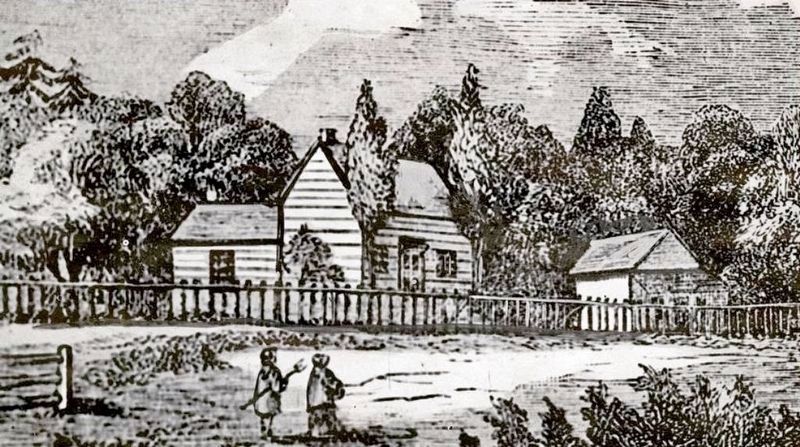
3. Credit Mission Village, ca 1830s
Also see . . . Heritage Mississauga - Credit Mission Village.
1825, the Mississauga living on the Credit River gained support in their dealings with the government, when Peter Jones (Kahkewaquonaby) a Mississauga (later Chief) and a Christian convert who spoke English, arrived at the Credit River and established the Credit Mission (on the present site of the Mississaugua Golf and Country Club). On July 13, 1825, Peter Jones met the Honourable Dr. Strachan, who, according to Jones, suggested the Mississauga establish a village. By the fall of 1826,their new homes were ready to be occupied.(Submitted on March 14, 2024, by Tim Boyd of Hamilton, Ontario.)
Credits. This page was last revised on March 17, 2024. It was originally submitted on March 14, 2024, by Tim Boyd of Hamilton, Ontario. This page has been viewed 234 times since then and 30 times this year. Photos: 1, 2, 3. submitted on March 14, 2024, by Tim Boyd of Hamilton, Ontario. • Andrew Ruppenstein was the editor who published this page.
