Alviso in Santa Clara County, California — The American West (Pacific Coastal)
The Port and Town of Alviso
Photographed by Craig Baker, September 26, 2021
1. Alviso Marker
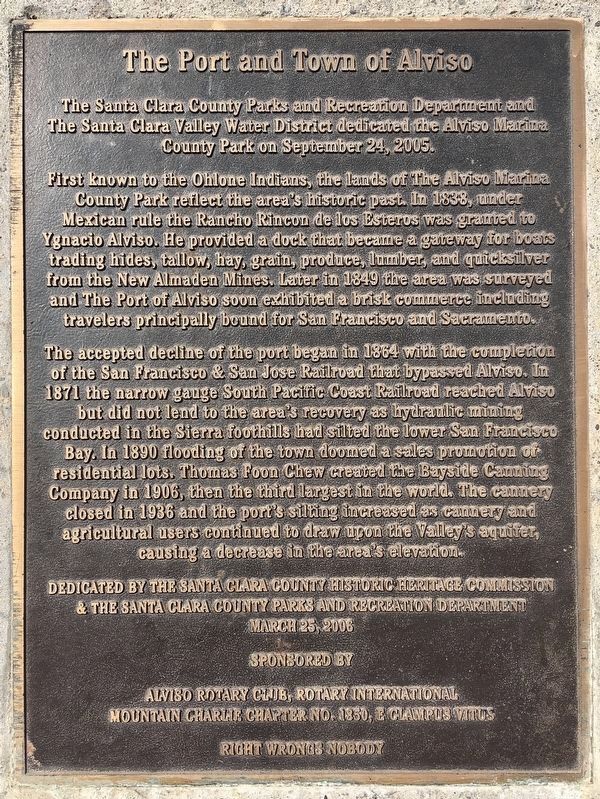
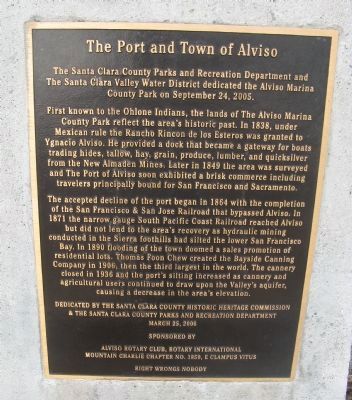
The Santa Clara County Parks and Recreation Department and the Santa Clara Valley Water District dedicated the Alviso Marina County Park on September 24, 2005.
First known to the Ohlone Indians, the lands of The Alviso Marina County Park reflect the area’s historic past. In 1838, under Mexican rule, the Rancho de los Esteros was granted to Ygnacio Alviso. He provided a dock that became a gateway for boats trading hides, tallow, hay, grain, produce, lumber, and quicksilver from the New Almaden Mines. Later in 1849 the area surveyed and The Port of Alviso soon exhibited a brisk commerce including travelers principally bound for San Francisco and Sacramento.
The accepted decline of the port began in 1864 with the completion of the San Francisco & San Jose Railroad Alviso. In 1871 the narrow gauge South Pacific Coast Railroad reached Alviso but did not lend to the area’s recovery as hydraulic mining conducted in the Sierra foothills had silted the lower San Francisco Bay. In 1890 flooding of the town doomed a sales promotion of residential lots. Thomas Foon Chew created the Bayside Canning Company in 1906, then the
this page online
Dedicated by the Santa Clara County Historic Heritage Commission & The Santa Clara County Parks and Recreation Department, March 25, 2006.
Sponsored by Alviso Rotary Club, Rotary International; and Mountain Charlie Chapter No. 1850, E Clampus Vitus.
Erected 2006 by Alviso Rotary Club, Rotary International and the Mountain Charlie Chapter No. 1850, E Clampus Vitus.
Topics and series. This historical marker is listed in these topic lists: Industry & Commerce • Notable Places • Settlements & Settlers. In addition, it is included in the E Clampus Vitus, and the Rotary International series lists. A significant historical date for this entry is March 25, 2006.
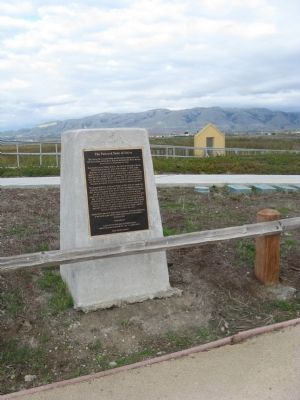
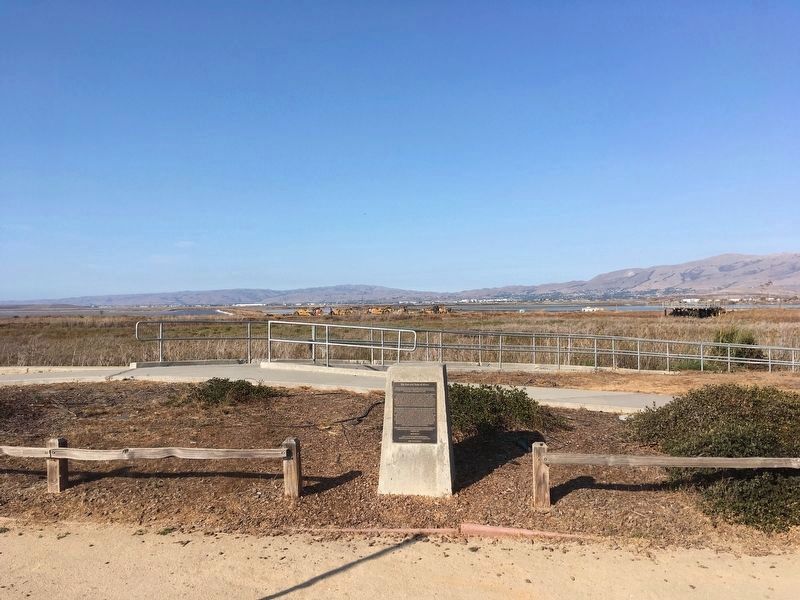
Location. 37° 25.793′ N, 121° 58.754′ W. Marker is in Alviso, California, in Santa Clara County. It can be reached from Hope Street. Marker is located near the entrance to the Alviso Marina County Park. Touch for map. Marker is in this post office area: Alviso CA 95002, United States of America. Touch for directions.

Regionally,
Photographed by Syd Whittle, November 5, 2009
2. Alviso Marker
Other nearby markers. At least 8 other markers are within walking distance of this marker: Discover Alviso’s Rich History (a few steps from this marker); Water Everywhere (within shouting distance of this marker); The Steamboat Jenny Lind Disaster (about 300 feet away, measured in a direct line); Salt Ponds (about 400 feet away); Location, Location, Location (about 500 feet away); China Camp (about 600 feet away); Bayside Cannery (about 600 feet away); Union Warehouse and Docks (about 700 feet away). Touch for a list and map of all markers in Alviso.
Also see . . .
1. Alviso. Visit San Jose website entry (Submitted on November 11, 2009, by Syd Whittle of Mesa, Arizona.)
2. The Juan de Bautista de Anza Trail. National
Photographed by Syd Whittle, November 5, 2009
3. Alviso Marker
Ygnacio Alviso was a child when he accompanied the Juan de Bautista Expedition. (Submitted on November 11, 2009, by Syd Whittle of Mesa, Arizona.)
Photographed by Craig Baker, September 26, 2021
4. Alviso Marker
Photographed by Syd Whittle, November 5, 2009
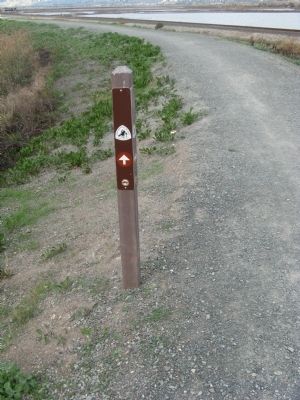
5. Juan Bautista de Anza National Historic Trail Marker
This is one of several trail markers located on the hiking trails in the park.
Photographed by Syd Whittle, November 5, 2009
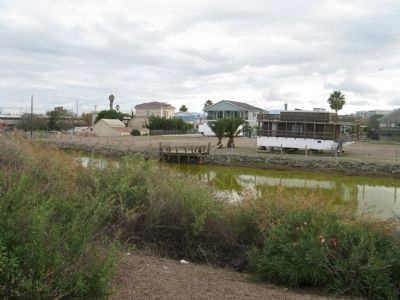
6. The Town of Alviso
Credits. This page was last revised on February 7, 2023. It was originally submitted on November 11, 2009, by Syd Whittle of Mesa, Arizona. This page has been viewed 1,731 times since then and 33 times this year. Photos: 1. submitted on September 26, 2021, by Craig Baker of Sylmar, California. 2, 3. submitted on November 11, 2009, by Syd Whittle of Mesa, Arizona. 4. submitted on September 26, 2021, by Craig Baker of Sylmar, California. 5, 6. submitted on November 11, 2009, by Syd Whittle of Mesa, Arizona.
