Near Union Point in Greene County, Georgia — The American South (South Atlantic)
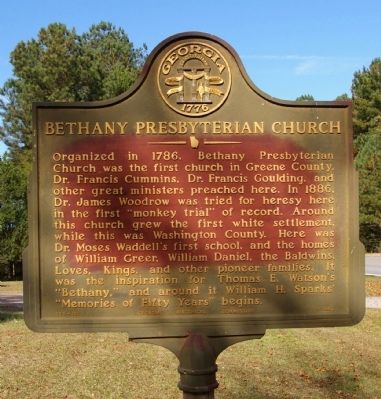
Bethany Presbyterian Church
Photographed by David Seibert, November 14, 2009
1. Bethany Presbyterian Church Marker
Erected 1957 by Georgia Historical Commission. (Marker Number 066-10.)
Topics and series. This historical marker is listed in these topic lists: Religion & Religious Structures • Settlements & Settlers. In addition, it is included in the Georgia Historical Society series list. A significant historical year for this entry is 1786.
Location. 33° 33.378′ N, 83° 0.918′ W. Marker is near Union Point, Georgia, in Greene County. It is on Bethany Church Road 0.3 miles north of
this page online

Regionally, this marker is in Georgia’s Antebellum Trail and in the Piedmont. It is also in the American South and specifically in the Deep South. Globally, it is in North America, the Western Hemisphere, the Western World, and the Anglosphere. Historically, it finds itself in what was once the territory of the Mississippian Culture, one of the original Thirteen Colonies, one of the Confederate States of America, and the Antebellum South.
Other nearby markers. At least 8 other markers are within 7 miles of this marker, measured as the crow flies: Confederate Gun Shop (approx. 2.4 miles away); Great Buffalo Lick (approx. 4.1 miles away); First Regimental Reunion of Confederate Veterans (approx. 5.1 miles away); Confederate Wayside Home 1862-64 (approx. 5.4 miles away); The Two Committees (approx. 5.4 miles away); Site of Wayside Home (approx. 5.4 miles away); White Plains Baptist Church (approx. 5.9 miles away); Bethesda Baptist Church (approx.
Photographed by David Seibert, November 14, 2009
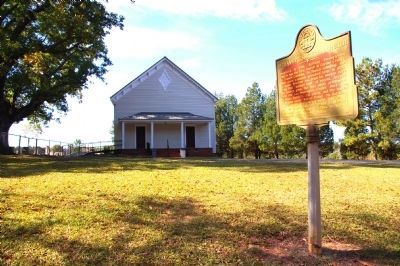
2. Bethany Presbyterian Church Marker and the Church
Photographed by David Seibert, November 14, 2009
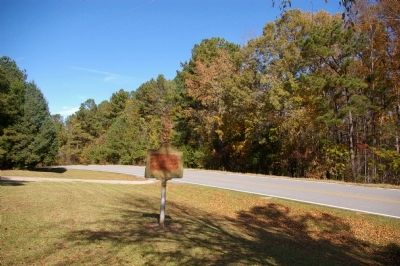
3. Bethany Presbyterian Church Marker
Looking northwest toward Union Point on Bethany Church Road

Photographed by David Seibert, November 14, 2009
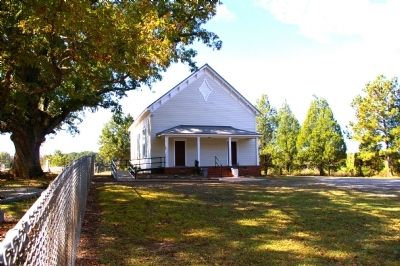
4. Bethany Presbyterian Church Marker and the Church
Photographed by David Seibert, November 14, 2009
5. Bethany Presbyterian Church
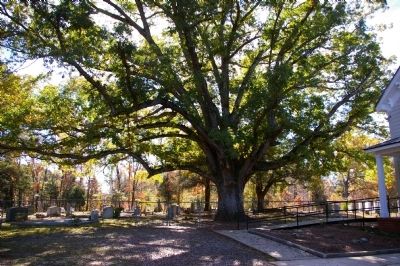
Photographed by David Seibert, November 14, 2009
6. Bethany Presbyterian Church Cemetery
Graves date to the early days of the church
Credits. This page was last revised on January 30, 2020. It was originally submitted on November 16, 2009, by David Seibert of Sandy Springs, Georgia. This page has been viewed 1,342 times since then and 48 times this year. Photos: 1, 2, 3, 4, 5, 6. submitted on November 16, 2009, by David Seibert of Sandy Springs, Georgia. • Craig Swain was the editor who published this page.
