Katonah in Westchester County, New York — The American Northeast (Mid-Atlantic)
The Glasshouse Complex and Herb Garden
John Jay Homestead
Photographed by Michael Herrick, November 10, 2009
1. The Glasshouse Complex and Herb Garden Marker
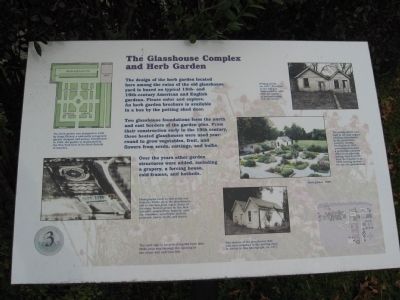
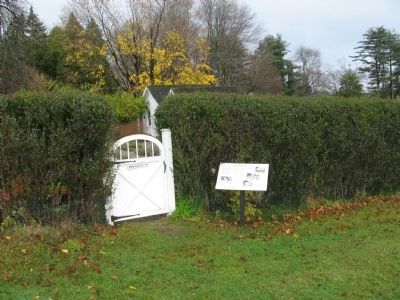
The design of the herb garden located here among the ruins of the old glasshouse yard is based on typical 18th- and 19th-century American and English gardens. Please enter and explore. An herb garden brochure is available in a box by the potting shed door.
Two glasshouse foundations form the north and east borders of the garden plan. From their construction early in the 19th century, these heated glasshouses were used year-round to grow vegetables, fruit, and flowers from seeds, cuttings, and bulbs.
Over the years other garden structures were added, including a grapery, a forcing house, cold frames, and hotbeds.
Erected by Friends of the Jay Homestead. (Marker Number 3.)
Topics. This historical marker is listed in this topic list: Horticulture & Forestry.
Location. 41° 15.031′ N, 73° 39.532′ W. Marker is in Katonah, New York, in Westchester County. It can be reached from Jay Street (New York State Route 22) 0.1 miles south of Beaver Dam Road, on the left when traveling south. Located on the grounds of the John Jay Homestead. Touch for map. Marker is at or near
this page online

Regionally, this marker is in the Hudson Valley and in the New York City Metropolitan Area. It is also in the American Northeast, in the Mid-Atlantic, and on the Eastern Seaboard. Globally, it is in the North Atlantic Region, North America, the Western Hemisphere, the Western World, and the Anglosphere. Historically, it finds itself in what was once New Netherland and also one of the original Thirteen Colonies.
Other nearby markers. At least 8 other markers are within walking distance of this marker: The Homestead Farm (a few steps from this marker); The John Jay Potting Sheds (within shouting distance of this marker); John Jay Homestead (within shouting distance of this marker); The Brick Lot (about 300 feet away, measured in a direct line); Bedford House (about 300 feet away); The Beech Allee (Avenue) and Stone Fences (about 400 feet away); The Farm Manager’s Cottage (about 400 feet away); The Stable Courtyard (about 500 feet away). Touch for a list and map of all markers in Katonah.
Other markers no longer nearby.
Photographed by Michael Herrick, November 14, 2009
2. The Glasshouse Complex and Herb Garden Marker
Photographed by Michael Herrick, November 10, 2009
3. The Garden Plan
[ detail from the marker ]
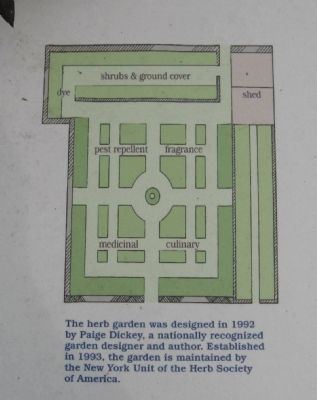
The herb garden was designed in 1992 by Paige Dickey, a nationally recognized garden designer and author. Established in 1993, the garden is maintained by the New York Unit of the Herb Society of America.
The herb garden was designed in 1992 by Paige Dickey, a nationally recognized garden designer and author. Established in 1993, the garden is maintained by the New York Unit of the Herb Society of America.
Photographed by Michael Herrick, November 10, 2009
4. Potting Sheds
[ detail from the marker ]
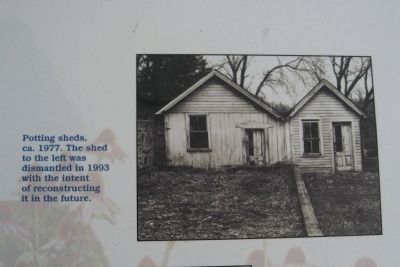
Potting sheds ca. 1977. The shed to the left was dismantled in 1993 with the intent of reconstructing it in the future.
Potting sheds ca. 1977. The shed to the left was dismantled in 1993 with the intent of reconstructing it in the future.
Photographed by Michael Herrick, November 10, 2009
5. Herb Garden 1998
[ detail from the marker ]
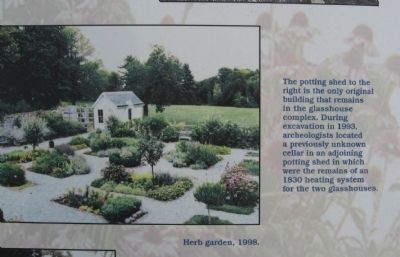
The potting shed to the right is the only original building that remains in the glasshouse complex. During excavation in 1993, archeologists located a previously unknown cellar in an adjoining potting shed in which were the remains of an 1830 heating system for the two glasshouses.
The potting shed to the right is the only original building that remains in the glasshouse complex. During excavation in 1993, archeologists located a previously unknown cellar in an adjoining potting shed in which were the remains of an 1830 heating system for the two glasshouses.
Photographed by Michael Herrick, November 10, 2009
6. Aerial View
[ detail from the marker ]
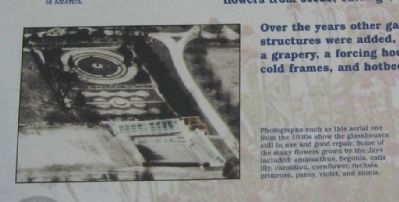
Photographs such as this aerial one from the 1930s show the glasshouses still in use and good repair. Some of the many flowers grown by the Jays included: amaranthus, begonia, calla lily, carnation, cornflower, fuchsia, primrose, pansy, violet, and zinnia.
Photographs such as this aerial one from the 1930s show the glasshouses still in use and good repair. Some of the many flowers grown by the Jays included: amaranthus, begonia, calla lily, carnation, cornflower, fuchsia, primrose, pansy, violet, and zinnia.
Photographed by Michael Herrick, November 10, 2009
7. Glasshouse Remains
[ detail from the marker ]
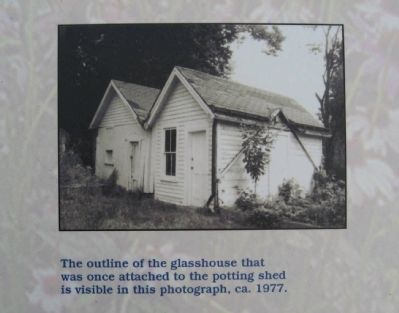
The outline of the glasshouse that was once attached to the potting shed is visible in this photograph, ca. 1977.
The outline of the glasshouse that was once attached to the potting shed is visible in this photograph, ca. 1977.
Credits. This page was last revised on November 28, 2019. It was originally submitted on November 21, 2009, by Michael Herrick of Southbury, Connecticut. This page has been viewed 1,121 times since then and 16 times this year. Photos: 1, 2, 3, 4, 5, 6, 7. submitted on November 21, 2009, by Michael Herrick of Southbury, Connecticut. • Syd Whittle was the editor who published this page.
