Glen Echo in Montgomery County, Maryland — The American Northeast (Mid-Atlantic)
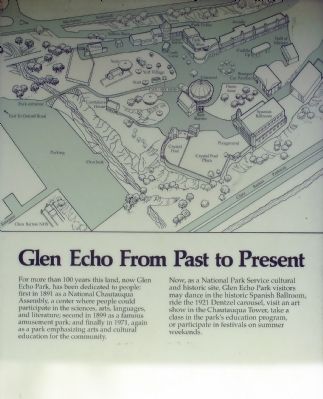
Glen Echo From Past to Present
Photographed by Tom Fuchs, April 22, 2006
1. Glen Echo From Past to Present Marker
Click on image to zoom in to examine map.
For more than 100 years this land, now Glen Echo Park, has been dedicated to the people: first in 1891 as a National Chautauqua Assembly, a center where people could participate in the sciences, arts, languages, and literature; second in 1899 as a famous amusement park; and finally in 1971, again as a park emphasizing arts and cultural education for the community.
Now, as a National Park Service cultural and historic site, Glen Echo Park visitors may dance in the historic Spanish Ballroom, ride the 1921 Dentzel carousel, visit an art show in the Chautauqua Tower, take a class in the park's education program, or participate in festivals on summer weekends.
Erected by National Park Service, U.S. Department of the Interior.
Topics. This historical marker is listed in these topic lists: Arts, Letters, Music • Education • Entertainment. A significant historical year for this entry is 1891.
Location. Marker has been permanently removed. It was located near 38° 57.991′ N, 77° 8.328′ W. Marker was in Glen Echo, Maryland, in Montgomery County. It could be reached from MacArthur Boulevard near Oxford Road. Touch for map.
this page online
We have been informed that this marker is no longer there and will not be replaced. This page is an archival view of what was.
Regionally, this marker was in the Washington Metropolitan Area. It was also in the American Mid-Atlantic. Globally, it was in North America, the Western Hemisphere, the Western World, and the Anglosphere. Historically, it found itself in what was once one of the original Thirteen Colonies and also the Antebellum South.

Other nearby markers. At least 7 other markers are within walking distance of this location: Glen Echo Park (here, next to this marker); a different marker also named Glen Echo Park (within shouting distance of this marker); 1921 (within shouting distance of this marker); Glen Echo Civil Rights Protest (within shouting distance of this marker); c. 1931 (about 300 feet away, measured in a direct line); Glen Echo Park: Arcade (about 300 feet away); Glen Echo Park: Spanish Ballroom (about 300 feet away). Touch for a list and map of all markers in Glen Echo.
Other markers no longer nearby. The Glen Echo Park Yurts
Photographed by Tom Fuchs, May 22, 2006
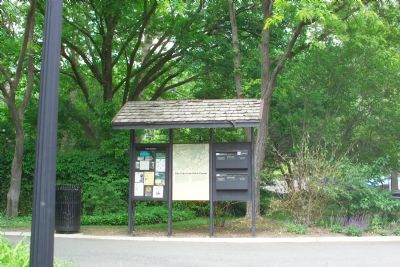
2. Glen Echo From Past to Present Marker
Related marker. Click here for another marker that is related to this marker. This marker has been replaced with the linked marker.
Also see . . .
1. Fun In the Dark at Glen Echo Park. Plenty
Photographed by Tom Fuchs, May 22, 2006
3. Dentzel Carousel Interpretative Panel
2. Real Photo Postcards. Almost from the first, Glen Echo used postcards to promote the park. (Submitted on June 2, 2010, by Mike Stroud of Bluffton, South Carolina.)
Additional commentary.
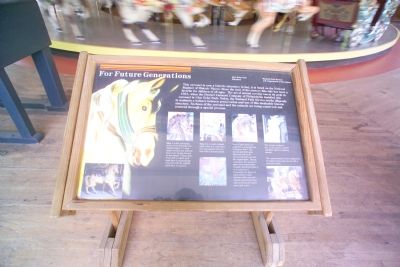
1. The Dentzel Carousel — For Future Generations
(Text of the interpretive panel found inside the carousel building.)
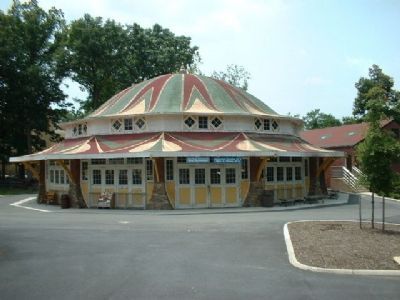
This carousel is now a historic structure; in fact, it is listed on the National Register of Historic Places. Since the turn of the century this ride has been a favorite for children of all ages. The art of animal carving was at its peak in 1921, when the Dentzel Carousel Company of Philadelphia installed this carousel in Glen Echo Park. Today, the National Park Service works diligently to maintain a balance between preservation and use of this invaluable historic structure. Sections of the carousel and the animals are being conserved and restored through a special process.
Step 1 in the restoration process is to determine the original colors: 1½ inch square sections are selected from every design element on the animal. Using
Photographed by Tom Fuchs, May 12, 2006
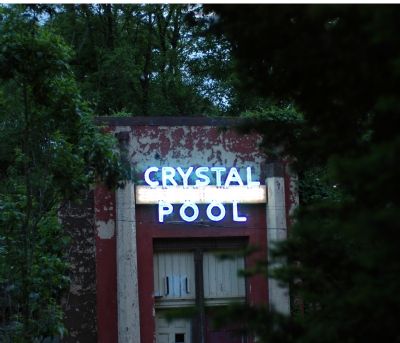
4. The Crystal Pool
The entrance is all that remains of the famous Crystal Pool, one of the largest in the nation in its time. It easily accomodated thousands of swimmers and had a sandy beach at one end for sunbathing.
Step 2 is to match original paint colors to a color chart, then photograph each section of the carousel animal.
Next all paint layers are removed—except for the last 2-3 layers. Why? The second and third layers are left on the carousel animal to protect the original paint. During restoration, the amount of paint layers found varies. A single animal may have 4 to 12 paint layers. Frequently, the layers of paint indicate which sections of the carousel animal required the most upkeep during the amusement park years.
The animal's surface is then sealed, sanded and filled until it is relatively smooth.
The carousel animal is now repainted in its original colors and covered with a protective finish.
— Submitted May 28, 2006.
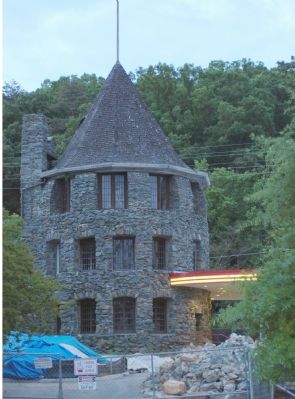
Photographed by Tom Fuchs, May 12, 2006
5. The Chautauqua Tower
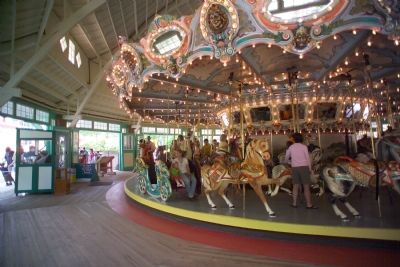
Photographed by Tom Fuchs, May 22, 2006
6. The Dentzel Carousel
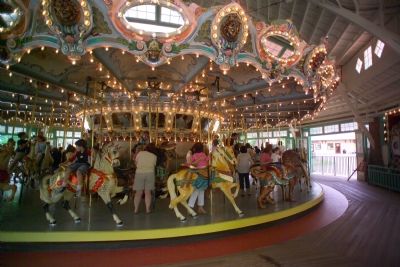
Photographed by Tom Fuchs, May 22, 2006
7. The Dentzel Carousel
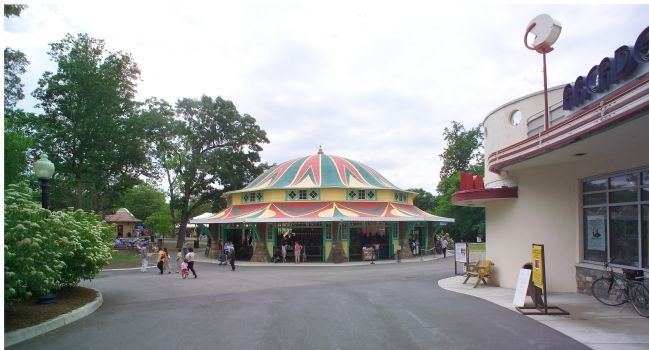
Photographed by Tom Fuchs, May 22, 2006
8. The Dentzel Carousel
Photographed by Tom Fuchs, May 5, 2007
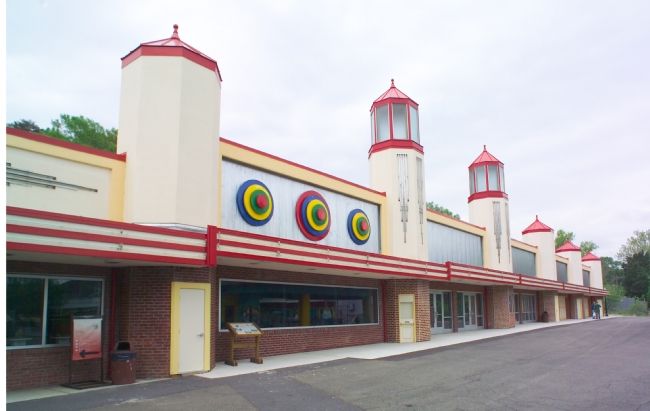
9. Art Deco Arcade
Cotton candy, popcorn, sodas, ice cream, beer, barbeque, a shooting gallery and archery range, the penny arcade with 98 amusements including Skee Ball alleys and pinball machines, and a sit-down restaurant were housed here, along with the park’s administrative offices.
Photographed by Tom Fuchs, May 5, 2007
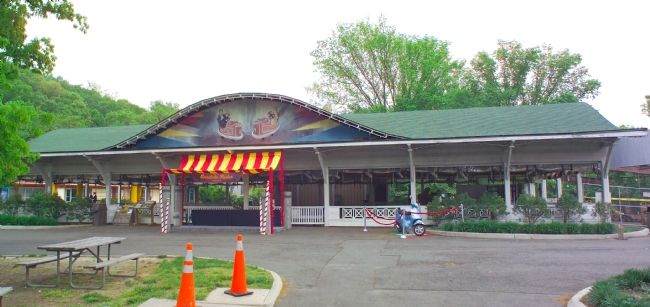
10. Bumper Car Pavilion
Circa 1926. Originally called “The Skooter”, then the “Dodgem”, it was one of the first bumper car rides in the world. Today the bumper cars are gone and it hosts dances and events.
Photographed by Michael Stroud, May 2003
11. The Dentzel Carousel
Photographed by Michael Stroud, circa May 2003
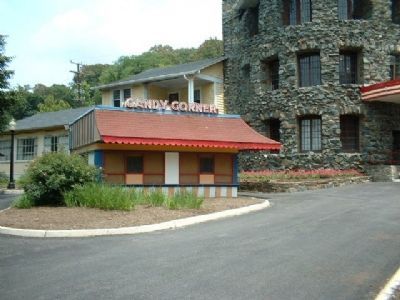
12. Candy Cotton A-Plenty
Credits. This page was last revised on June 1, 2024. It was originally submitted on May 28, 2006, by Tom Fuchs of Greenbelt, Maryland. This page has been viewed 5,765 times since then and 79 times this year. Last updated on May 31, 2024, by Laura Edwards of Bethesda, Maryland. Photos: 1, 2, 3, 4, 5, 6, 7, 8. submitted on May 28, 2006, by Tom Fuchs of Greenbelt, Maryland. 9, 10. submitted on May 28, 2007, by Tom Fuchs of Greenbelt, Maryland. 11, 12. submitted on December 26, 2007, by Mike Stroud of Bluffton, South Carolina. • Devry Becker Jones was the editor who published this page.
