Brownwood in Brown County, Texas — The American South (West South Central)
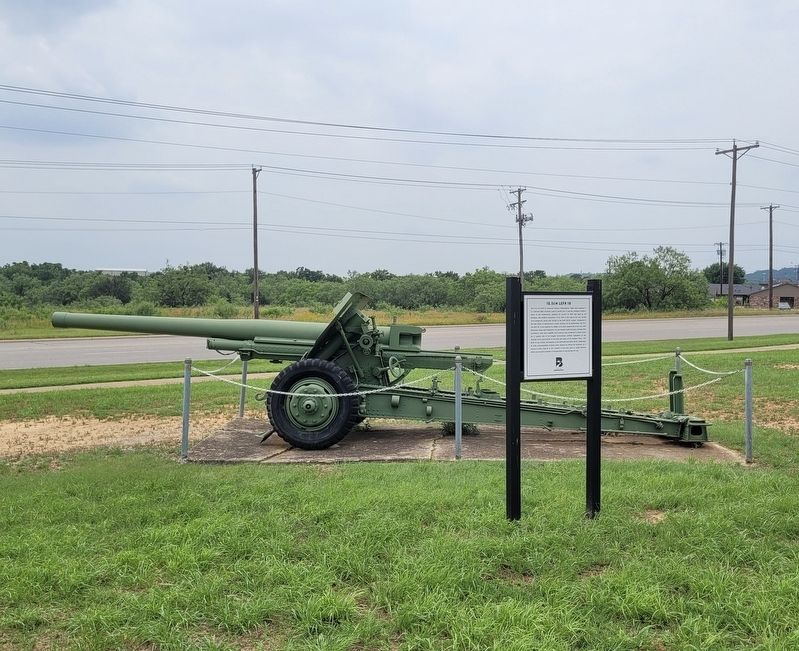
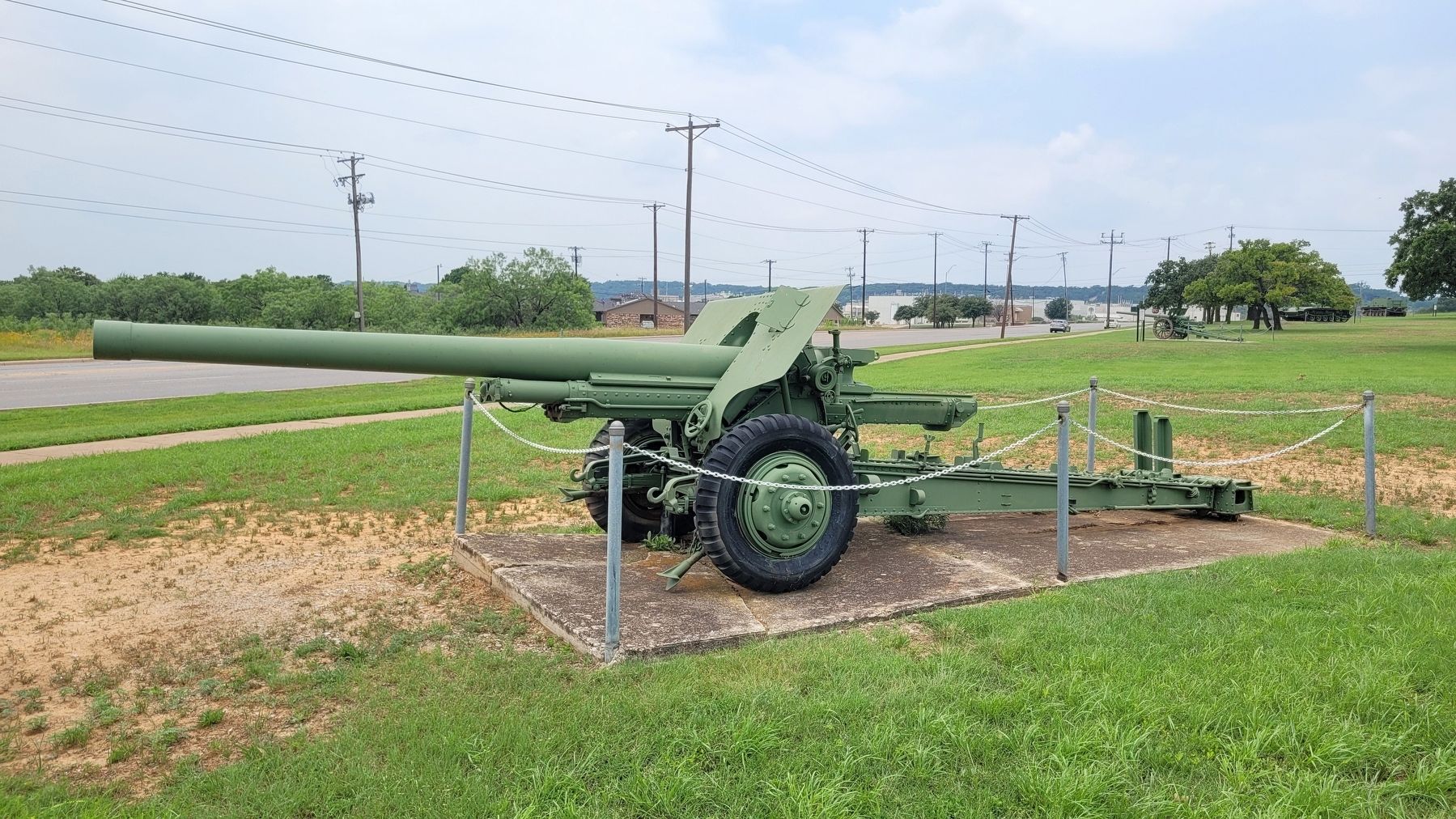
10.5cm lhFH 18

Photographed by James Hulse, May 30, 2024
1. 10.5cm lhFH 18 Marker
Erected by City of Brownwood.
this page online
Topics. This historical marker is listed in this topic list: War, World II. A significant historical year for this entry is 1935.
Location. 31° 40.59′ N, 98° 59.428′ W. Marker is in Brownwood, Texas, in Brown County. It is at the intersection of Morris Sheppard Drive and Crockett Drive, on the left when traveling east on Morris Sheppard Drive. The marker is located at the southeast section of the Camp Bowie Memorial Park. Touch for map. Marker is at or near this postal address: 2605 Morris Sheppard Dr, Brownwood TX 76801, United States of America. Touch for directions.

Regionally, this marker is in Big Country. Globally, it is in North America, a Gulf of Mexico state, the Western Hemisphere, the Western World, and the Anglosphere. Historically, it finds itself in what was once New Spain, the Comanchería, the Republic of Texas, and one of the Confederate States of America.
Other nearby markers. At least 8 other markers are within walking distance of this marker: WW II Japanese Model 92 (1932) 105mm Gun (within shouting distance of this marker); United States M59 Armored Personnel Carrier (within shouting distance of this marker);
Photographed by James Hulse, May 30, 2024
2. The 10.5cm lhFH 18 and Marker
Also see . . . 10.5 cm leFH 18. Wikipedia
Designed in the late 1920s, it represented a major advance on its predecessor the 10.5 cm leFH 16. It was superior in caliber to its early opponents in the war, with adequate range and firepower, but the modern split trail gun carriage that provided it with more stability and traverse also rendered it overly heavy for a mobile role in the largely horse-drawn artillery battalions of the German army, particularly in the mud and snow of the Eastern Front.(Submitted on June 2, 2024, by James Hulse of Medina, Texas.)
Photographed by James Hulse, May 30, 2024
3. 10.5cm lhFH 18
Credits. This page was last revised on June 2, 2024. It was originally submitted on June 1, 2024, by James Hulse of Medina, Texas. This page has been viewed 352 times since then and 41 times this year. Photos: 1, 2, 3. submitted on June 2, 2024, by James Hulse of Medina, Texas.
