Canal Winchester in Franklin County, Ohio — The American Midwest (Great Lakes)
Carty-Tussing House

Photographed by Duane and Tracy Marsteller, May 26, 2024
1. Carty-Tussing House Marker
Topics and series. This historical marker is listed in this topic list: Architecture. In addition, it is included in the National Register of Historic Places (NRHP) series list. A significant historical year for this entry is 1874.
Location. 39° 50.708′ N, 82° 48.465′ W. Marker is in Canal Winchester, Ohio, in Franklin County. It is at the intersection of Elm Street and West Oak Street, on the right when traveling south on Elm Street. Touch for map. Marker is at or near this postal address: 48 Elm St, Canal Winchester OH 43110, United States of America. Touch for directions.

Regionally, this marker is in the Scioto Valley and in the Columbus Metropolitan Area. It is also in the American Midwest and in the Corn Belt. Globally, it is in North America, the Western Hemisphere, the Western World, and the Anglosphere. Historically, it finds itself in what was once the Haudenosaunee (Iroquois) Confederacy, the territory of the Mississippian Culture, and the Northwest Territory.
Other nearby markers. At
this page online
Regarding Carty-Tussing House. Excerpts from the National Register nomination:
Jacob Carty acquired two acres and 82 poles of land in this area in 1868 from John and Hannah Kramer. He built this house in 1874. He died in 1897 and the property was sold to Rudolph Judson (R.J.) Tussing in 1898. The house remained in the Tussing family into the 1920's.…
In 1868 the Winchester Mills were built by Jacob Carty, M.C. Whitehurst, John Gehm and Abraham Lehman. This company sold to C.P. Bauman in 1896, then called the Winchester Milling Company. The company was the last vestigeof agricultural business of Canal Winchester, operating untilPhotographed by Duane and Tracy Marsteller, May 26, 20242. Carty-Tussing House MarkerMarker is between the porch windows.
1978. …
Rudolph Judson Tussing was a greenhouse operator at this location from the time of his acquisition of the property in 1898 through at least 1922. Tussing was active in community service, particularly agricultural related. He was the presiding officer of the Madison Grange #194 in 1880 and 1892 and also secretary of the Franklin Farmers Institute in 1887.

Also see . . . J. Carty-R.J. Tussing House (PDF). National Register nomination for the house, which was listed in 1989. (Prepared by Kathy Mast Kane; via National Archives) (Submitted on June 12, 2024, by Duane and Tracy Marsteller of Murfreesboro, Tennessee.)
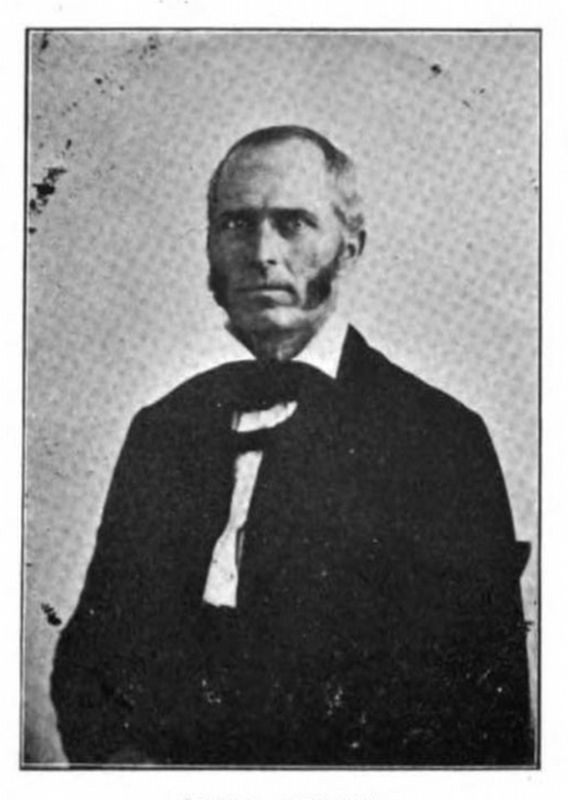
History of Madison Township ; George F. Bareis; via Google Books (Public Domain), 1902
3. Jacob Carty (1805-1897)
He was among Canal Winchester's first businessmen, opening (with Israel Julian) the town's second store in 1832.
Credits. This page was last revised on June 12, 2024. It was originally submitted on June 12, 2024, by Duane and Tracy Marsteller of Murfreesboro, Tennessee. This page has been viewed 215 times since then and 24 times this year. Photos: 1, 2, 3. submitted on June 12, 2024, by Duane and Tracy Marsteller of Murfreesboro, Tennessee.
